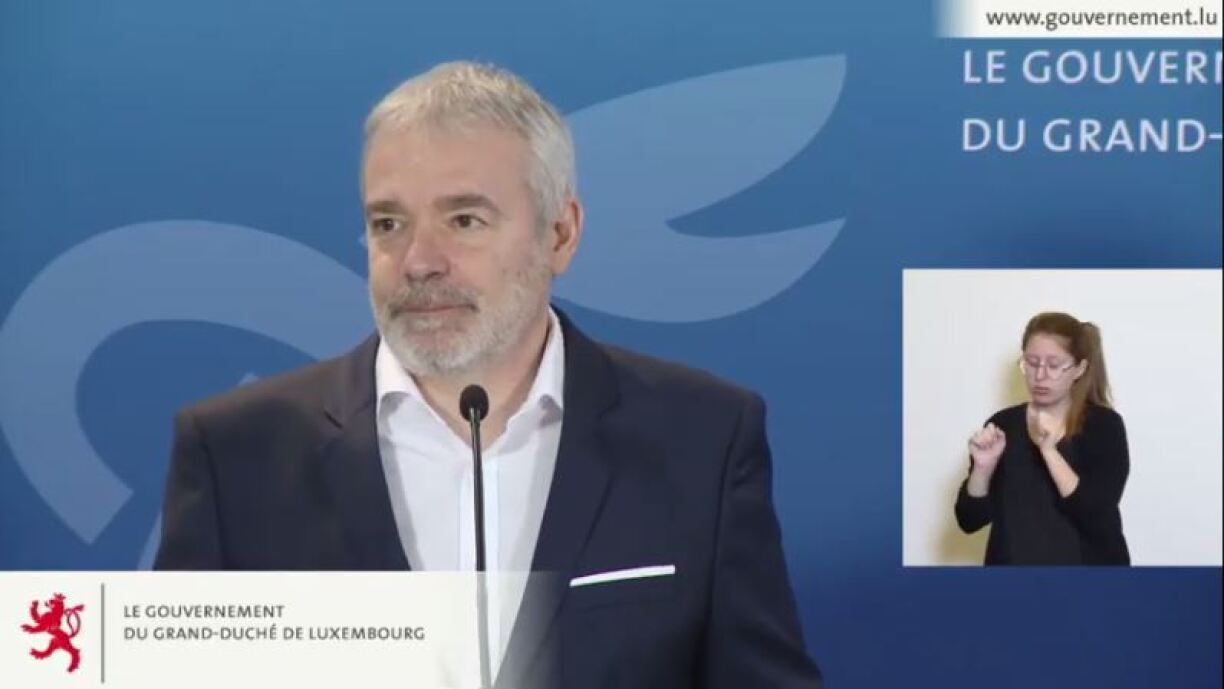
Sporting activities will resume on Monday, albeit under sanitary restrictions. Although it has not strictly been banned for the duration of the health crisis thus far, team activities have been severely restricted, with many sporting leagues on hold.
Following meetings with different sporting federations and representatives over the past weeks, Kersch said they had found a compromise which could enable sports to continue while protecting players' health. Harking back to the Prime Minister and Minister of Health's press briefing earlier this week, Kersch pointed out the importance of maintaining physical and mental health, the latter of which has been severely impacted for many people during the pandemic. He described sport as being both a solution and part of the problem, which the restrictions will now seek to moderate.
The general rules below will apply from Monday 11 January until 31 January.
Up to two people will be able to practise any sport without wearing a mask or observing the two metre physical distance. This applies equally to professional and leisure sports, both indoors and outdoors.
Groups of up to ten people will be permitted to practise a sport together, but the 2 metre physical distance must be maintained. The same distance rules used in shops will be applied here, with 15 m2 required for 1 player, 50 m2 for 2 players and so on. A maximum of 30 square metres per player will be applied to groups of ten.
Players will not have to wear masks, but the distance must be maintained due to health concerns over an increased amount of droplets produced from exertion and heavier breathing, explained Kersch.
A maximum of two groups of ten people can practise together, provided they keep physical distance among the individual groups. There must be at least 20 metres between the two separate groups.
Sports halls which can be split into thirds by a fixed curtain can accommodate 10 athletes at the same time.
Outdoor areas, such as golf course, could accommodate up to four groups of 10, so long as players in the individual groups are observing physical distances.
Swimming will be permitted, with reduced numbers of swimmers. 6 swimmers will be allowed in a 50 metre pool, with up to 3 people per 25 metre swimming lane.
Access to changing rooms and showers will be regulated, for all types of sports. 10 people can use one changing room with around 2 metre physical distance between each other. Masks must be worn in changing rooms.
Exceptions to the rules will apply to professional sportspeople from all federations. Students at the sporting lycée will also be exempt.
Training and competitions will be permitted to take place; however, Kersch added that the changing room and shower rules will still apply to all of the above.
In theory, competitions could resume from Monday. Kersch urged federations to organise themselves responsibly, and said he expected the first professional matches to resume at the end of the month for handball, while football will resume the first weekend of February. Volleyball and basketball will resume at the end of February.
It will be possible for players to get rapid antigen tests, although a number of guidelines will apply. No one will be forced to take a test, but federations may exclude players who refuse to take a test at their own discretion.
Kersch added that testing for Covid is still a medical act and must be carried out by a trained professional. He said around 50,000 rapid tests would be made available for Luxembourgish sports.
Sport should not be an excuse to gather large numbers of people in one place, highlighted Kersch. Nor should people be looking at exploiting loopholes.
The Minister appealed to all those participating in sports to take care, to observe the sanitary guidelines and barrier gestures, to help reduce the virus spread.





