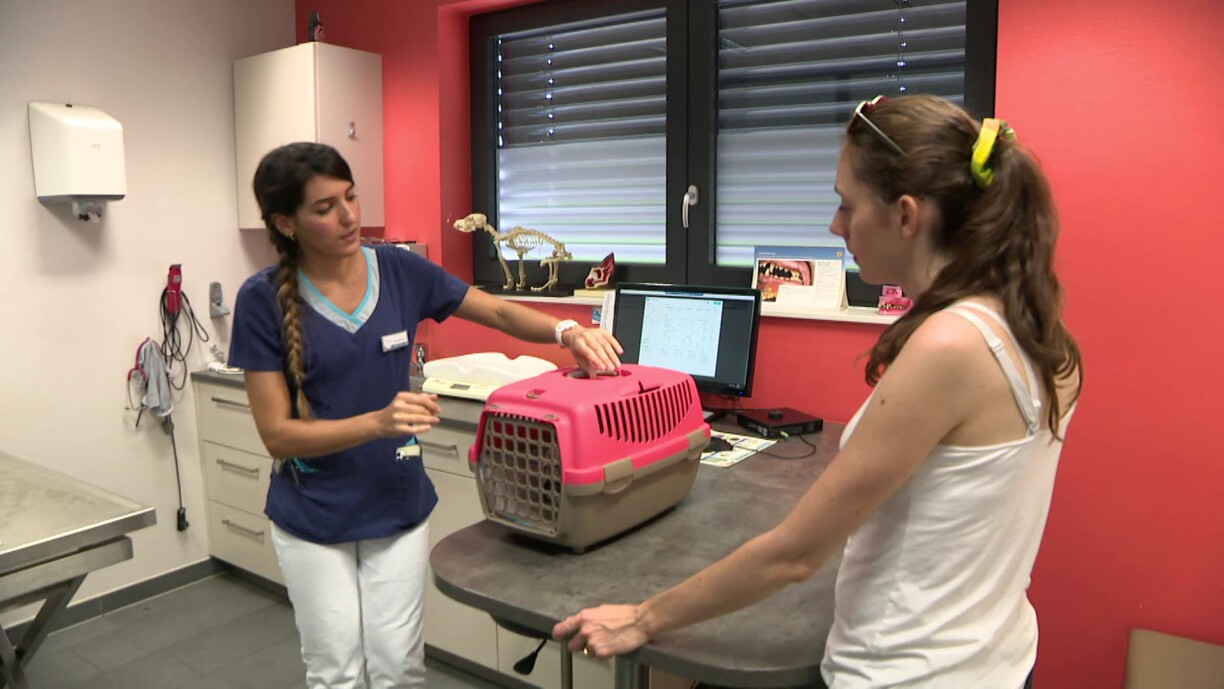
While the clinic resumed operations after two days, this is not an isolated incident. The ongoing shortage of veterinarians further complicates an already less than ideal situation.
Pet owners often view their companions as cherished friends, yet emotions can sometimes escalate. Although physical aggression remains rare, verbal attacks are on the rise. Dr Linda Weiland from the Krakelshof veterinary clinic shared her insights: "In recent years, we've observed a heightened proximity between animals and people, leading to decreased tolerance and increased stress levels."
While efforts are made to communicate with pet owners and defuse tense situations, these measures may prove insufficient in some cases. Veterinary professionals are actively exploring solutions.
Dr Weiland added, "our facilities are equipped with surveillance cameras, we can record phone calls, and we have other security measures in place. However, we're wondering whether that's enough."
The veterinary field, noted for its physical demands and time-intensive nature, is grappling with a declining interest among aspiring professionals. Calls for enhancing the attractiveness of the profession are growing and include specific demands to politicians.
Dr Simone Mousel, President of the Luxembourg Association of Pet Veterinarians (LAK), elaborated, "discussions with the veterinary college, in collaboration with government authorities, are underway to see if we could at least simplify the recognition of foreign diplomas to facilitate foreign professionals' integration into the Luxembourg workforce."
With approximately 300 veterinarians in Luxembourg, the current ratio stands at 0.75 veterinarians per 1,000 animals. In contrast, the ratio for general practitioners in medicine is 3.8 doctors per 1,000 residents.
Full report by RTL Télé (in Luxembourgish):





