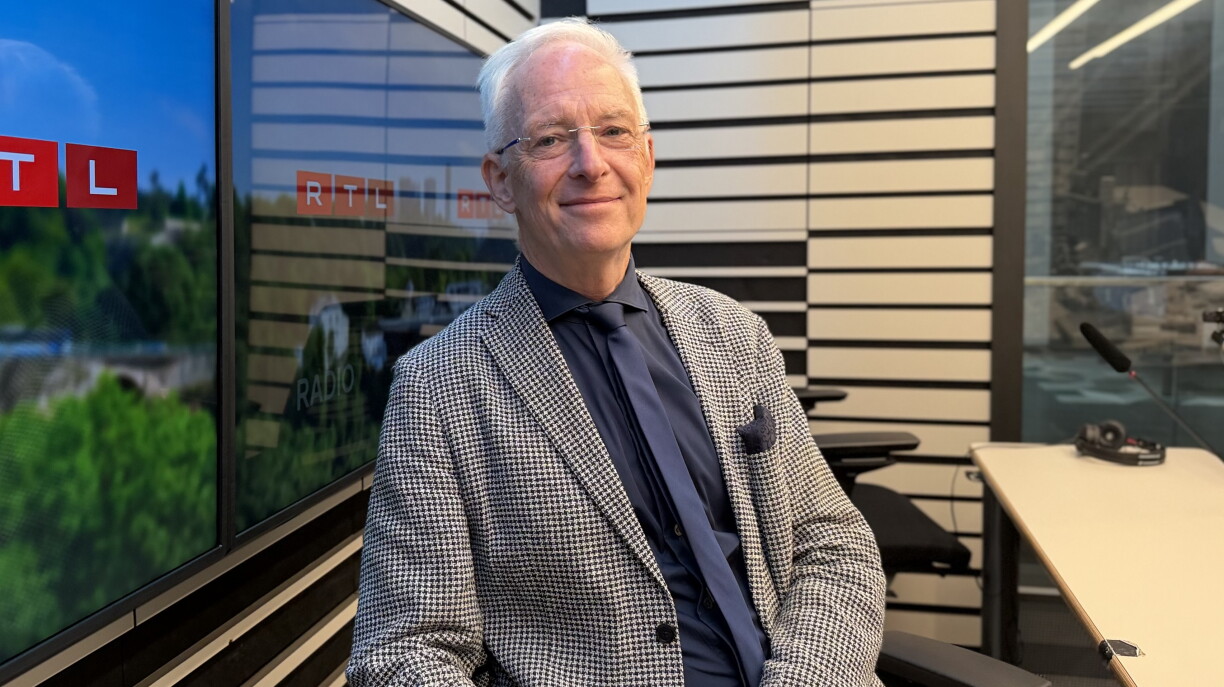
In conversation with RTL Radio on Monday, Trier mayor Wolfram Leibe reacted with anger and concern to the Alternative for Germany's (AfD) historic victory in Sunday's state election in Saxony-Anhalt.
The AfD won 43.8% of the vote, more than doubling its 2021 result and finishing far ahead of the Christian Democratic Union (CDU) on 17.2%. The Social Democratic Party (SPD) received 9.3%, while the Greens, The Left, and the Sarah Wagenknecht Alliance (BSW) also entered the state parliament. The AfD fell short of an outright majority, taking 39 of the 83 seats.
The party's Saxony-Anhalt branch has been classified as confirmed right-wing extremist by the state's domestic intelligence agency.
For Leibe, a Social Democrat who has served as mayor of Trier since 2015, the result was difficult to comprehend.
"It's more anger than tears", he said. Leibe said he struggled to understand why so many voters had backed a party whose programme, in his view, contained social and economic policies that would ultimately harm many of its own supporters.
He also pointed to warnings from businesses in Saxony-Anhalt that the AfD's policies could damage the state as an economic location.
The result leaves Saxony-Anhalt facing a complicated government formation. The AfD is by far the largest party but does not have enough seats to govern alone, while the other established parties have ruled out a coalition with it.
Asked whether such a large election victory meant the AfD should nevertheless be given an opportunity to govern, Leibe acknowledged that the strongest party had a democratic claim to put forward a candidate for state premier.
However, he strongly rejected the argument that an extremist party should simply be allowed to govern so voters could see whether it succeeds. Drawing on German history, Leibe warned that such an experiment could be "extremely dangerous".
At the same time, he questioned whether an alliance bringing together as many as five very different parties could realistically provide a stable government.
"The conflict would be built in from the start", he said, arguing that a minority government supported by different parties on individual issues might ultimately prove more realistic.
Leibe also believes fresh elections, an option already raised by the AfD, could strengthen the party further by mobilising more previous non-voters.
He nevertheless pointed to the difference between urban and rural voting patterns as one reason for optimism. While the AfD achieved particularly high results in some rural areas, its support was considerably lower in several cities.
For Leibe, that suggests there are still forms of politics at local level that can persuade voters not to turn to the AfD.
Migration was also central to the interview.
Leibe argued that concerns about migration should be taken seriously rather than dismissed, but said the debate required far more differentiation.
He noted that eastern German states have generally received fewer migrants than many western regions, yet migration has still become an especially powerful political issue there. He also argued that declining migration figures in recent years had received too little public attention.
Leibe said Germany needed to distinguish more clearly between people the country urgently needs, including doctors and care workers, and those who have no right to remain and should be returned more quickly.
The mayor said his own experience in Trier showed how contradictory public attitudes towards migration can be.
Trier handles citizenship and immigration matters locally and is also involved in returns. Leibe said residents may express broad opposition to refugees or immigration, but often react very differently when a specific family in their neighbourhood faces deportation.
"When it comes to an individual case, suddenly we receive enormous protests because people say: 'But please don’t deport that family'", he said.
Leibe also placed part of the responsibility for the AfD's rise on Germany's established parties and the federal government.
He criticised what he described as constant changes of direction in debates over reforms to pensions, healthcare, and social policy.
Once political decisions have been made, he argued, governments need to follow through rather than reopening the same debate every day. "How is an ordinary citizen supposed to know where we actually are in this reform process?" he asked.
Leibe said dissatisfaction with the federal government was one of the factors driving voters towards the AfD. However, he rejected calls for party leaders or senior government figures to be replaced after every poor election result. Instead, he argued that the deeper problem was finding policies that reconnect with voters.
Leibe pointed to the relative strength of Social Democrats at municipal level in the Trier region as evidence that mainstream parties can still win public trust locally.
"Perhaps Berlin should listen a little more to us at municipal level instead of always trying to explain the world to us", he said.
The rise of far-right parties elsewhere in Europe also worries the Trier mayor.
Asked what a far-right-led government in another major EU member state could mean for the bloc, Leibe described the prospect as a "catastrophe".
He acknowledged that criticism of the EU was justified in some areas, but argued that European cooperation remained one of the greatest achievements in the continent's history.
Greater political obstruction from major member states, he warned, could eventually raise fundamental questions about the functioning of the EU itself.
The interview ended closer to home, with Leibe reflecting on cross-border cooperation between Trier and Luxembourg.
During an earlier RTL interview more than two years ago, he had called for a better direct rail connection between the two cities. Luxembourg and Trier are now served by several direct rail services, although the route is currently closed for maintenance works until mid-September.
Leibe described the improved connection as a major investment and a good example of cooperation between Luxembourg and Germany, although he acknowledged that the current interruption was undermining efforts to encourage more passengers to use it.
"We need more projects like this", he concluded.





