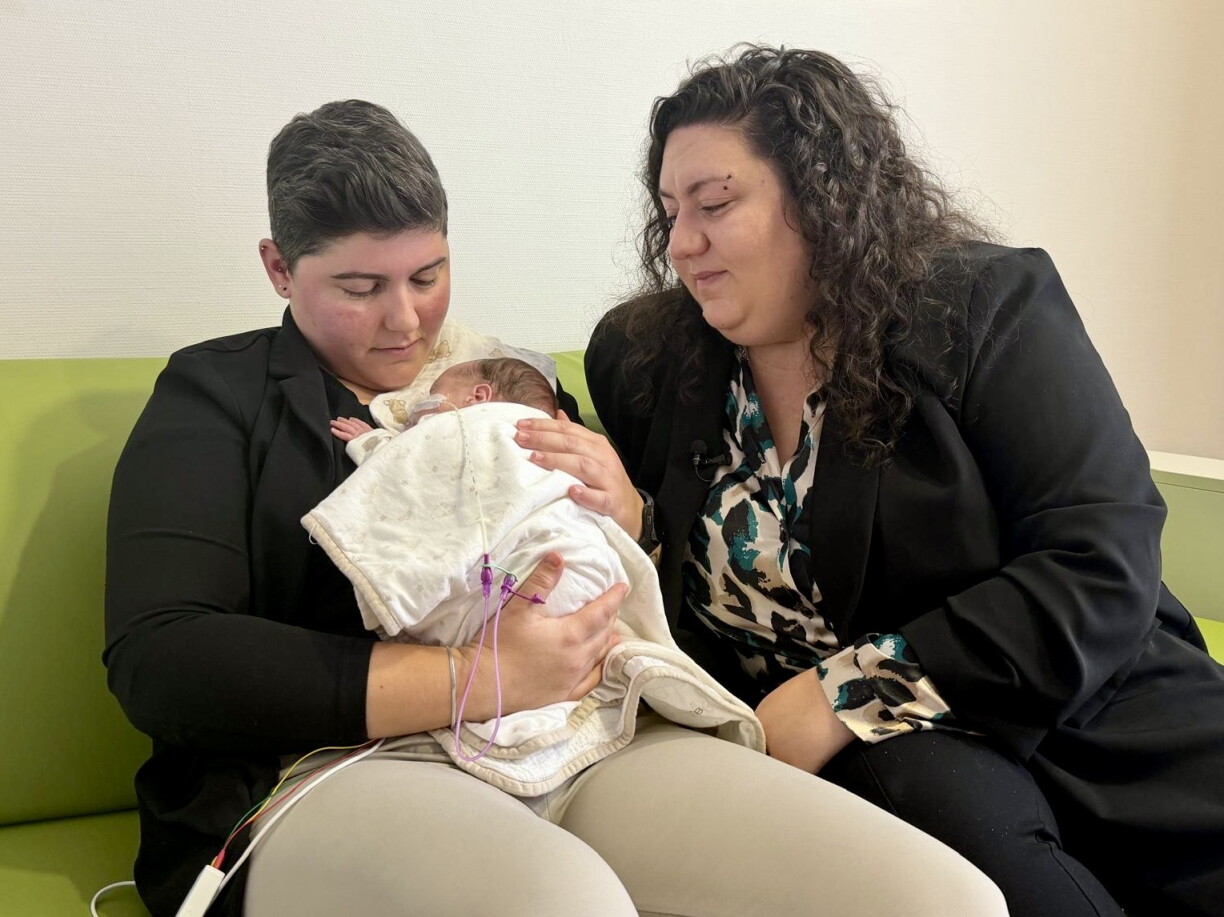
When little Mylan was born seven weeks ago, arriving in the 29th week of pregnancy, his mothers, Gabi Lucas and her wife, found themselves unprepared for the challenges that followed.
Since his birth, he has remained in hospital, highlighting how even families who feel well-informed can be caught off guard by the realities of premature birth.
In Luxembourg, the subject of prematurity is rarely discussed, and many parents experience the issue as a taboo. The new association 'Sou Kleng Sou Staark' ('So Small, So Strong' in Luxembourgish) has now been founded to address this silence and provide much-needed support for affected families.
The association is led by Stéphanie Thein, a neonatologist who regularly witnesses the emotional strain placed on parents after a premature delivery.
While medical care is generally good, many parents, especially mothers, struggle with feelings of guilt, even though premature birth is rarely something that could have been prevented.
'Sou Kleng Sou Staark' aims to ensure that parents do not have to face these difficult emotions alone.
After a premature birth in Luxembourg, mothers are generally allowed to remain with their baby in the maternity ward for about ten days. However, the baby may need to stay in hospital for a minimum of sixteen weeks.
This situation places a significant burden on parents, who often have to shuttle between their home and the hospital for weeks or even months, making an already stressful situation even more challenging. Thein points out that the emotional and logistical toll on families can be considerable.
The association’s mission is to advocate for better conditions so parents can spend more time with their babies. One of the main proposals is to create dedicated rooms either within the hospital or nearby, so families who live further away can stay close to their child during this critical period.
Maternity leave is another major concern for affected families. In Luxembourg, the leave period is limited to 20 weeks.
For premature births, any unused pre-birth weeks are added to the postnatal period. However, if a baby requires a long stay in neonatal care, the leave can expire before the child is ready to go home, leaving parents in a difficult position.
The association is therefore calling for a public discussion on more flexible and appropriate leave arrangements for families whose babies require extended hospital care.
A key aspect of 'Sou Kleng Sou Staark' is to foster peer support among parents who have gone through similar experiences.
Many find it difficult to talk about the challenges of premature birth with others who have not experienced it themselves.
The association believes that creating specific spaces or settings for such exchanges would help parents feel more comfortable and less alone.
The association's support continues after the baby is discharged from hospital. Parents often remain anxious at home, sometimes limiting social contacts or daily activities out of concern for infections, which are precautions that may be less common in other young families.
The association also aims to increase public understanding of the special needs of prematurely born children and their families.
The association’s support is not limited to families of premature babies. Parents of full-term newborns who are seriously ill, or families with older children requiring intensive care, can also find help through the organisation.
The goal is to show that families facing these challenges are not alone, and that others have successfully navigated similar journeys.
Further information is available at www.soukleng.lu.


