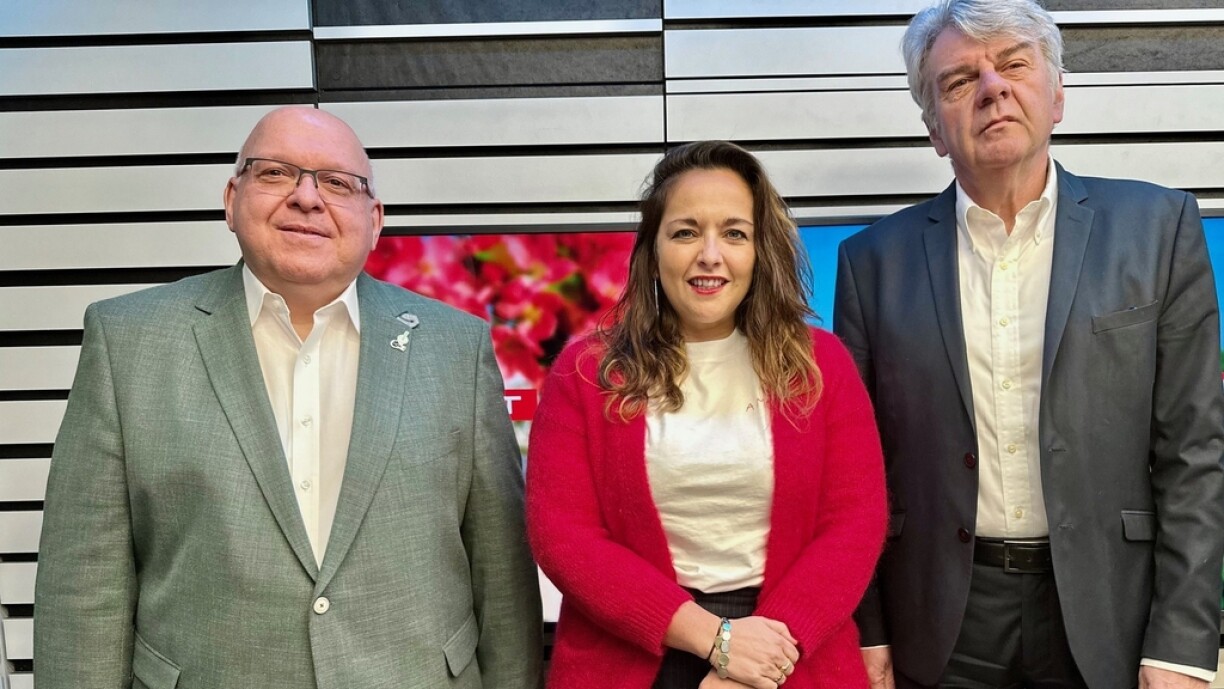
With the new government's policies yet to materialise in several sectors, the consensus among Luxembourg's three major trade unions remains cautious. Nora Back, President of the Independent Luxembourg Trade Union Confederation (OGBL), Patrick Dury, President of the Luxembourg Confederation of Christian Trade Unions (LCGB), and Romain Wolff, President of the General Confederation of the Civil Service (CGFP), shared insights during a roundtable discussion hosted by our colleagues from RTL Radio.
Dury expressed disappointment with the lack of progress on housing policies, particularly in addressing affordable housing. He criticised the government's focus on investors, noting the absence of sustainable solutions for the housing market.
According to Wolff, it would have been "dishonest beyond compare" not to talk about pensions before the elections only to then announce a complete overhaul of the pension system.
Nora Back pushed back against criticism that trade unions are "too stubborn" or cling to past achievements regardless of the arguments against them, stating that this criticism typically comes from those seeking to weaken trade unions. She also rejected the claim that the wage indexation system adversely affects the economy.
Dury agreed and highlighted the frequent strikes for better wages and working conditions in other countries. The LCGB President attributed the absence of regular strikes in Luxembourg to the wage indexation system and the Grand Duchy's social model.
All three union representatives also agreed on the topic of pensions. "We will not tolerate any degradation of our pension system," asserted Nora Back, expressing scepticism towards the accuracy of long-term forecasts for the current system, citing past inaccuracies.
While the CGFP remains open to dialogue, Romain Wolff emphasised their staunch opposition to the privatisation of the pension system.
Discussions surrounding pension reform are not new, noted Patrick Dury, who, like Back, advocates against a shift towards private pension schemes.
Above all, however, the trade unions would have liked the government to have sought dialogue with them in the first place.
Patrick Dury addressed the growing influence of independent lists, which have gained traction in recent social elections. He identified non-union members as the primary competitors to trade unions. Despite this, Nora Back highlighted the robust representation of trade unions, particularly in larger companies, where they remain stronger than their non-union counterparts.
The union representatives also condemned what they deemed an "impertinent" press release by the Federation of Craftspeople, which "attempted to argue that no one needs trade unions." Such assertions, they stressed, are "of course not true."
Patrick Dury reflected on the longstanding issue of absenteeism, a concern that has been with him ever since he first became an active trade unionist. He emphasised that prolonged absences are typically attributed to serious illnesses, dismissing the idea of a "qualifying day," which would entail workers not being paid for the first day they stay at home because they are ill, as "harassment" towards sick people.
Minister of Finance Gilles Roth's recent announcement of reduced civil service hiring prompted a response from Romain Wolff, who challenged the decision. Dury cautioned against widening salary discrepancies between the private and public sectors, underscoring the importance of maintaining balance. He warned against fostering social envy, asserting that achievements made by the CGFP should not be undermined.
In Dury's eyes, however, the gap could only be narrowed if all Luxembourg residents were granted voting rights in legislative elections.




