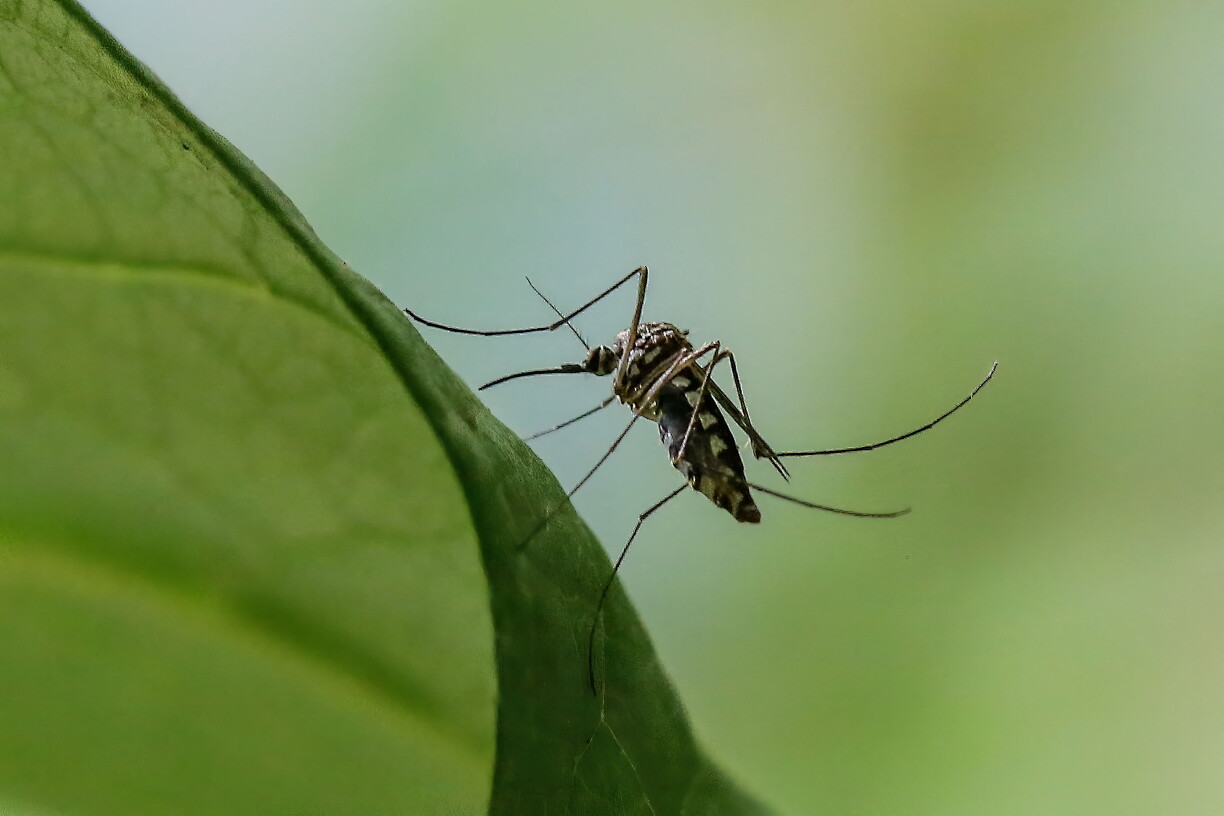
Tiger mosquitoes are becoming increasingly present in Luxembourg, prompting health authorities to expand monitoring efforts aimed at detecting invasive species capable of transmitting diseases such as dengue fever, Zika, chikungunya, and the West Nile virus.
While no tiger mosquito in Luxembourg has yet been found to have transmitted disease to humans, officials say the insects are already present in the country and are expected to spread further as climate conditions become more favourable.
"We are already finding the Asian tiger mosquito regularly at two or three locations in the country. We can expect it to continue spreading", explains biologist Alexander Weigand from the National Museum of Natural History.
The Health Directorate's sanitary inspection service currently operates a network of traps at locations where mosquitoes could be introduced through international travel and trade, including Berchem, the Aire de Capellen service area, Findel airport, Bettembourg, Kockelscheuer, and the Bouillon Park and Ride.
Some traps use a substance that mimics human scent to attract adult mosquitoes, while others encourage females to lay eggs in containers of water. The traps are checked every two weeks, with inspectors examining around 50 collection tubes.
Although no tiger mosquito eggs had been detected in the traps by the end of May, officials say it might simply be too early in the season.
"We may still be a little early in the season for Luxembourg", observed Isabelle Karreck of the sanitary inspection service while examining samples.
Luxembourg is home to around 30 mosquito species, four of them invasive. According to experts, tiger mosquitoes can sometimes be mistaken for native species because of the black-and-white markings on their legs.
However, the distinctive striped pattern on the body is a key identifying feature.
The country's monitoring programme also includes genetic testing at the Luxembourg Institute of Science and Technology (LIST), allowing researchers to distinguish between four invasive mosquito species that may carry different viral diseases.
"We are looking for them as part of an early warning system, so we know when they arrive in Luxembourg", a LIST researcher noted in conversation with RTL.
Authorities have already begun applying targeted biocides against mosquito larvae in urban areas such as drains and sewers, although treatments are not used in rural environments.
Health officials are also urging residents to eliminate standing water around their homes. Rain barrels, flower pots, and children's toys can all provide breeding sites for mosquitoes.
"Simply emptying containers is not enough because the eggs can remain stuck to surfaces", a health official warned. Residents are advised to scrub containers thoroughly to ensure all eggs are removed.
Members of the public can report suspected tiger mosquito sightings through the Mosquito Alert app, preferably with photographs attached, helping authorities track the spread of the invasive species and respond if further control measures become necessary.





