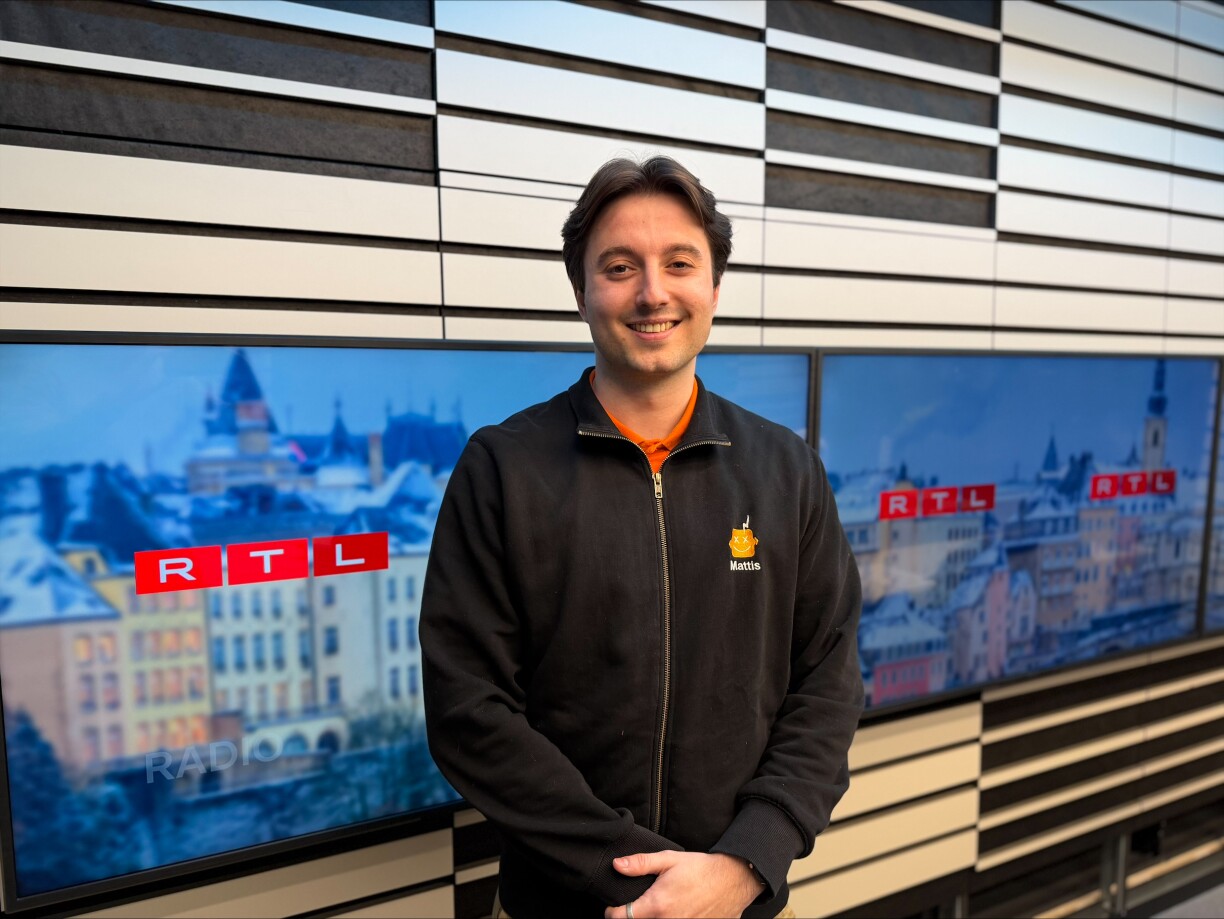
Elected on Friday at the Association of Luxembourg Student Unions' (ACEL) general assembly, Mattis Noël clarified that although the union has been involved in numerous political dossiers over the past year, its committee members continue to remain politically neutral and hold no party membership.
The conversation then shifted to the Student Fair. Noël revisited the criticism surrounding the current format of the Student Fair.
He stated that the Belval campus had been chosen as a temporary solution during the pandemic, but that the ACEL considers it ill-suited as a long-term venue because, in their view, it is too fragmented across different buildings, insufficiently central, and not well connected to public transport.
Three possible replacements are now being discussed in Kirchberg: the Convention Centre, the Coque, or, returning to tradition, the Luxexpo. Noël declined to indicate a preference, explaining that the ACEL will first draw up a structured list of pros and cons for each venue.
The Student Fair is also set for a conceptual overhaul. The ACEL supports turning it into a broader 'Fair for the Future', with discussions already underway with the Ministry for Higher Education, according to Noël. He said the association is pleased to be involved proactively in shaping the event, which in future should highlight not only university studies but also non-formal education opportunities and pathways into working life.
Regarding the pension reform, Noël argued that progress has been too limited so far, describing recent measures as short-term rather than structural.
He pointed out that most students are well aware they will need to work longer in future and largely accept that reality, but they regret having no seat at the table during the social dialogue of recent months, even though younger generations will be the most affected by tomorrow's pension system. The ACEL therefore hopes for stronger inclusion in upcoming political discussions, according to Noël.
He welcomed, however, the fact that the student representative was able to contribute directly to the preparatory work on the new student aid draft law. Interest rates for student loans will now be capped at 1.8% instead of 2%, the mobility grant will rise by 5%, and all financial support will in future be adjusted to the index each trimester.
According to Noël, these measures provide real relief for students, particularly at a time when the cost of living has risen sharply in many European cities.
The ACEL represents 20 student circles, including the one for students from the University of Luxembourg. For next year, Noël identified the housing and transport situation as a priority.
An online survey on these issues is still open, and he said a large number of students, both in Luxembourg and abroad, have already taken part. The results will be finalised shortly and presented to the Minister for Higher Education Stéphanie Obertin at their first meeting in late January, according to Noël.
Noël admitted that the ACEL has not yet explored the issue of artificial intelligence in depth: for example, how students use such tools during their studies. He noted that some students have reportedly switched course programmes pre-emptively out of fear AI could transform their intended profession. He concluded that the ACEL may well take up the subject in the future.





