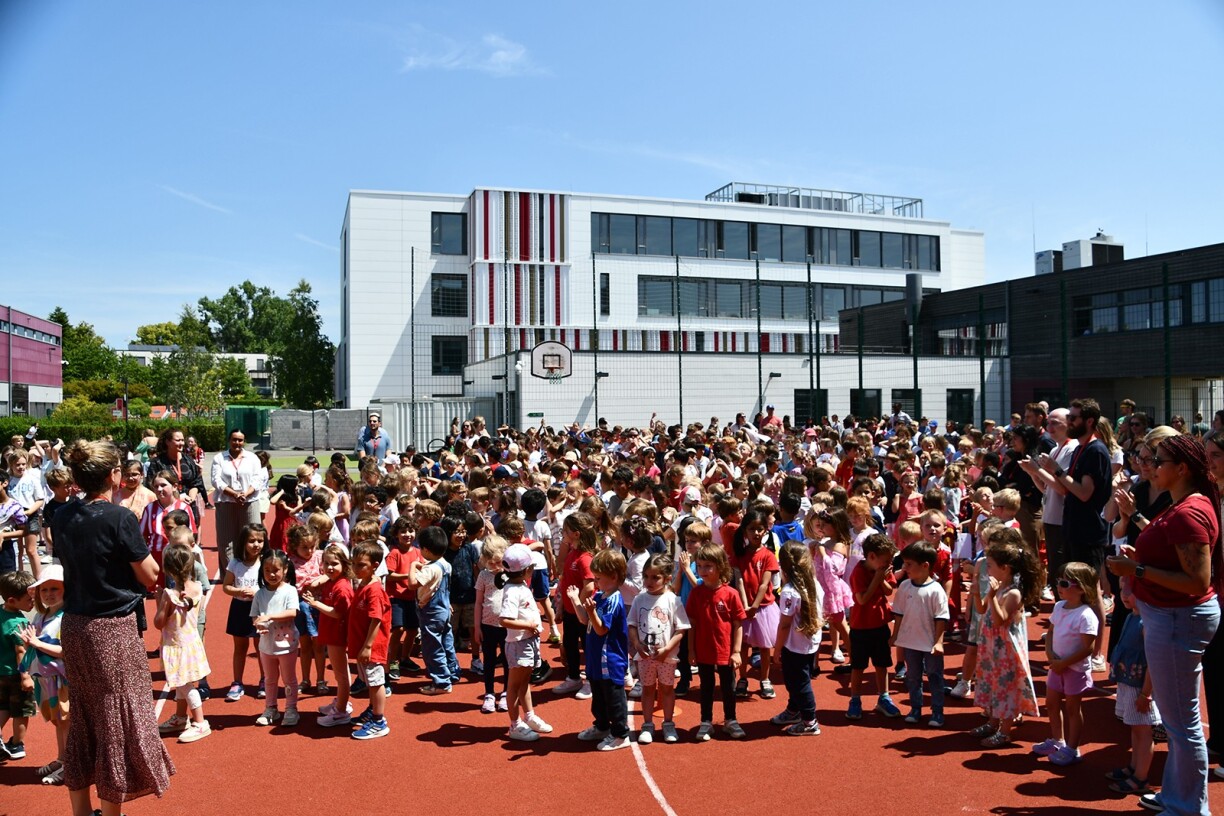
As part of its commitment to a more ethical and sustainable future, the school has pledged to source Fairtrade-certified products across its campus. This includes the 30,000 cups of coffee served annually, as well as bananas, sugar, chocolate, and all sports balls purchased for the newly built gymnasium. Students will also play a role, using exclusively fairtrade ingredients in all school bake sales.
The certification follows a student-led campaign that engaged the broader school community in adopting fairer practices. “The journey began when Year 5 students took part in workshops organised by Fairtrade Luxembourg”, explained Anne-Marie McHugh, St George’s Sustainability Coordinator.
“Inspired by what they learned, the students launched a petition calling for the school to adopt Fairtrade principles. Their enthusiasm quickly spread and they were joined by the school’s Secondary Eco-Agents, who formed a Fairtrade School Committee. Together, students from both Primary and Secondary levels worked to implement meaningful changes across the school.”
To celebrate the signing of the Fairtrade School agreement, 350 students took part in a choreographed dance event during an official ceremony. The performance was part of the #DancingAgainstChildWork campaign, a collaboration between Fairtrade and Kinderarbeit Stoppen that aims to raise awareness about child labour. Students danced to the lively track “Dibby Dibby Sound” as a symbol of solidarity with children worldwide.
“Fairtrade means making sure that children are not forced to work”, one student explained. “Today, we are dancing against child labour. We are protesting with children around the world. All children should have fun, play outside and get educated fairly.”
Jean-Louis Zeien, President of Fairtrade Luxembourg, also addressed the ceremony, highlighting the impact of everyday consumer choices. “A bar of chocolate can be infinitely more than just a bar of chocolate. It can be your contribution against child labour”, he said. “Each of us can do our bit to reduce child labour. Children should work in school, not in the cocoa field."
“Keep your eyes open in the supermarket, not just on World Day Against Child Labour, but every day. Look for the Fairtrade label. With the Fairtrade premium that is in the chocolate, we provide local schooling. Fairtrade prohibits child labour and the cooperatives in Africa are committed to ensuring that the children of cocoa farmers receive an education. This is an investment in the future and St George’s International School will now also make its contribution as a certified Fairtrade School.”





