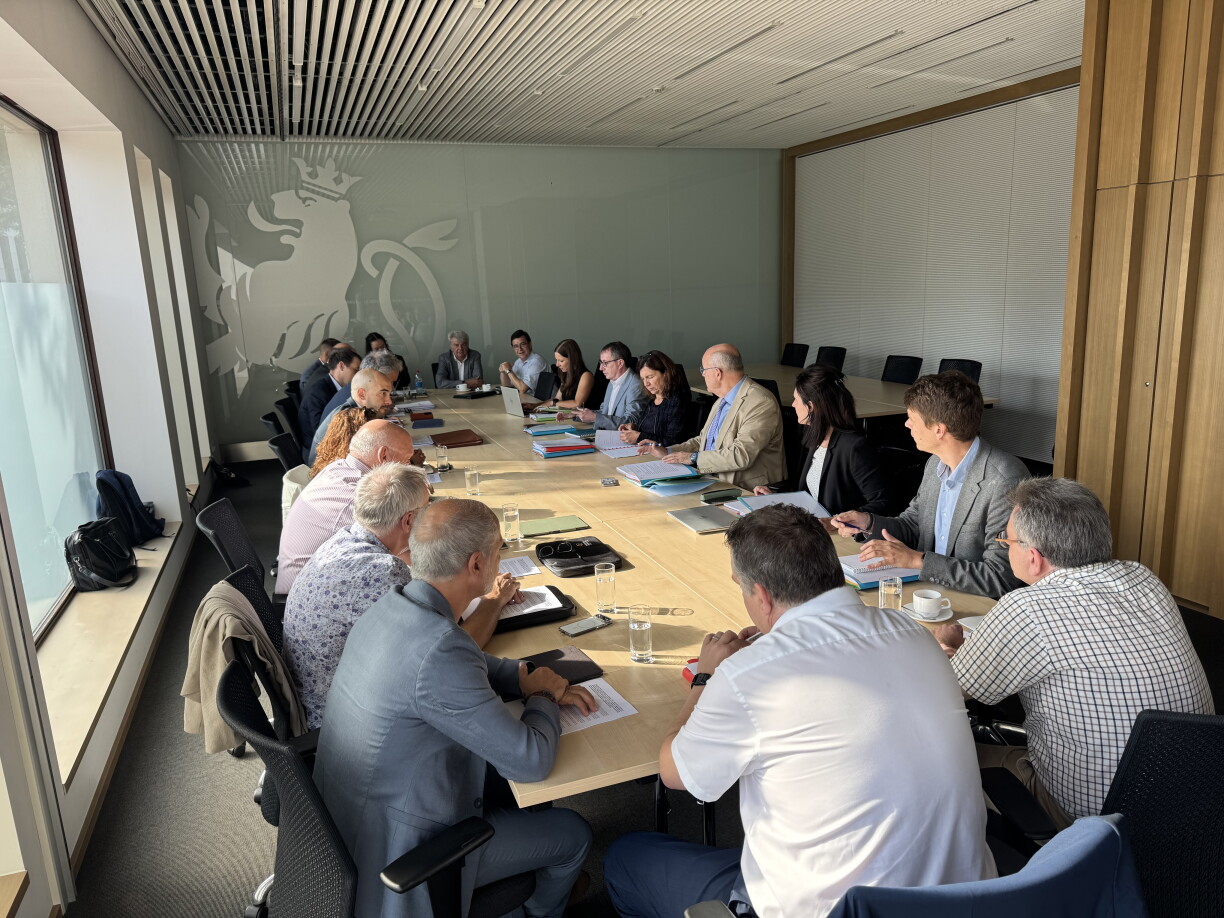
After months of tension in Luxembourg’s tripartite social dialogue, a breakthrough was achieved on Wednesday morning as the Standing Committee on Employment convened to resolve a protracted dispute over collective bargaining.
The conflict had its roots in autumn 2024, when reforms to working time arrangements triggered a significant rift between trade unions and the government, eventually leading to a major demonstration in June and the resignation of Minister of Labour Georges Mischo six months later.
At the heart of the discussions was the implementation of the EU's minimum wage directive, which sets a target for at least 80% of employees to be covered by collective agreements, which is well above the current rate of 55% in Luxembourg.
Negotiators from the government, employers' associations, and trade unions confirmed to RTL that they have now agreed on a national action plan aimed at boosting the coverage of collective bargaining agreements.
The agreement comes just a week after a consultation debate in the Chamber of Deputies, where all parliamentary parties expressed support for regulating greater flexibility in working hours and employment models through collective agreements rather than through legislation.
This growing political consensus paved the way for Wednesday’s compromise among the social partners.
The Standing Committee on Labour and Employment (CPTE) is due to meet again after the summer recess, with the agenda set to include further discussions on platform work and equal pay between women and men, which are two issues that remain high priorities for Luxembourg's labour market reforms.





