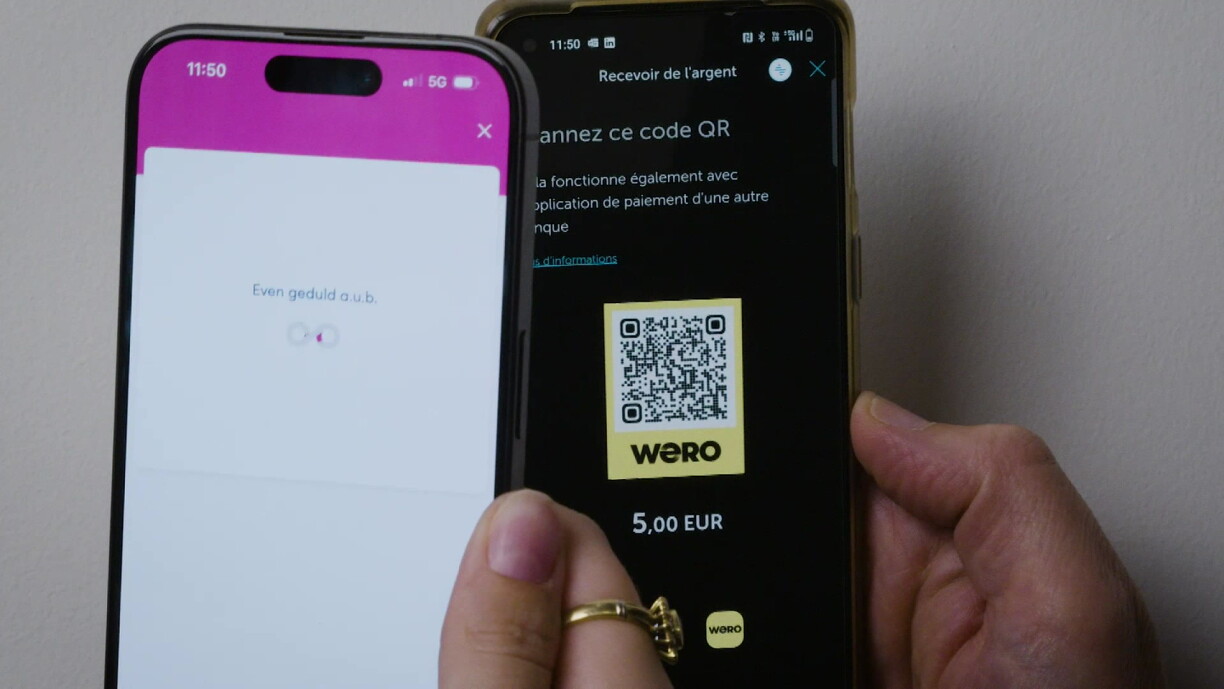
First it was Digicash, then Payconiq, and now Wero. The new digital payment system was due to launch in Luxembourg in July, but the date was pushed back to 1 September.
All the functionalities are due to be tested again, says Ralf Hamal, responsible for Luxembourg and Belgium at the European Payments Initiative, which developed the Wero payment system and electronic wallet.
"We wanted to ensure that all cases, from payments between friends, to payments in shops, bills for all the banks involved [...] would be tested extensively before launch."
From 1 September, customers of the participating banks – Spuerkeess, Raiffeisen, Post, BGL BNP Paribas and BIL – will be asked to download the Wero application and connect their bank account. In an initial phase, the two systems, Payconiq and Wero, will run in parallel.
Hamal explains: "All existing Payconiq features will be carried over to Wero, but Wero itself is much richer in features. Eventually we will also add features such as subscription payments, cash for delivery, or payment for order shipments."
The money is transferred directly from one account to another, as with Payconiq. Wero is currently already operating in France, Belgium and Germany – in addition to Luxembourg, the Netherlands will join this year and Austria next year. Discussions are also underway with other countries and interoperability with similar payment systems in southern and northern European countries is expected.
Luxembourg has always been innovative in payments, says ABBL's Ananda Kautz, and is therefore strategically interesting for Wero:
We're in the heart of Europe, so we also have a lot of cross-border transactions by nature, since millions of people cross our borders every day. And we, as residents, can also spend money in neighbouring countries and pay our colleagues. So, the goal of having a solution that works in neighbouring countries is very appealing.
In future, Wero will offer all services in Europe currently only offered by international companies such as Visa or Apple.
This is sovereignty, says Hamal: "There is nothing to explain except that currently with the geopolitics that are playing out today, it is becoming more and more important to have European solutions, and not only at the level of payments, we see this in defence, we see this in the broader economy, the need to really have European alternatives."
Kautz also highlights the importance of payment infrastructure for resilience, as the economy depends on it:
Having a European solution for everyday use makes a lot of sense. We already have a very robust European infrastructure, especially with instant payments. Therefore, having a solution, a payment method that is completely European, with European governance and local decision-making, is very helpful.
Wero will not replace cards and other payment systems, but operate as a digital wallet in addition to these.





