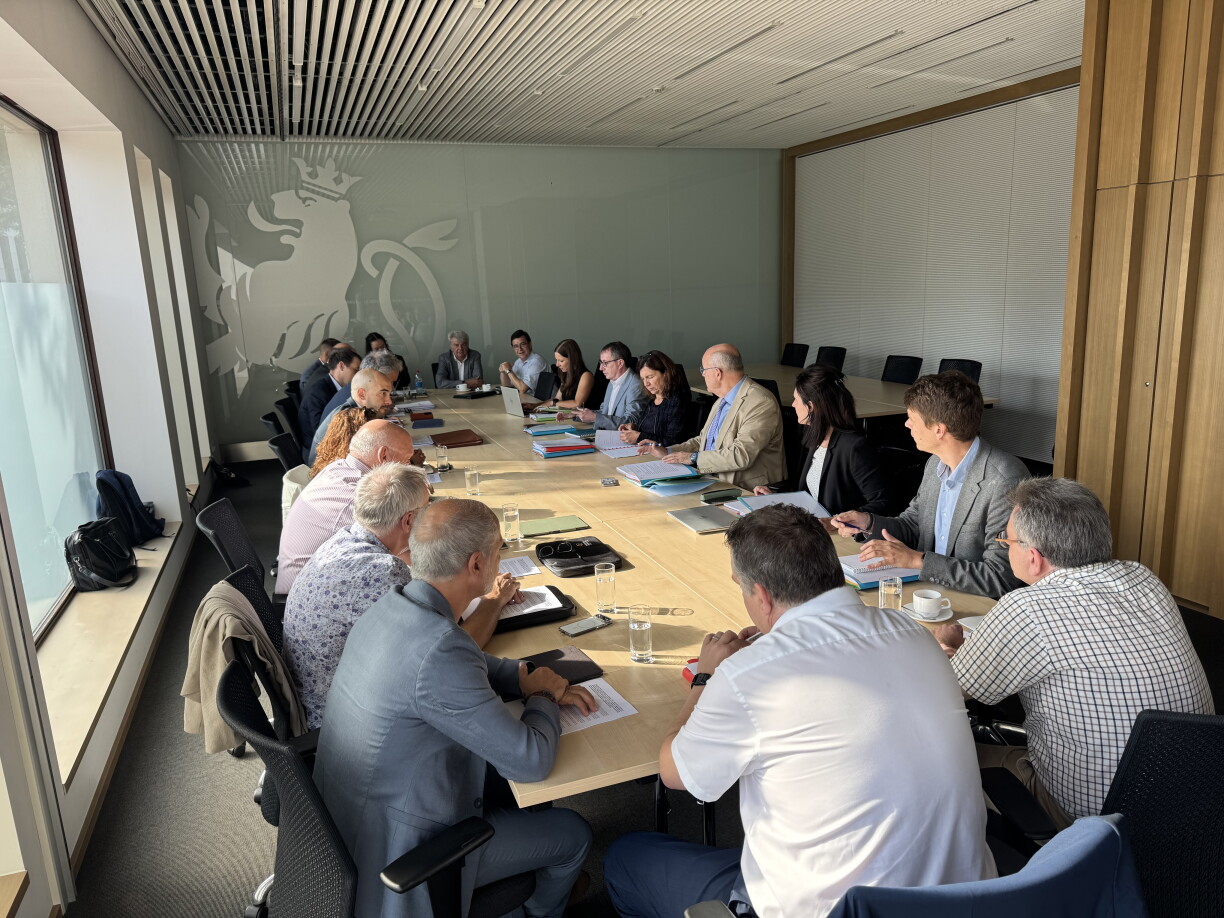
Social partners have expressed satisfaction after gathering for the first time in months in the Standing Committee of Labour and Employment (CPTE), describing the talks as "constructive".
Two years ago, the first scandal rocked the CPTE, and in autumn 2025, trade unions walked out of the committee altogether, accusing the government of seeking to reduce their role in collective bargaining. At Wednesday's meeting, however, tensions appeared to have largely dissipated.
Minister of Labour Marc Spautz also voiced satisfaction with the talks, stating that they continued "in the spirit of Senningen" – referring to the tripartite talks held in early June – and were "very constructive". During the meeting, the social partners discussed platform work, collective agreements, and wage justice.
According to Spautz, there are even signs of progress. On collective agreements, he noted that both unions and employers agree that an increase in such agreements could enhance wage transparency. Similar progress was achieved regarding a new legislative framework for platform work, he added.
On platform work, the social partners agreed that it represents a new labour model. Patrick Dury, president of the Luxembourg Confederation of Christian Trade Unions (LCGB), said they also concurred that platform workers should benefit from an employment framework and social security, rather than being subject to what he termed "a new modern form of slavery." The social partners are now working on the most appropriate legal wording.
Michel Reckinger, president of the Luxembourg Employers' Association (UEL), confirmed Spautz's assessment that the social partners agree on many points regarding collective agreements – for instance, that more are needed and that this would benefit wage justice. Reckinger noted that current labour laws are very strict and include numerous prohibitions, and that social partners agree many of these decisions should instead be taken within the framework of collective agreements.
Nora Back, president of the Independent Luxembourg Trade Union Confederation (OGBL), acknowledged that no concrete results have yet been achieved, but said the unions' concerns were heard. She stated that the unions remained in the meeting because all three parties debated respectfully. While no definitive draft bills exist yet, she confirmed the mood was positive.
The next CPTE meeting is scheduled for 15 July. Until then, work on the various texts will continue in individual task forces. On Wednesday, the social partners expressed confidence that concrete solutions would be available by the next meeting.





