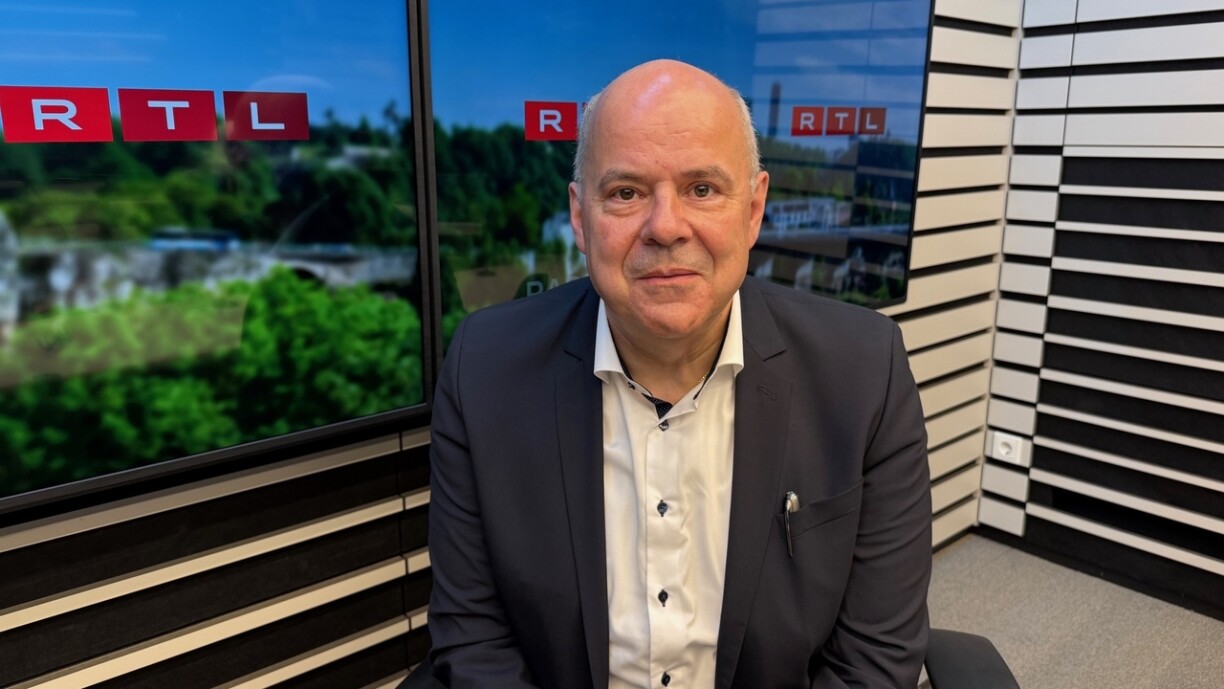
On Wednesday morning, our colleagues from RTL Radio discussed the latest Politmonitor poll results with Christian Social People's Party (CSV) parliamentary group leader Marc Spautz.
Spautz emphasised that polls represent snapshots of public sentiment, noting this survey was conducted after the State of the Nation Address and pension debates. The poll showed particularly low ratings for both the government and Prime Minister Luc Frieden.
"These results shouldn't be underrated, but also not overrated," Spautz cautioned.
The CSV leader attributed the poor ratings primarily to communication failures rather than policy substance. While acknowledging the government "messed up on one or two occasions," he reaffirmed Luxembourg's tradition of social dialogue as key to the country's success.
Spautz referenced Frieden's announced meeting with social partners on 9 July as a step toward rebuilding dialogue. "Whether it's formally called tripartite or not is irrelevant – citizens want to see social partners engaging again," he stated, adding that opinions on the approach may vary.
The poll revealed declining popularity and competence ratings for most politicians, which Spautz interpreted as symptomatic of eroding public trust. "This needs to be remedied," he stressed.
Responding to reported infighting within the CSV parliamentary group regarding Sunday work hour proposals, Marc Spautz dismissed the conflicts as overstated. "It's not as bad as it's made out to be," the CSV leader told RTL, emphasising that differing viewpoints are "normal" within a people's party.
The debate stems from Labour Minister Georges Mischo's draft bill to double permitted Sunday work hours from four to eight – a move the Council of State recently criticised as a "regression" of social rights.
While clarifying he doesn't oppose Sunday work in principle, Spautz endorsed the Council's assessment, stressing such changes should emerge from collective bargaining rather than legislation. "There's no need for Luxembourg to become like Paris or London," he said, pointing to German cities like Düsseldorf and Berlin where Sunday retail closures remain standard.
Spautz expressed scepticism about the proposal's current form surviving the Council of State's rebuke, noting such criticism "leaves no one unaffected." Both Prime Minister Luc Frieden and Minister Mischo have signalled a revisit of the issue, with Spautz anticipating further discussion at the parliamentary labour committee meeting on 2 July.
The CSV leader also addressed Economy Minister Lex Delles' parallel bill on retail hour liberalisation, acknowledging the need to address the Council's three formal objections. He stressed the importance of evaluating both proposals in tandem.
Spautz confirmed he will not join the trade union protest organised by the Independent Luxembourg Trade Union Confederation (OGBL) and the Luxembourg Confederation of Christian Trade Unions (LCGB) on 28 June, despite his well-known union sympathies. "I don't think the government is doing everything wrong," he stated, acknowledging disagreements on Sunday work hours while expressing overall confidence in the government's performance and its ability to restore social dialogue.
When questioned about potential union consolidation, Spautz defended Luxembourg's pluralistic labour representation system as fundamentally positive. However, he endorsed the OGBL-LCGB collaboration on core issues like collective bargaining and social dialogue, noting these fall squarely within unions' traditional mandate.





