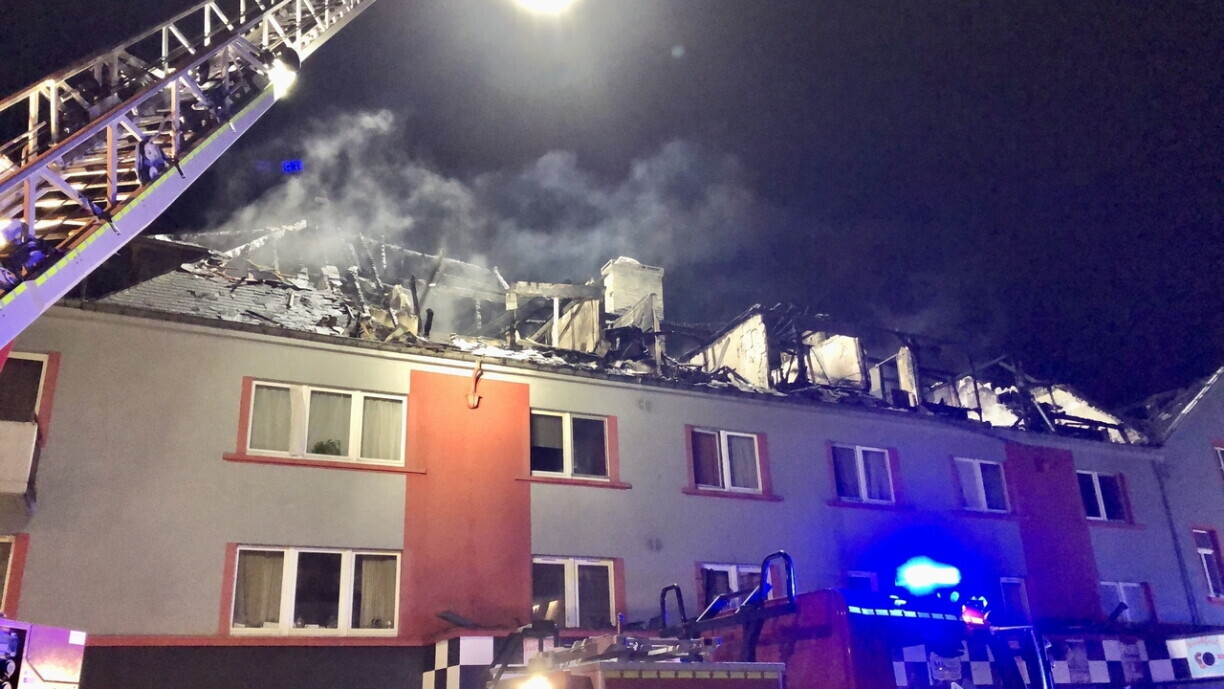
The defendant, whose history of arson stretches back as far as 2008, appeared in court on Monday afternoon to confess to his two most recent attacks and apologise to his victims. He insisted he had not acted with malicious intent and never wished anyone harm, telling the court he could not bear the thought of anyone being hurt.
His first known arson incident occurred in 2008, when he set fire to the cabin of a fire engine in Schifflange, the very station where he had volunteered as a firefighter since childhood. At the time, he said he was motivated by disappointment with a colleague in the fire brigade.
Following his earlier convictions for arson, for which he received a six-year prison sentence, the defendant fled to Paraguay. Although he was apprehended by police in Paraguay, he managed to evade justice through bribery. After a second brush with the law, he was expelled from Argentina and eventually extradited to Luxembourg.
After serving his prison sentence, the defendant struggled to rebuild his life, despite holding a master craftsman’s certificate as a carpenter. He began drinking at 16 and has battled severe alcoholism ever since.
Both the 2019 campsite fire and the 2023 hotel fire were committed while he was heavily intoxicated. According to a psychiatric expert, this level of intoxication led to a reduced capacity for self-control at the time of the offences.
Notably, the psychiatric evaluation concluded that the defendant is not a pyromaniac. As the expert explained, pyromania involves a compulsion to set fires for pleasure or gratification while sober, which was not the case here. Instead, the defendant set fires when frustrated or angry and described having lost the will to live at the time of his actions.
The presiding judge responded critically, stating that “there are other ways to express yourself than to set a hotel on fire with 23 people inside.”
In the days leading up to the hotel blaze, the defendant had completed a withdrawal programme and was due to begin longer-term therapy. However, his doctor failed to submit the necessary paperwork before going on holiday.
Around the same time, a romantic relationship and a joint social project collapsed, leaving him feeling worthless. He set fire to a plastic sheet in the hotel’s attic with a lighter, and within minutes the blaze had taken hold.
On both occasions, he tried to extinguish the fires but failed. At the campsite, two chalets were completely destroyed. The hotel was left uninhabitable, with neighbours losing their homes and belongings. Several victims have joined the trial as civil parties to seek compensation, though there is little hope the defendant will be able to pay damages.
One young woman, who had moved from Algeria for a research job, could not find new accommodation due to her short-term contract and eventually relocated to Thionville. However, she was unable to stay there as her residency permit was valid only in Luxembourg. Another resident had to use the money saved for her wedding deposit to secure a new flat, and did not complete the final year of her training.
A former neighbour spent three years living on the streets after the fire, telling the defendant in court that he had to wake up in the rain, all because the defendant was "playing with a lighter".
While none of the residents were physically injured in the fires, the damage to their lives and possessions was devastating.
The trial will continue on Thursday.


