Students are particularly burdened by exorbitant rental costs, which often include agency fees and a three-month deposit. These accumulative expenses can easily amount to thousands of euros, presenting a significant financial hurdle. While some students can manage these costs, securing accommodation remains an arduous challenge due to owners' preferences for tenants with stable employment contracts.
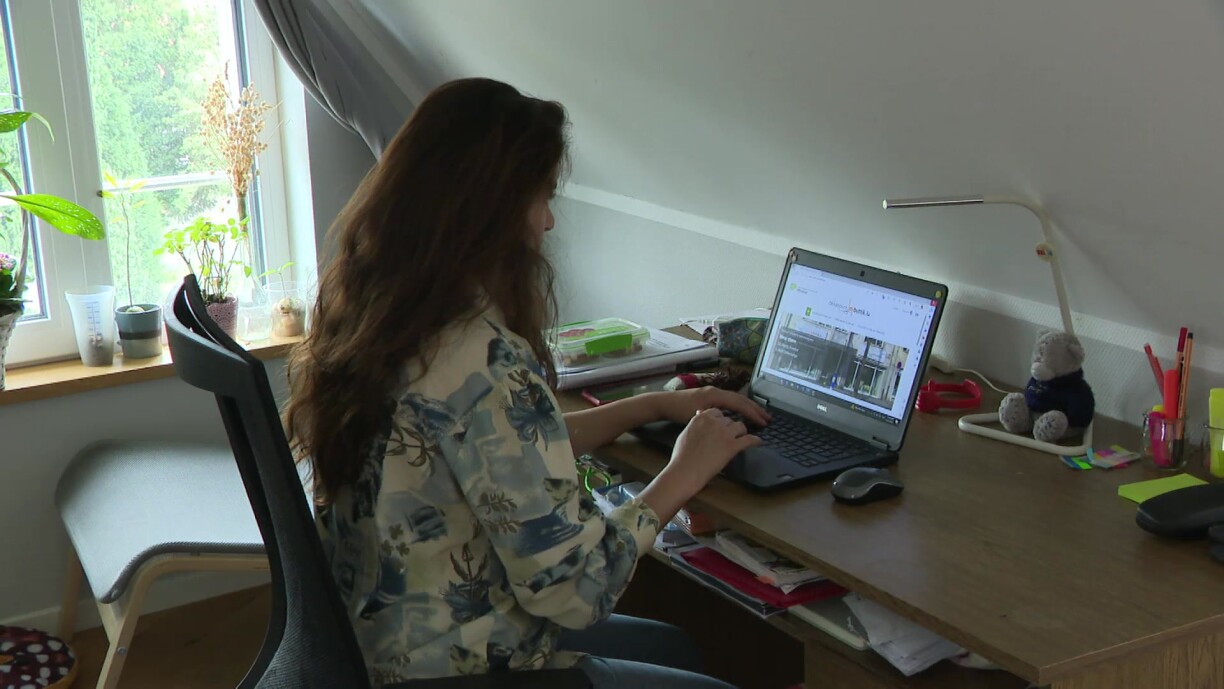
Fariba Emami's experience echoes this struggle. A student at the University of Luxembourg for two years, Emami recounts her ordeal of searching for suitable student housing. Her four-month quest for a place to live, alongside her boyfriend, left her without a residence of her own. Coping with the emotional toll of being far from family and her native language while living with a friend of hers was immensely difficult, she recounts.
The University of Luxembourg itself offers approximately 1,000 affordable flats for around 6,000 students. While the university's efforts are considered "average" on an international scale, the available housing stock still falls short of meeting the demand.
Max Bintener, president of the student delegation, notes that the problem persists, with a substantial number of students affected. He stresses that although some students manage to find housing solutions, a "four-digit figure" still struggles to secure accommodation.
When asked, the University of Luxembourg writes that the situation would be similar to last year, noting that "every day, flats are vacated and rented out again." It would be too early to give definitive figures regarding the waiting list. In addition, the university points out that projects are underway to increase the supply. In Esch-Belval, for example, around 100 student flats are to be added in 2027.
"That's nowhere near enough," according to the president of the student delegation. In the run-up to the elections, the delegation has presented its demands to the parties: Modern housing must be built, especially around Luxembourg City. Students from third countries should also be allowed to live across the border, if they want to. This way, they would have more options to find affordable housing.
Bintener also proposes that incentivising private landlords to rent to students could alleviate the crisis. Financial and fiscal incentives from the government might encourage landlords to accommodate students.
Fariba Emami was fortunate to secure a student room through the non-profit association Lisel, paying €600 per month for a spacious room shared with her boyfriend. The contract's duration is tied to the semester and can be extended upon proof of student status. Official registration at the provided address is possible, distinguishing such legitimate arrangements from the often-risky offers found on social media platforms.
Amid the challenges, there have been instances of fraud on social media platforms, capitalising on students' desperation. Emami highlights cases where ads promising accommodation turned out to be scams, cautioning against prepayment schemes that exploit students' need for housing. In her experience, such fraudulent tactics have led some students to lose substantial sums of money.
"They will tell you that they are not in Luxembourg right now. They'll say that you can't visit, but if you pay the deposit, they'll keep the room for you." According to Emami, an Iranian friend of hers fell for this trick and ended up transferring €700.
Full report by RTL Télé (in Luxembourgish)





