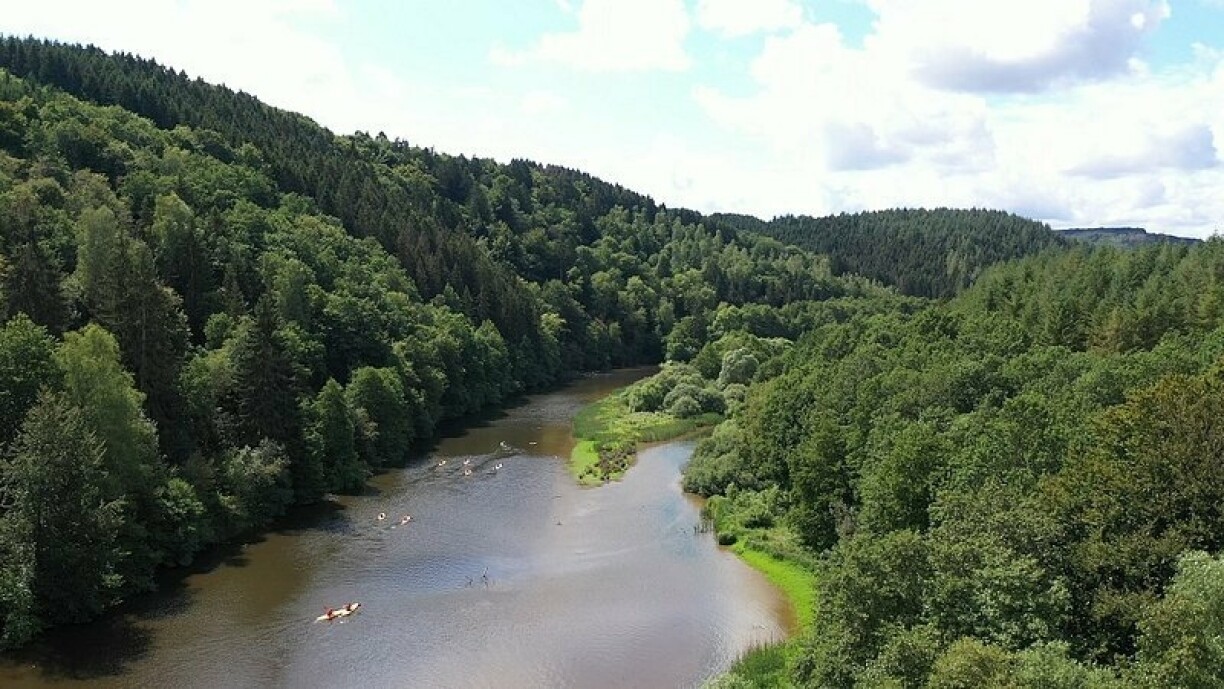
In a newspaper interview in February, the president of the Chamber of Agriculture, Guy Feyder, accused Dieschbourg of ignoring the issue of high phosphate levels in the Upper Sûre Lake.
In her response to Graas' parliamentary question on the issue, the Minister now rejected the accusations, stressing that her Ministry is taking the problem very seriously.
Dieschbourg explained that the creation and limitation of the water protection zones around the SEBES drinking water pool is based on an assessment by the German IWW institute.
This assessment names waste water as well as phosphate used in agricultural activities as possible sources of the contamination.
The Minister rejects the accusations by the Chamber of Agriculture, pointing out that the latter had hired its own expert from the Karlsruhe Institute of Technology (KIT), despite the adaptation of the Grand Ducal regulation on protection zones, only so that they could question the scientific basis of the first assessment.
Contrary to the statements made by Feyder, Dieschbourg continued, the Ministry of the Environment had in fact read this second assessment in detail. However, it had come to the conclusion that the uncertainties listed did not question the limits of the water protection zones in the municipalities around the Upper Sûre Lake, and thus no further changes to the legislative texts are necessary.
Dieschbourg also raises the question whether the Chamber of Agriculture deliberately wants to ignore other studies published by CEBEDEAU in Liège or the Centre for Technological Resources of the Environment, which also deal with the risks of water pollution in the Upper Sûre Lake and list the potential causes.
In addition, the Minister rejects Feyder's accusation that the treatment plants around the lake are in violation of the legal standards. All of the SIDEN plants comply with the legal standards and, Dieschbourg added, the majority of waste water would be diverted to the plant in Fond de Heiderscheid anyway in the near future.
According to the Minister, the causes for the high levels of phosphate are complex and cannot be attributed to one single polluter, which is also why Dieschbourg does not consider it helpful to stigmatise farmers and the fertilisation of meadows and fields.
Sediments caused by soil erosion also carry phosphate, the Minister pointed out. The Bridges and roads authority currently carried out tests at the Pont Misère and Bavigne locations to assess the possibility of removing these residues.





