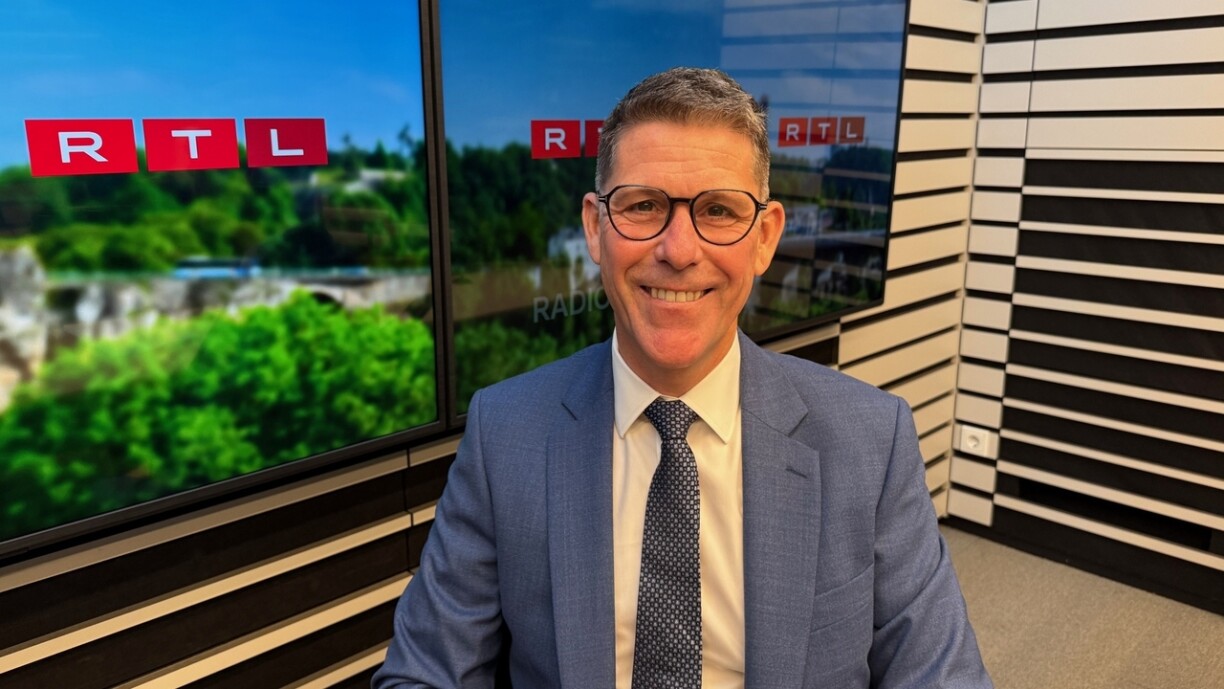
Marc Thewes, President of Luxembourg's Council of State, addressed the institution's functioning during an interview with our colleagues from RTL Radio on Tuesday morning, emphasising its non-political nature despite political nomination processes.
Thewes stated it is not customary for the Council President to revisit already-issued opinions. Regarding recent opinons on Sunday work and retail hour liberalisation, he noted that public commentary contributes to democratic discourse, with various stakeholders fulfilling their respective roles.
While acknowledging Council members are nominated by political parties and may hold party affiliations, Thewes stressed appointments primarily consider expertise. "The constitution mandates this structure to mirror the Chamber of Deputies' composition", he explained, adding that deliberations remain strictly non-partisan. The President emphasised members serve single terms.
Thewes clarified the Council of State's constitutional mandate, emphasising its advisory rather than decision-making function.
"The constitution requires our opinion on all legislation, but the Chamber of Deputies holds final authority", Thewes stated. He acknowledged the Council's recommendations may sometimes prove unpopular but stressed their importance in legislative scrutiny. The formal opposition mechanism allows the Council to flag critical legal concerns, particularly regarding constitutional compliance or EU law violations. In such cases, the Chamber must either amend texts or hold two votes spaced three months apart.
Thewes noted that many people are unaware that the constitution requires a draft law to be voted on twice within three months in the Chamber of Deputies unless the Council of State agrees with the text. According to Thewes, however, this almost never happens. Since the end of the Second World War, the Council of State has forced the Chamber of Deputies to hold a second vote a total of 65 times.
Thewes revealed the Council has issued 426 opinions in the past ten months, comprising 156 draft laws, 181 legislative amendments, and 69 grand ducal regulatory projects. On average, the Council requires five months to finalise opinions on draft laws, while amendments take 2.6 months and regulatory projects 3.7 months.
The president acknowledged exceptional cases may extend to 1-2 years due to legal complexities, pending external reports, or requested government revisions. He emphasised such delays reflect thorough procedural review rather than deliberate obstruction.
Thewes noted that published opinions routinely show reduced participation, with some members abstaining per 4-10 opinions due to declared conflicts. "The recusal happens at the earliest stages", he explained, adding that affected members are barred from all subsequent deliberations on the matter. The president acknowledged the system relies on member honesty but stated he has strengthened oversight during his tenure through more rigorous questioning.
Regarding the Lucien Lux affair, Thewes confirmed the Council had previously imposed sanctions under his predecessor. He clarified that judicial investigations remain active.





