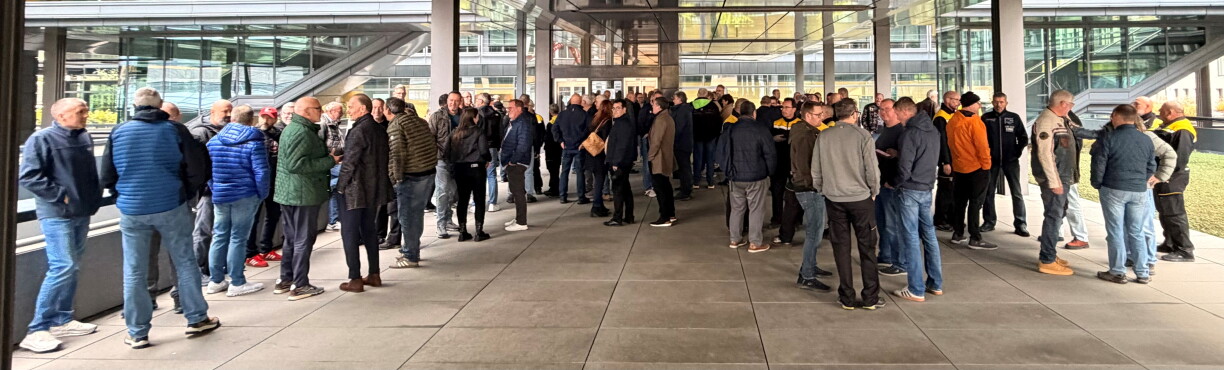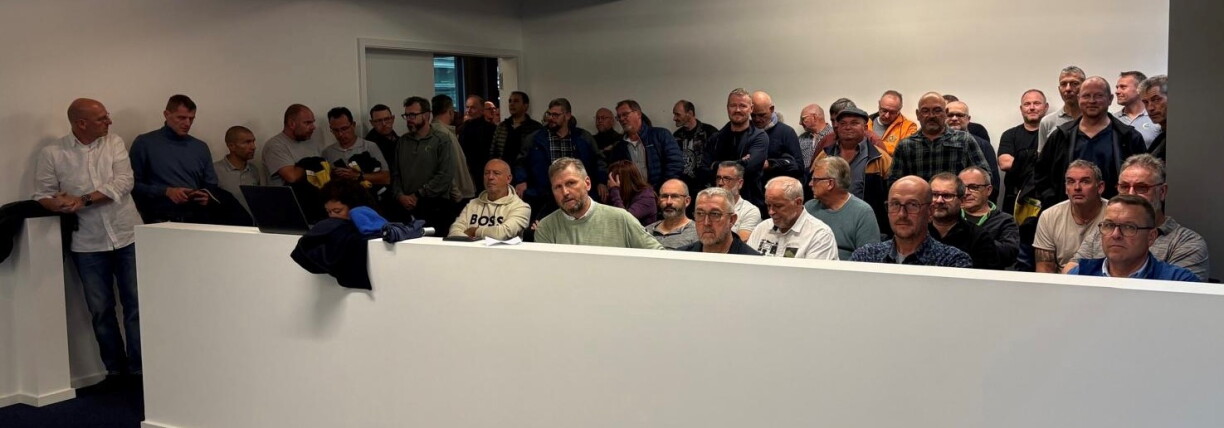
The courtroom was not large enough to accommodate everyone attending the hearing, with postal workers standing outside the door.
They have taken legal action over changes introduced during the 2015 public service reform, which saw them graded differently from other professional groups that had previously been in the same career category, their lawyer Marc Kohnen explained.
Before 2015, postal workers and prison officers had the same entry requirements, including the same educational qualifications, as well as identical career progression. The reform changed that arrangement, placing prison officers in grade D1 and postal workers in D2, he continued.
According to Raymond Juchem, president of the postal workers’ union, this results in a difference of around 70 points by the end of a career. At the current value of a salary point, that amounts to approximately €1,600 per month.
Postal workers have already raised what they consider to be discriminatory treatment with Public Service Minister Serge Wilmes. Two years ago, they reached an agreement to receive an additional 12 points.
There was therefore some surprise in the courtroom when the state’s representative argued that the postal workers’ legal challenge was inadmissible because they work for Post Luxembourg rather than directly for the state.
According to this argument, the workers had approached the wrong authority by taking their case to the public service minister.
Raymond Juchem said he was equally surprised by the claim that the minister was not responsible.
He pointed out that salary negotiations are not conducted by Post Luxembourg’s director general and that the union had negotiated its agreements with former Public Service Minister Marc Hansen, rather than with the minister responsible for the postal service, also stressing that postal workers are sworn civil servants.
Marc Kohnen was also taken aback by the state’s position, and argued that the minister’s agreement to grant postal workers the additional 12 points amounted to an acknowledgement that discriminatory treatment had occurred.
The state’s representative, meanwhile, described the postal workers’ legal claims as abusive, arguing that they were intended to put pressure on the authorities to secure political demands.
The public service minister is therefore seeking compensation from each postal worker involved, as well as from their lawyer, Marc Kohnen. The lawyer views the move as an attempt to intimidate his clients.
He argued that requesting €1,000 in procedural costs from each individual in a case involving a civil servant challenging a provision they consider discriminatory was highly unusual. In his view, the request could be intended to send a message discouraging others from pursuing similar legal action.
To reduce the workload of an already overstretched court, the parties agreed to treat the 27 cases heard on Tuesday as pilot cases. The court’s decision in these proceedings would also apply to the remaining cases.
Under the agreement reached on Tuesday, if either the postal workers or the public service minister is dissatisfied with the ruling and attempts to pursue one of the remaining cases separately, they will have to pay €2,000 in procedural costs.