
Here are five things you should know at the end of this week:


Luxembourg's Overshoot Day in 2024 was on 20 February, indicating a slight improvement from the previous year, but the country still remains one of the highest resource consumers in Europe.
Unwanted top spot – Luxembourg marked its Overshoot Day on 20 February 2024, a date that signifies when the country has used up all its natural resources allocated for the year. This represents a marginal improvement from 14 February in 2023, showing that while there is progress, it remains minimal.
Despite this slight advancement, Luxembourg continues to be one of the leading consumers of natural resources in Europe, a distinction that highlights the ongoing challenge of reducing its ecological footprint and moving towards more sustainable consumption patterns.
Contended methodology – The concept of Overshoot Day is utilised by the Global Footprint Network to illustrate the gap between a country's ecological footprint (the demand on nature) and its biological capacity (nature's ability to replenish). While the methodology provides a clear picture of consumption patterns and promotes global awareness, it has its critics.
Critics argue that the reliance on outdated United Nations data and the failure to promptly reflect changes such as increased use of renewable energy or the implementation of environmental policies can skew the results. Additionally, Luxembourg's unique situation, being a small country with a significant number of cross-border workers, further complicates the accuracy of these calculations.
Improving sustainability – The response to Luxembourg's ecological overshoot encompasses a series of recommendations aimed at reducing individual and collective environmental impacts. Authorities and environmental organisations suggest eating less meat and more seasonal fruits and vegetables, promoting the use of second-hand and repairable items, and increasing the reliance on public transportation. These measures are part of a broader call for a cultural shift towards sustainability, emphasising the need for significant investment in energy transition projects, especially given Luxembourg's current economic prosperity.
However, the efforts made locally, such as the adoption of solar energy, the introduction of a carbon tax, and the provision of free public transport, may not be fully captured by the Overshoot Day calculation, leading to a call for a more nuanced approach that better reflects the country's actual environmental progress.

A family reunification application from Gaza to Luxembourg has been rejected due to unmet requirements, amid concerns over the dire humanitarian conditions in Gaza.
Luxembourg's family reunification rules are restrictive, with eligibility mainly for partners and children, though exceptions exist for refugee minors and certain other cases.
The Ministry of Foreign Affairs is coordinating with the EU on potential evacuations from Gaza but options are limited, highlighting the difficulties for Palestinians seeking refuge.
Application denied – The Luxembourg government has rejected a family reunification application from individuals in the Gaza Strip attempting to join family members here in the Grand Duchy. The rejection of the application shows the challenges faced by individuals from conflict zones in navigating the bureaucratic and regulatory frameworks of foreign countries, in this case, Luxembourg. The situation has sparked concern among the Palestinian community in Luxembourg, particularly given the dire circumstances their relatives are enduring in Gaza.
Tough criteria – Luxembourg's regulations regarding family reunification are stringent, primarily designed to facilitate the joining of immediate family members such as spouses and children. There are provisions for exceptions, such as for refugee minors seeking to reunite with parents and for individuals who have resided in Luxembourg for over a year without family support.
However, these rules still limit the ability of many from third countries, like those from Gaza, to bring their relatives to Luxembourg. The framework aims to balance national security and social integration concerns with humanitarian considerations, but in practice, it can prevent families from reuniting due to stringent criteria that many applicants struggle to meet.
Bureaucratic hurdles – The Luxembourg Ministry of Foreign Affairs acknowledges the severe conditions in the Gaza Strip and is engaged in efforts to aid those with family ties in the region. However, the process of evacuating individuals from Gaza to Luxembourg, particularly for those without dual nationality, is fraught with logistical and bureaucratic hurdles.
Coordination with other European Union countries is ongoing, but the actual options for evacuation are limited. This situation highlights the broader challenges faced by refugees and those seeking asylum, especially from regions in crisis, as they navigate international laws and processes that can often be restrictive and complex.
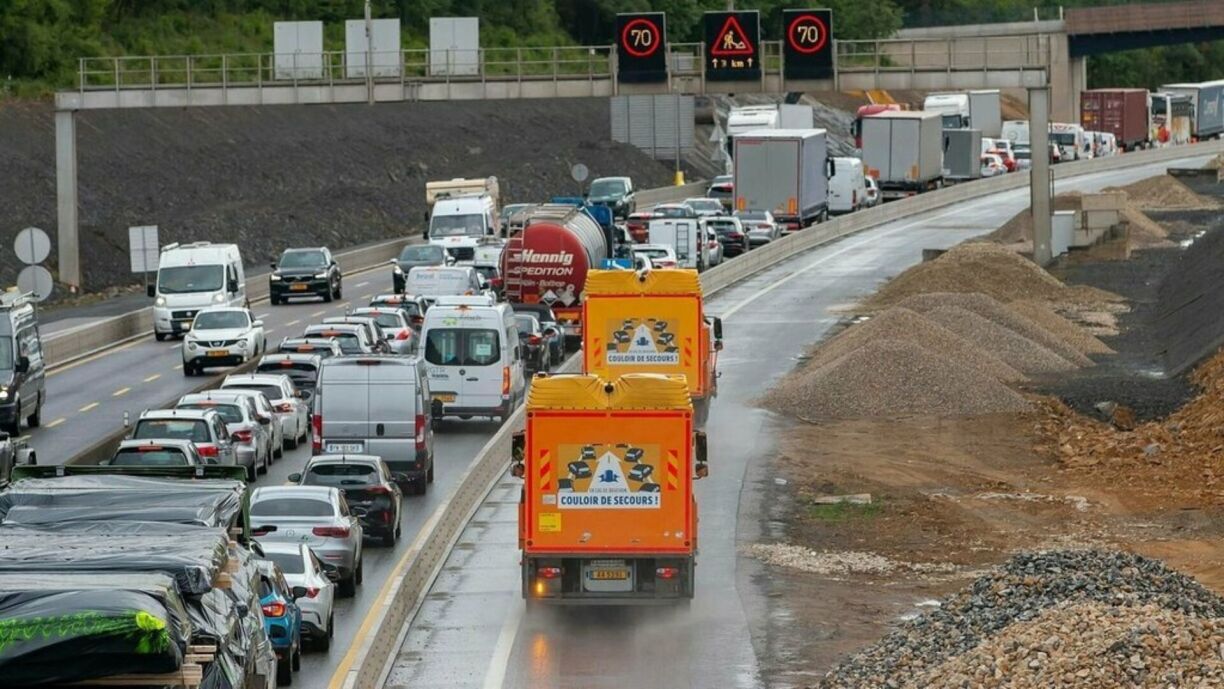
The A3 motorway in Luxembourg is undergoing expansion to three lanes in each direction over 12 kilometres to alleviate congestion and improve cross-border traffic flow by the end of 2030.
Concerns about the A31bis toll impact and cross-border traffic are being addressed, with Luxembourg not participating in the toll decision but focusing on their own infrastructure improvements.
Both Luxembourg and France are investing in major transport infrastructure projects, including the Metz - Thionville - Luxembourg railway line, with a significant financial contribution from Luxembourg.
Alleviating congestion – The expansion of the A3 motorway in Luxembourg is a strategic project aiming to enhance the capacity and efficiency of the crucial transport link between Luxembourg and France. The motorway, which is a vital route for nearly 90,000 French cross-border workers and residents, has been facing significant congestion issues, especially during peak hours.
By expanding the motorway to three lanes in each direction along its entire 12-kilometre length, the project aims to alleviate traffic bottlenecks, enhance safety, and improve the overall flow of vehicles. The expansion is expected to be completed by the end of 2030.
French toll – Regarding the A31bis, there are concerns about the impact of the proposed toll system, which could cost motorists up to €170 per month. Luxembourg's Minister of Mobility and Public Works, Yuriko Backes, indicated that while Luxembourg has not been involved in the decision to implement the toll on the French side, it is focusing on its own infrastructure improvements.
Cross-border cooperation – Both Luxembourg and France are demonstrating a strong commitment to improving transport infrastructure, which is crucial for the economic and social integration of the region. The two countries have agreed to significantly upgrade the Metz - Thionville - Luxembourg-City railway line by 2030, aiming to enhance the public transport link between the countries.

The United States vetoed a UN Security Council resolution calling for an immediate ceasefire in Gaza, leading to criticism from both allies and adversaries, as the resolution aimed to halt civilian casualties and address the humanitarian crisis.
The vetoed resolution demanded an immediate humanitarian ceasefire and the release of hostages taken by Hamas, while the US presented an alternative draft focusing on a temporary ceasefire contingent on the release of all hostages.
The US veto has drawn criticism for potentially enabling further Israeli military actions in Gaza amid a backdrop of escalating violence and significant civilian deaths.
Veto criticised – The United States faced significant backlash after vetoing a United Nations Security Council resolution that sought an immediate ceasefire in the Gaza Strip. The vetoed resolution, which has been developed by Algeria over the course of three weeks, was aimed at stopping the ongoing violence and addressing the dire humanitarian situation in Gaza.
Critics, including representatives from countries typically allied with the US, condemned the veto as reckless and dangerous, arguing that it undermines efforts to alleviate the suffering of Palestinian civilians and could further destabilise the region.
Alternative resolution – In the face of escalating violence in Gaza, the vetoed UN resolution called for an "immediate humanitarian ceasefire" and the release of all hostages held by Hamas following an attack on 7 October. This resolution was aimed at providing immediate relief to civilians and facilitating a humanitarian response to the crisis.
However, the United States, while circulating its own draft resolution, objected to the immediate enforcement of a ceasefire, arguing that it could jeopardise sensitive negotiations, particularly those concerning the release of hostages.
The US proposed an alternative that endorsed a "temporary ceasefire in Gaza as soon as practicable", contingent upon the release of hostages, reflecting a more conditional approach to halting the violence compared to the immediate ceasefire demanded by the vetoed resolution.
Protecting civilian lives – The US veto is perceived by many as a green light for Israel to continue its military operations in Gaza, with significant criticism pointing to the high number of civilian casualties and the worsening humanitarian situation. This situation has strained relationships with international allies and raised questions about the US' commitment to resolving the conflict in a manner that protects civilian lives and leads to a sustainable peace.

The uncrewed commercial robot Odysseus, built by Intuitive Machines and funded by NASA, successfully landed near the lunar south pole, marking the first American lunar landing since the Apollo era.
The mission faced technical challenges, including a failed onboard navigation system, but achieved landing using an experimental laser guidance system, and aims to pave the way for future astronaut missions as part of NASA's Artemis programme.
Odysseus carries six NASA science instruments and private payloads, and represents a new phase of lunar exploration involving commercial entities under NASA's Commercial Lunar Payload Services initiative.
Lunar south pole – The successful landing of the Odysseus lander near the lunar south pole marks a significant milestone in American space exploration, being the first such event since the Apollo era over half a century ago. Built by Houston-based Intuitive Machines and funded by NASA, this mission is part of a broader strategy to return humans to the Moon and establish a sustainable presence there. The landing site near the lunar south pole is of particular interest due to its unique environmental conditions and potential resources, such as water and ice, which could be crucial for future lunar bases and deep space missions.
Adaptation – The mission encountered significant technical challenges, notably the failure of its onboard navigation system during the final descent. However, the situation was salvaged by switching to an experimental laser guidance system developed by NASA, intended only as a technology demonstration.
This switch highlights the unpredictable nature of space exploration and the importance of having backup systems and innovative solutions. Despite these challenges, the successful landing of Odysseus serves as a critical step in preparing for the eventual return of humans to the lunar surface, specifically under NASA's Artemis programme, which aims for a manned mission to the lunar south pole by no earlier than 2026.
Lunar economy – The Odysseus mission carries both scientific and commercial payloads, including six NASA science instruments designed to study various aspects of the lunar environment, such as the effects of spaceship engine plumes on the lunar surface and the behaviour of charged dust particles.
Additionally, the mission supports private sector involvement in lunar exploration by carrying payloads for Intuitive Machines' private clients, including artistic contributions like the stainless steel mini Moons by Jeff Koons.
This mission is part of NASA's Commercial Lunar Payload Services (CLPS) initiative, which aims to outsource cargo delivery to the Moon to private companies, thereby reducing costs and fostering a commercial lunar economy.
Business & Tech – 2024 will be a year of change for the world's biggest tech companies as they bow to EU rules that come into force next month, shaking up how Europeans use vastly popular platforms from Google to Instagram.
Science & Environment – Elon Musk says the first human patient with a brain implant from his Neuralink startup is able to move a computer mouse with thought.https://today.rtl.lu/news/world/a/2066108.html
Entertainment – "Oppenheimer", Christopher Nolan's epic movie about the creation of the atomic bomb, swept the board at Sunday's BAFTA film awards in London, delivering a serious statement ahead of next month's Oscars.
Stormy weather – Luxembourg faced a tumultuous Thursday evening as powerful winds, nearing speeds of 100 km/h, battered the nation, resulting in two injuries and extensive property damage.
Verdict announced – A man who was formerly on Europe's "most wanted" list was sentenced on Thursday following a violent assault in Remich over three years ago.https://today.rtl.lu/news/world/a/2066108.html
Military alliance – Luxembourg and Belgium have taken a significant stride towards strengthening their military cooperation, paving the way for the establishment of a joint battalion comprising 700 soldiers.

Your Weekly Recap is published every Friday at noon. Read earlier versions.





