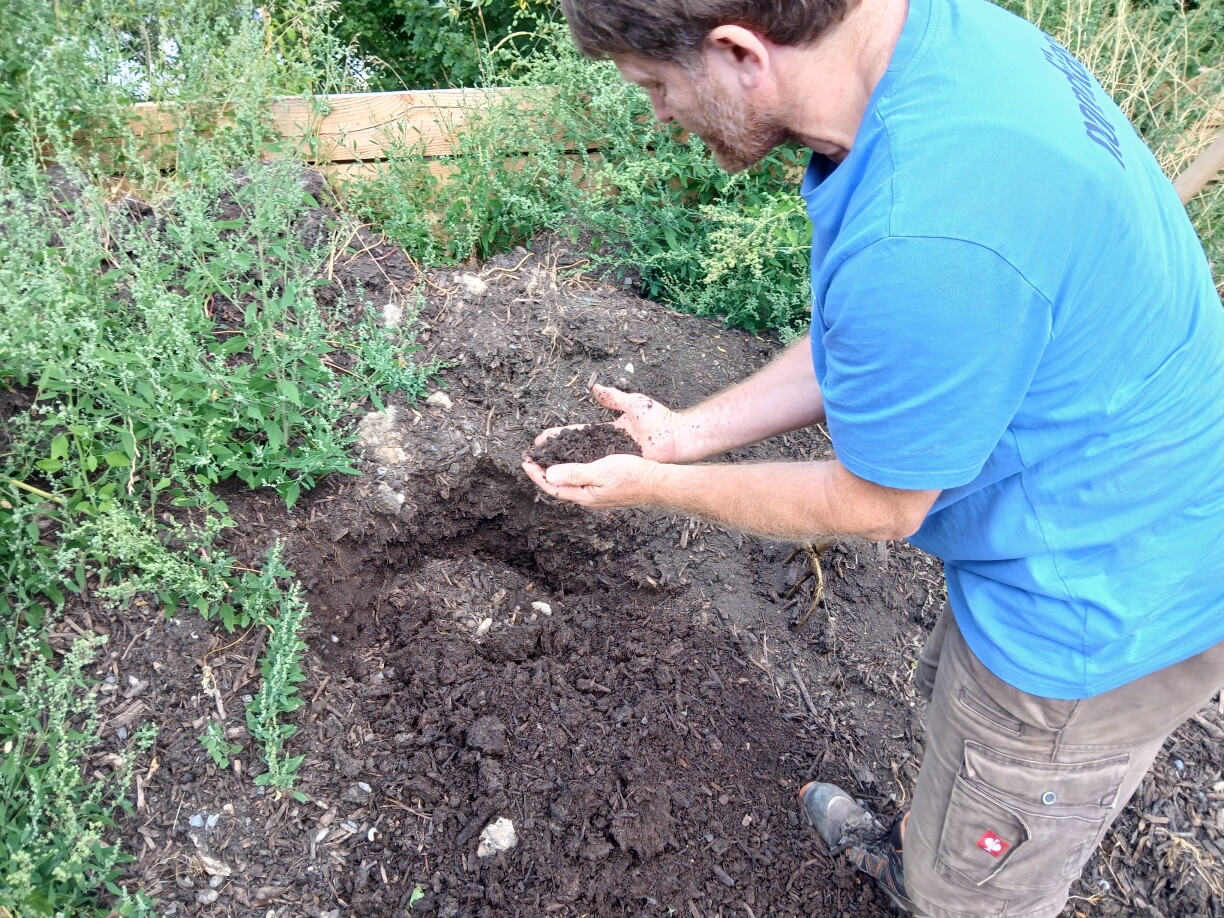
Luxembourg's agricultural sector should use the current disruption to reconsider how it operates, according to organic farmers who are less exposed to rising synthetic fertiliser prices.
The prolonged closure of the Strait of Hormuz during the war with Iran caused the prices of several products to rise sharply. These include synthetic fertilisers, adding to the financial pressure already facing conventional farms due to high energy costs.
Organic farms, however, are largely unaffected because they generally do not use synthetic fertilisers.
Tom Kass, who manages the Kass-Haff organic farm in Rollingen near Mersch, said the public debate surrounding the impact of the conflict had focused almost exclusively on conventional agriculture.
"Organic farming has existed for around 100 years and has been scientifically documented for the past 40 or 50 years", he said. "It is a form of agriculture that works worldwide. It is simply not true to suggest that there is no alternative to synthetic fertiliser."
Until now, much of the discussion has centred on the additional financial burden created by high fertiliser prices.
Speaking to RTL radio around a month ago, Charel Ferring, president of the Luxembourg Rural Youth and Young Farmers Association (LLJ) argued that such expenditure was difficult to avoid if farmers wanted to maintain high production standards.
He said farmers could not simply use less fertiliser without affecting results, particularly when growing bread-making wheat. "Certain criteria have to be met, and that requires effective fertilisation", he said.
Kass strongly disagreed, calling it "nonsense". Organic farmers in Luxembourg also produce wheat suitable for bread, he said, even though organic grain may contain less protein.
According to Kass, the plants grow in a more balanced way because they are not pushed by synthetic fertilisers. As a result, organic wheat can sometimes achieve better baking quality despite its lower protein content, he said.
Organic farming instead relies on natural sources of nutrients, including manure and slurry. Kass explained that not all manure has the same properties.
Pig and poultry manure are particularly nutrient-rich, while cattle manure tends to be more balanced, he said. Kass-Haff keeps several types of livestock, meaning manure from different animals can be mixed together in its compost, Kass added.
"Each type of animal provides a different balance of nutrients", he explained. Combining them produces compost containing a more even mixture of substances such as nitrogen, phosphorus, and potassium.
Legumes also play an important role. Crops including clover, beans, and peas require little fertiliser themselves and absorb nitrogen from the air. This is stored naturally in their roots through a symbiotic relationship with root-nodule bacteria, benefiting the crops planted afterwards.
Farmers can then use this natural reserve of nutrients throughout the crop rotation. Crops with high nutrient requirements, such as wheat, vegetables, and potatoes, are planted first, followed by less demanding varieties, according to Kass.
Eventually, legumes are planted again to replenish the soil, Kass said. He noted that this generally means that around one third of the farmland is devoted to legumes at any given time. Other crops can also benefit when grown alongside them.
Legumes are used not only in fields but also in vegetable gardens, although a different approach is required because garden beds often contain crops for only a few weeks.
Rather than occupying valuable growing space during the main season, legumes can be included in cover crops planted in autumn, according to Kass.
He explained that once outdoor cultivation ends for the year, these crops cover and protect the soil over winter, remaining in place until planting resumes in spring, while also helping restore nutrients naturally.
Kass maintained that using natural fertilisers does not reduce food quality. On the contrary, he argued that it can result in better-quality produce than farming based on synthetic fertilisers.
Asked whether the fertiliser price surge could encourage farmers to reconsider their methods, Kass said previous agricultural crises had often led to greater interest in organic farming.
"When crises have affected agriculture, particularly conventional agriculture, organic farming has usually benefited", he said, pointing to events such as the Bovine Spongiform Encephalopathy (BSE) crisis. Such periods prompt people to examine how food is produced and how different parts of the agricultural system are connected, he added.
Whether organic products will now become more competitive on price remains to be seen, Kass noted.
He argued, however, that they are already competitive when the environmental and social costs associated with conventional food production are taken into account and reflected in the final price.





