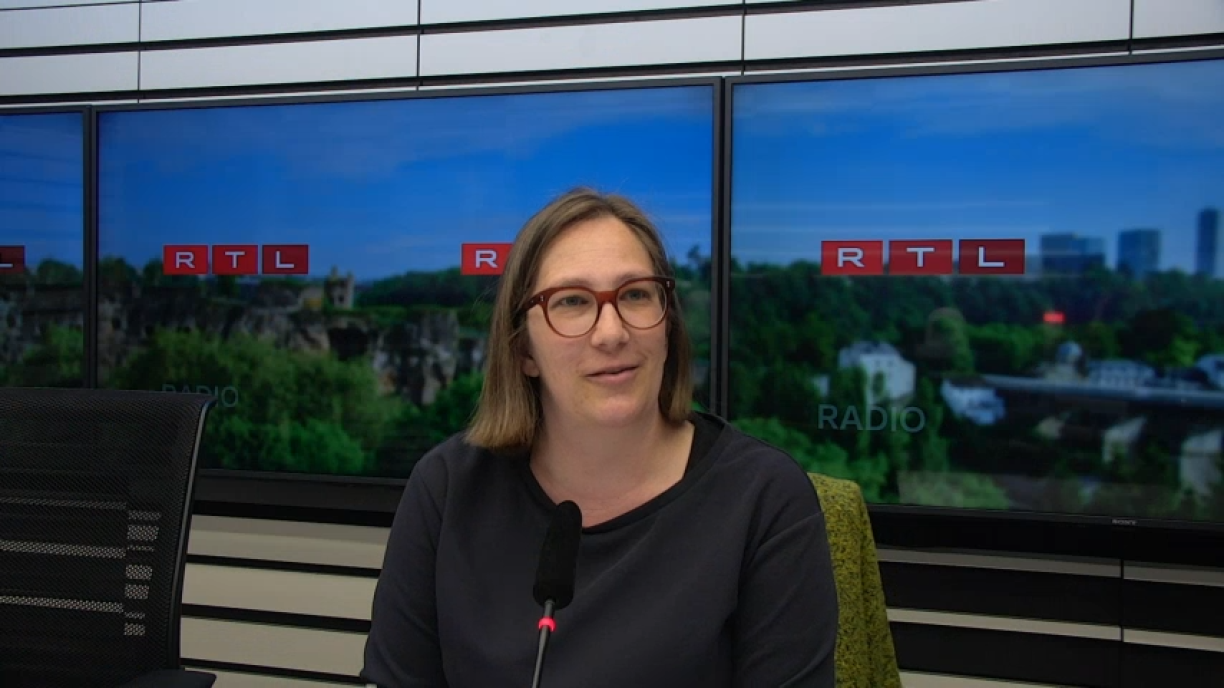
In conversation with RTL Radio on Monday, Anne-Marie Hanff, president of the National Association of Nurses and Nurse Practitioners of Luxembourg (ANIL), delved into the main issues that nurses face in Luxembourg.
The law governing the nursing profession, specifically general care nurses, is more than 30 years old. However, according to Anne-Marie Hanff, president of the National Association of Nurses and Nurse Practitioners of Luxembourg (ANIL), the planned reform is "a reform that reforms nothing". In her view, it fails to set a course for the future.
Luxembourg has a fragile healthcare system, Hanff warned. The country is facing staff shortages, has recently been through a pandemic, and now the hantavirus is also looming, according to Hanff.
She said that the European Commission's aim had been to make healthcare systems more resilient. "That opportunity has now been missed", she said.
Hanff referred to the 2021 Lëtz’Care study, which found that nurses in Luxembourg spend 40% of their working time on paperwork and administrative tasks, rather than at the patient's bedside. For that reason, ANIL had called for nurses to be given greater autonomy, allowing them to use their time more effectively, she said.
Hanff criticised the fact that even a nurse trained at higher education level cannot even provide an antiviral cream for cold sores without a doctor's prescription, as this would otherwise be considered the illegal practice of medicine, despite nurses being trained to do such tasks.
Hanff said ANIL had previously called for nursing training to be raised in level, not simply because nurses wanted a different diploma, but because they already carry those responsibilities in their daily work.
According to Hanff, the current situation already causes unnecessary suffering, particularly in care homes. She said ANIL was simply asking for things nurses are already doing in practice to be made legally possible, so that nurses can work within a clear legal framework.
In France, Hanff noted, nurses can already prescribe certain materials and care supplies that they need in their daily work, meaning patients do not have to go to a doctor or wait unnecessarily.
Health Minister Martine Deprez had argued that this would fall under the role of an advanced practice nurse, but Hanff stressed that this is a different category altogether, referring to nurses with a master's degree and significant experience.
Another point of criticism concerns grey areas in the current draft law. According to Hanff, some procedures appear twice in the text: once as something nurses may carry out with a prescription, and once without one. She suggested that this was probably an error.
She also criticised vague wording stating that nurses must ensure that a doctor is "in a position to intervene". Hanff questioned what this actually means in practice, asking whether nurses would be responsible for ensuring that a doctor is capable of intervening, whether the doctor would have to be physically present, or whether being reachable by phone would be enough.
Hanff said she saw many parallels with the pensions reform. In both cases, she argued, many people were asked for their opinion, but their views were ultimately not taken into account.
According to Hanff, the reform was prepared under severe time pressure. The European Commission had set a deadline of the end of September last year, but the working groups only began their work in June.
Hanff criticised the process, pointing out that many people were absent during the summer holidays and that meetings held under time pressure need to be properly prepared. In her view, this was not the case.
She added that no expert assessments had been carried out in advance and that discussions repeatedly went round in circles. Neither ANIL nor other stakeholders had ever given their approval to the draft law, she said.
Hanff explained that ANIL had submitted written opinions and also held meetings with the minister, which made it all the more difficult for the association to understand why it was no longer being heard.
She explained: "We represent nurses, but we are also members of this society ourselves. We are family members, we experience the status quo, and we know what could be improved. Ultimately, we are simply working towards better patient care. And yes, the voice of nurses and of those affected has been consistently ignored."
The Council of State issued its opinion very quickly, on 5 May, even though it had until 20 May to do so, Hanff said. For her, this raises the question of whether the Council of State was even able to carry out a complete assessment.
She criticised the fact that the Council had apparently not even waited for opinions it had itself requested. In her view, the Council of State should perhaps be asked to complete its work properly.
Hanff also stressed that it was important for MPs, including those from the governing majority, not to simply vote through the draft law without further scrutiny.
She explained that the association is also holding an online information meeting on Monday at 5pm for anyone who wants to better understand the situation, with details available on ANIL's website.
According to Hanff, the next step would be to contact the European Commission and consider strike action if necessary.





