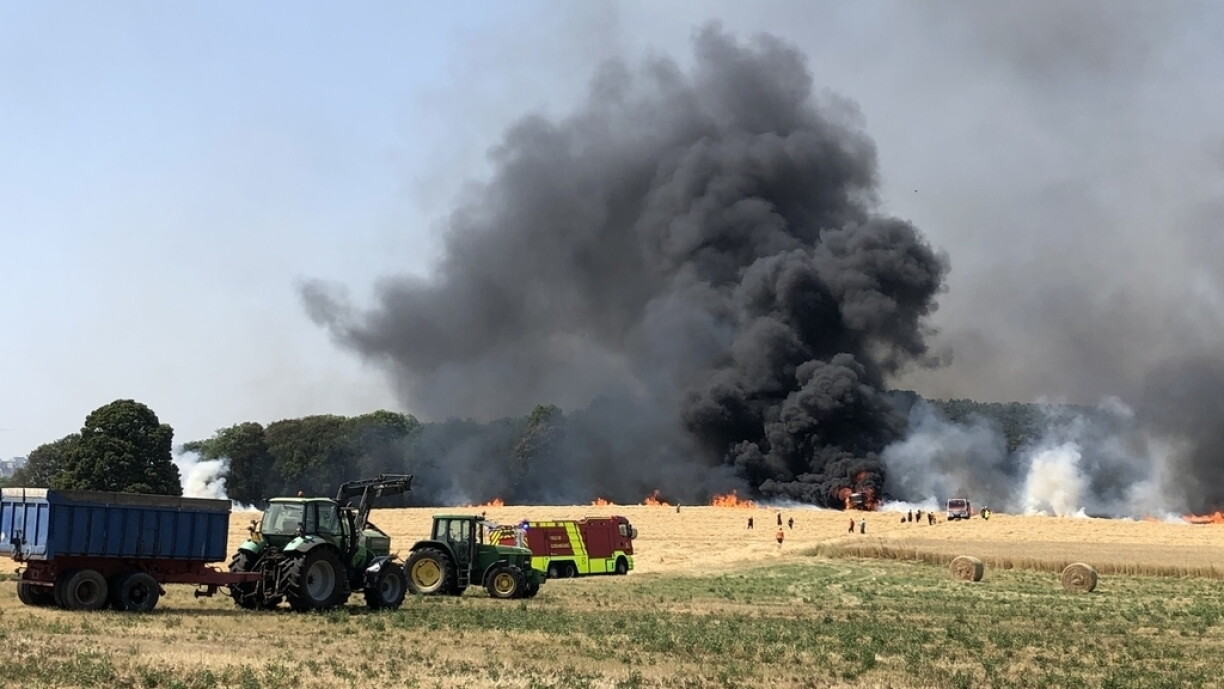
July was an exhausting month for Luxembourg's firefighters. The Grand Ducal Fire and Rescue Corps (CGDIS) counted 242 interventions related to fires, a number which is expected to rise in the following years.
A year ago, a massive blaze broke out in the Oesling region, the damage still apparent today. However, the fire was a learning curve for the country's fire brigades.
Traces of the fire, such as charred soil and dead pine trees, can still be seen on the hillside between Schlindermanderscheid and Consthum. The extinguishing operation lasted a gruelling 18 hours. In an email, the Bourscheid municipality showed its appreciation for all the firefighters involved, thanking those who "avoided a catastrophe through their service."
Forest fires or, from a Luxembourgish point of view, rather wildfires are starting to become a challenge for the country's fire brigades. Last month alone, CGDIS saw 67 wildfires reports. For that reason alone, the emergency services have had to develop a new national concept.
At the current moment, CGDIS only has six specialised vehicles dedicated to wildfires across the country. In the future, such equipment will be standardised nationwide.
The past two weeks alone have shown how challenging fires are for the teams: a huge blaze broke out in Ottange, spreading to Rumelange. In one afternoon, an area as big as 210 football fields was consumed by fire. On that day, the main problem for firefighters was the wind, which changed directions several times. That same day saw a human error endanger firefighters in Hamm. An incident,which certainly has had psychological consequences on top of the material damage.
Prevention remains an important aspect in tackling wildfires as well as improved equipment. In order to avoid dangerous extinguishing operations, the authorities have asked farmers and forest owners to act responsibly. They are reminded that forests need to be maintained, for example paths have to remain accessible, so firefighters can quickly get to the place of the fire.





