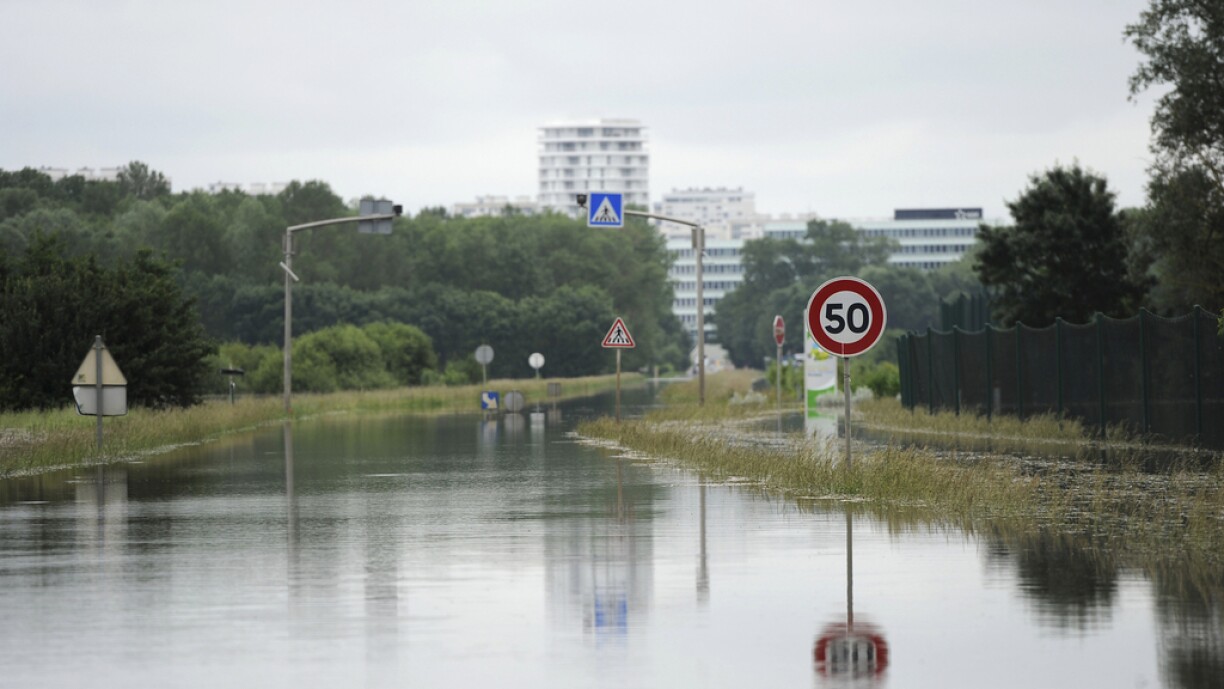
The Water Management Authority analyses potential scenarios in order to pre-emptively detect dangers. This process is meant to improve the authorities' ability to predict risks and ultimately limit the potential damage.
On Thursday, the State Council adopted a new Flood Risk Management Plan, which includes updated maps and simulations.
Locations where one river flows into another are particularly susceptible to floods. This scenario is more likely to occur during winter, for instance when snow melts and water levels start to rise.
In addition to an EU directive for floods caused by rivers, Luxembourg has also integrated a plan for floods resulting from heavy rainfall. Due to the effects of climate change, this scenario is occurring more frequently in Luxembourg, particularly in spring and summer.
Video report in Luxembourgish:
In the case of floods caused by rivers, an early warning system alerts residents up to 24 hours in advance. According to Minister for the Environment Carole Dieschbourg, this does not work for floods from heavy rainfall, as the latter are less predictable.
Dieschbourg explains that these types of floods can affect smaller bodies of water, or sometimes do not even require an already existing body of water to overflow. These floods can occur very suddenly and in a very short amount of time.
The new Flood Risk Management Plan includes over 240 measures, according to Claude Schortgen from the Water Management Authority.
The main aspects revolve around protection, prevention, preparation, recovery, and monitoring. Schortgen explains that these aspects should be understood as a "cycle", adding that the main goals for Luxembourg's new management plan are the prevention of risks followed by the reduction of existing risks.
The government also wants to learn from experience, with Dieschbourg stressing that prevention is cheaper than repairing the damage. This is why the authorities want to raise awareness for the topic of floods among the population.
Instead of retroactively intervening, the government wants to put more emphasis on preparation, seeing as these types of weather phenomena will likely only increase in frequency. Dieschbourg explains that renaturation of areas close to riverbanks - or generally just giving the water more room - could improve the situation.
The new Flood Risk Management Plan also stipulates that private individuals and organisations can apply for so-called "object protection". If they can prove that they live in a risk zone, they are eligible to have up to 75% of the costs for protective works refunded.





