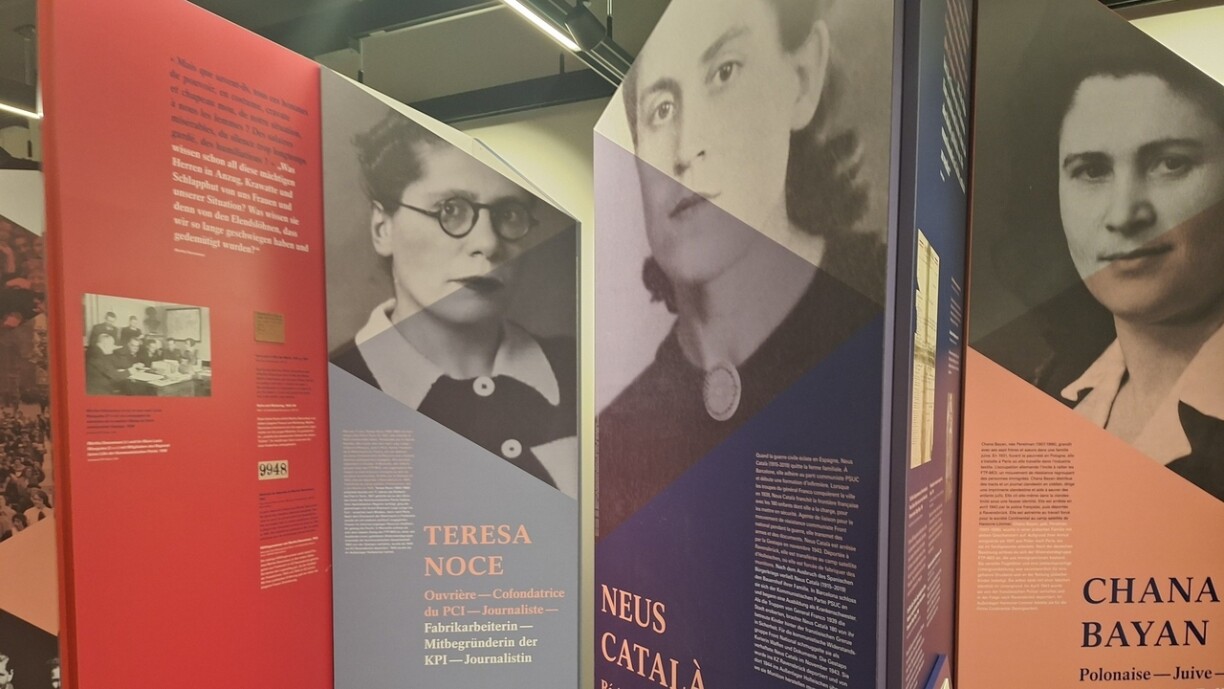
In honor of International Women's Day, a new exhibition titled 'Resistance, Persecution, Deportation' will open this Saturday at the Museum for Resistance and Human Rights in Esch-sur-Alzette. The exhibition aims to highlight the experiences of women who resisted oppression and endured persecution and deportation during the Second World War.
The exhibition specifically seeks to highlight and commemorate the suffering of women imprisoned within the Nazi concentration camp system. One of the most notorious of these sites was Ravensbrück, the largest concentration camp for women under the Nazi regime. Women from across Europe were detained there, some for their involvement in resistance activities, others merely for failing to conform to the Nazi ideological worldview. They endured forced labor, abuse, and, for many, death.
Originally developed in Ravensbrück, the exhibition not only recounts the stories of those who died but also pays tribute to Luxembourgish women, explains museum director Frank Schroeder.
“We have, of course, highlighted figures who are already represented in the museum, such as Yvonne Useldinger, Madelaine Weis-Bauler, and Marie Bricks. These women made significant contributions in Esch and southern Luxembourg and remained active after the war. They played key roles in trade unions and the women's movement.”


The exhibition also marks the launch of the ‘Women in Conflict’ series, an initiative that explores the roles of women in both historical and contemporary conflicts. This series will run from March 2025 to September 2026.
Beyond reflecting on the past, the exhibition invites visitors to reflect on contemporary challenges. When asked whether parallels can be drawn between the past and the present day, Frank Schroeder replies:
"There are phenomena from the past that we see resurfacing in various countries today – even in those that were thought to uphold democratic values and human rights. As soon as freedoms are restricted, the separation of powers is attacked, and press freedom is undermined, we enter a dangerous trajectory. Fortunately, we have not reached the extremes of National Socialism, and I hope we never will, but when you compare and contrast, you'll notice that the fundamental patterns bear clear similarities."
The exhibition therefore does not only serve as a historical retrospective, but also as an important reminder of enduring resistance, courage and justice – values just as relevant today as they were in the past.





