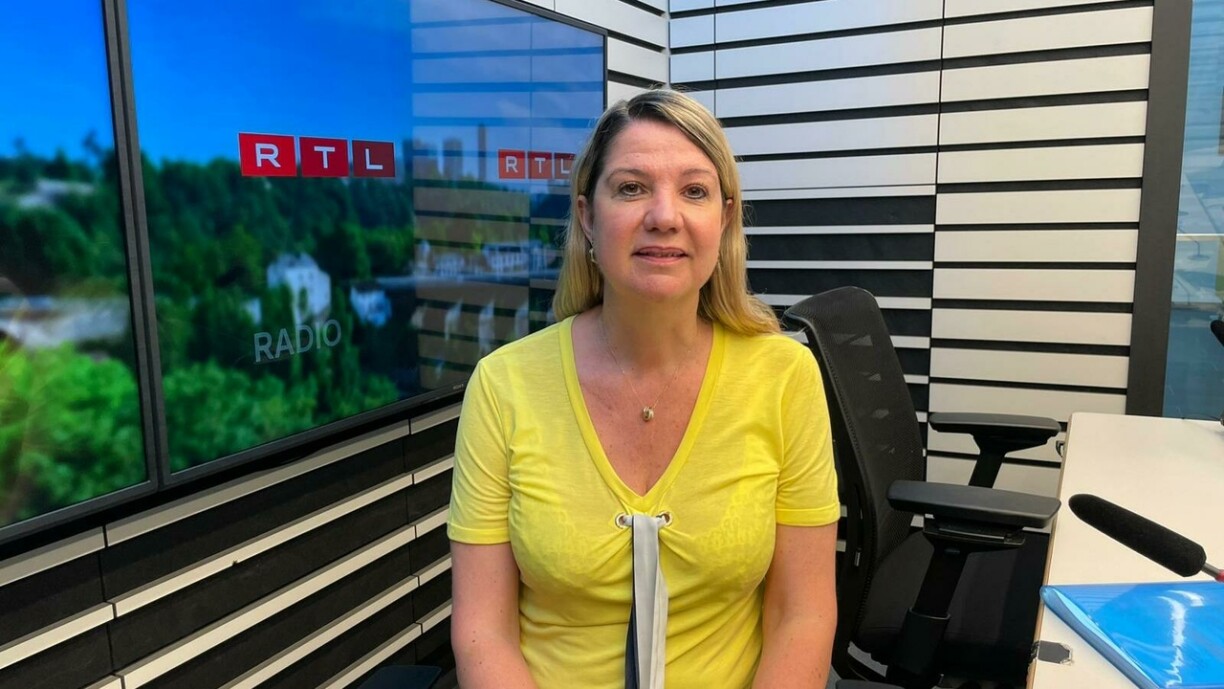
The Chamber of Civil Servants and Public Employees (CHFEP) has appointed Mona Guirsch as its new president. A German teacher and member of the board of directors at The Athénée high school in Luxembourg City, she succeeds former president Romain Wolff, who will now focus exclusively on his role within the civil service trade union CGFP.
Among the chamber’s current priorities are pension and tax reforms. Guirsch, who has been part of the CHFEP office since 2018, was elected president on Monday for a five-year term.
Mona Guirsch is the first woman to lead the CHFEP. Speaking to RTL.lu on Friday morning, she said she had been encouraged to take on the role, though noted that for her, gender had never been a factor in her professional life as a teacher.
“Some people told me it would be fun to have a female president leading the Chamber of Civil Servants”, she said. However, Guirsch emphasised that her appointment was based solely on years of conscientious work, not on her gender.
Mona Guirsch sees her role as operating more in the background compared to the trade union activities of the CGFP. The primary responsibility of the Chamber of Civil Servants and Public Employees (CHFEP), she explained, is to comment on draft legislation. As such, she will not take part in the tripartite discussions between the government and employers' association on 9 July.
Guirsch stressed that the functions of CHFEP should not be conflated with those of a trade union. Nevertheless, she welcomed the renewed opportunity for social dialogue, highlighting the importance of communication in reaching compromise. She particularly praised the government's willingness to engage in discussions on pension reform.
Like her predecessor, the new president is calling on the government to take CHFEP's input seriously. This includes allowing the chamber sufficient time to review and comment on draft legislation, as tight deadlines can undermine the quality of its recommendations.
In light of the extreme temperatures over the past week, Mona Guirsch was asked about possible measures to address such situations in schools. While many classes were cancelled, some students voiced frustration at not being granted a heat-free day.
Guirsch explained that the Ministry of Education generally leaves such decisions to individual schools. However, she suggested that a uniform policy could better serve both students and teaching staff. She also advocated for air-conditioned school buildings or structural renovations to ensure a more comfortable learning environment, noting that the main obstacle is likely to be funding.





