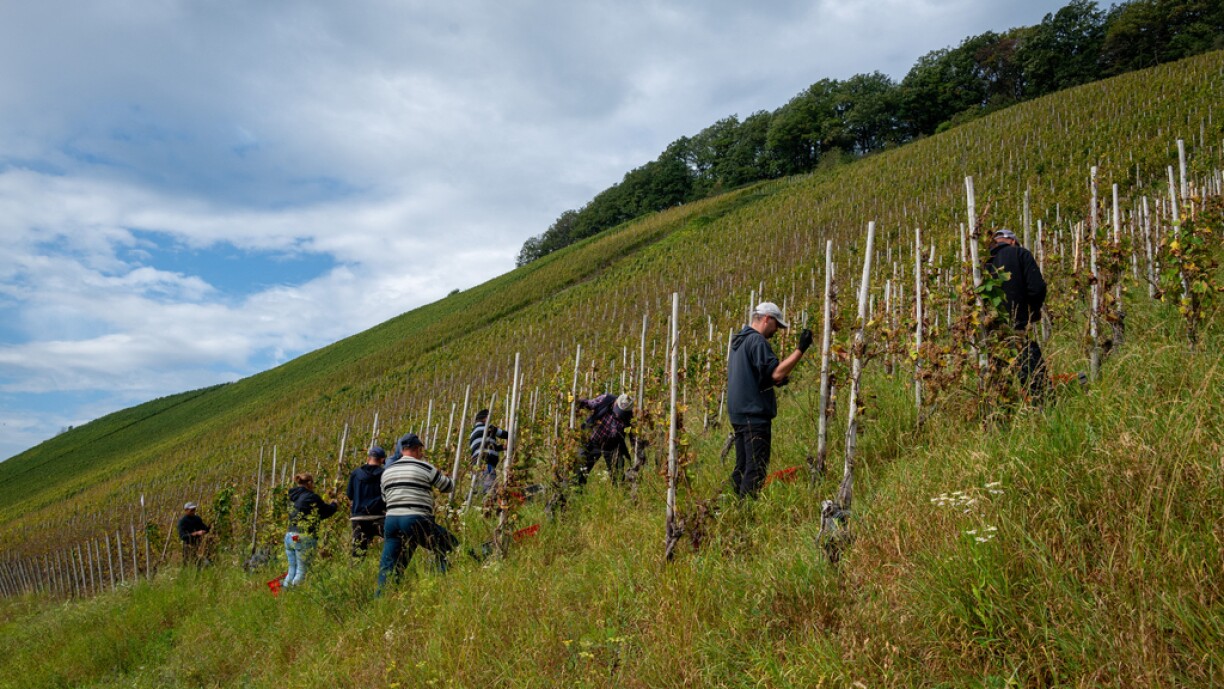
The aim is to build on successful initiatives like 'Wine Taste Enjoy', which took place over the Pentecost weekend and featured 28 wineries and private producers offering tastings of Luxembourgish wine and Crémant. The event has become one of the key fixtures in the sector's calendar.
Still, organisers hope to attract visitors throughout the year, not just during major events.
Gilles Estgen, president of the Regional Tourist Office for the Moselle, will oversee coordination of the new action plan. He pointed out that the last plan dated back to 2012, and while some elements remain relevant, such as this year's 'Wine Taste Enjoy' edition, much has changed since then.
Visitor profiles, expectations, and the broader tourism landscape have evolved, he said, adding that, as a result, the sector must explore new approaches. Estgen explained that the upcoming months will involve collaborative brainstorming between tourism professionals and the wine sector to identify short-term actions, long-term goals, and priorities that require more time to develop.
The initiative has been widely welcomed by both wineries and private winemakers, who believe that the hospitality sector also stands to benefit from a coordinated national strategy for wine tourism.
Josy Gloden, president of the wine grower's cooperative Vinsmoselle, stressed the importance of tapping into day-trippers and expats living in Luxembourg City, who are often looking for weekend escapes. He emphasised that all visitors are welcome to experience the beauty of the Moselle region, whether for wine tastings or simply to enjoy the natural surroundings.
Estgen also noted that wine tourists increasingly expect options to stay overnight, ideally near or even at the winery itself, something that needs to be considered in future planning. However, many wineries are located in protected green zones, which complicates the expansion of tourism-related infrastructure.
Jeff Konsbrück, vice president of the Private Winemakers' Association, said that greater flexibility is needed in these areas. He suggested that small-scale accommodation, such as tiny houses, should be allowed in green zones to give visitors a chance to stay overnight.
For Konsbrück, promoting tourism means creating welcoming spaces where people can unwind, taste local wines, and enjoy the countryside. He pointed out that many wineries are already located along picturesque hiking routes, and more rest spots like the one where he was speaking would only enhance the visitor experience.
The goal is for all stakeholders to meet regularly over the coming months and finalise the new Moselle tourism strategy by the end of the year.
Wineries that develop tourism offerings can also receive financial support, with subsidies covering up to 50% of investment costs depending on the project. Estgen explained that both the Ministry of Tourism and the Ministry of Agriculture offer funding opportunities for winemakers who wish to invest either in their existing facilities or in off-site projects related to tourism or the marketing of their products.





