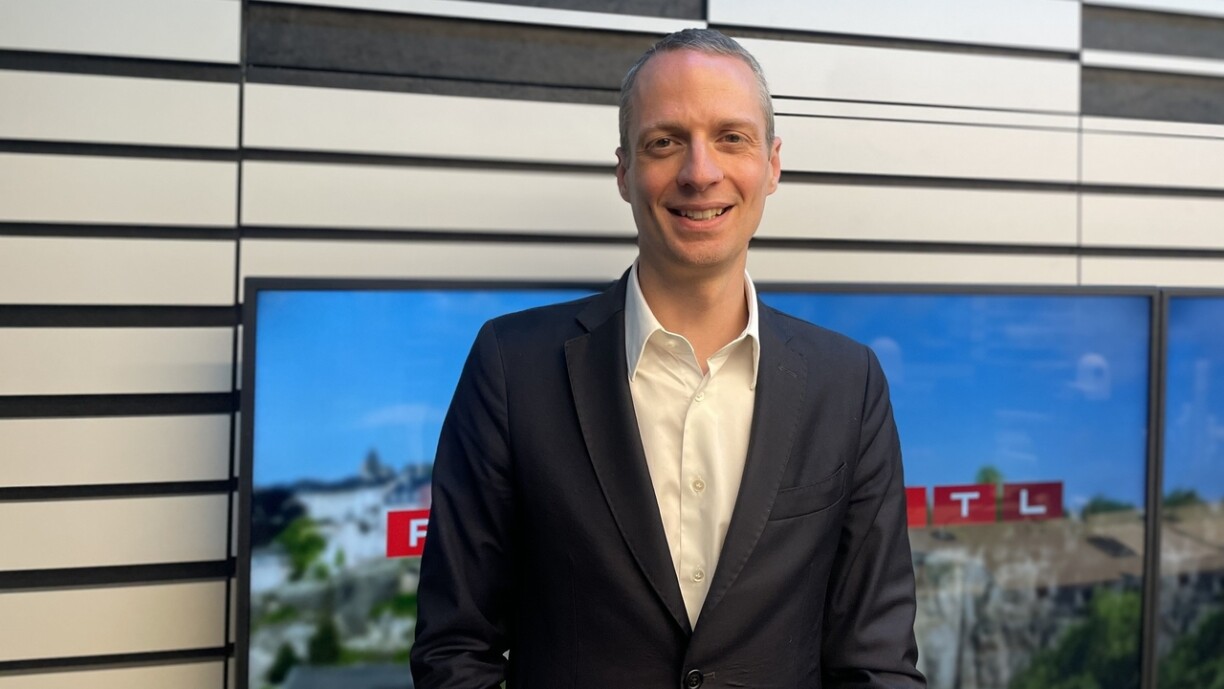
On Saturday, our colleagues from RTL Radio spoke with Minister of the Environment and the Civil Service Serge Wilmes.
Minister Wilmes responded to Prime Minister Luc Frieden's controversial comments about trade unions made during the Christian Social People's Party's (CSV) summer festival. Wilmes characterised Frieden as "a very respectful person" who had promptly apologised for his remarks.
The Prime Minister had drawn criticism for joking that union representatives "didn't look good" following Wednesday's 11-hour negotiation session, suggesting they "apparently aren't used to working overtime." Wilmes cautioned against overinterpreting these comments, noting the informal atmosphere of the festival. He firmly rejected any suggestion of government bias towards employers, emphasising their commitment to mediating between both sides.
With discussions set to resume Monday, Wilmes declined to speculate on outcomes but affirmed that the government would respect the Prime Minister's stated positions. "If the Prime Minister said no further discussions will be held on collective agreements, then that's the situation", he stated.
The minister emphasised that social dialogue continued at all times through multiple channels, stressing the need to focus on future solutions rather than past disagreements. Monday's agenda includes critical pension discussions with employer and union representatives – a topic Wilmes described as "eminent for both present and future."
While pension reform was appropriately mentioned in the State of the Nation address, Wilmes clarified these were merely proposals open to debate. "Controversy around such reforms is normal", he noted, expressing the government's willingness to compromise.
Looking ahead, Wilmes struck an optimistic tone about finding common ground. "Our task is to reconcile opposing positions", he said, "with the ultimate goal of establishing a sustainable pension system."
Minister Wilmes drew parallels between current pension reform efforts and the 1990s reforms, noting that previous disparities between private and public systems have since been resolved. He emphasised that the proposed changes would equally affect both sectors.
Contrary to claims made by the Prime Minister, Wilmes clarified that climate-related funds could not be diverted to support pensions, stating: "The CO2 tax revenue is specifically earmarked to address potential inequalities arising from climate change measures."
Addressing concerns about Luxembourg's compliance with the EU minimum wage directive, Wilmes asserted the country would meet requirements even when including civil servant salaries in calculations. This follows reports that Labour Minister Georges Mischo had considered excluding public sector wages from the computation.
Wilmes strongly rejected divisive rhetoric between sectors, specifically criticising LCGB President Patrick Dury's repeated use of the term "social apartheid" to describe public-private disparities. "We must avoid pitting these sectors against each other", the minister stated.
Defending recent public sector salary increases, Wilmes noted comparable wage growth in industries like finance. He also affirmed the government's commitment to maintaining civil servants' unique family benefits - €700 for individuals and €1,400 for couples – describing them as "historically established achievements."
Wilmes downplayed his seven-point decline in the latest Politmonitor survey, suggesting such polls should not be overanalysed. "There's no clear methodology to determine why respondents perceive politicians as competent or likeable", he remarked.
Wilmes highlighted his ministry's concrete achievements, including sector-wide roundtable discussions and administrative simplifications like eliminating permit requirements for rooftop solar installations.
He reaffirmed the government's commitment to ecological transition, citing a €150 million investment to cover energy grid costs as evidence that climate action remains a priority despite competing crises.
Addressing recent EU climate policy debates, Wilmes attributed regulatory pushbacks to right-wing political pressures. He argued that the European Commission and the Luxembourg government had instead committed to simplifying – not abolishing – regulations. According to Wilmes, the economy needs clear direction and planning certainty to remain competitive.
Regarding the EU's emissions reduction targets, which are currently subject to heated debate, Wilmes stated that as many member states as possible must be brought on board – a process that would "take time", he added.





