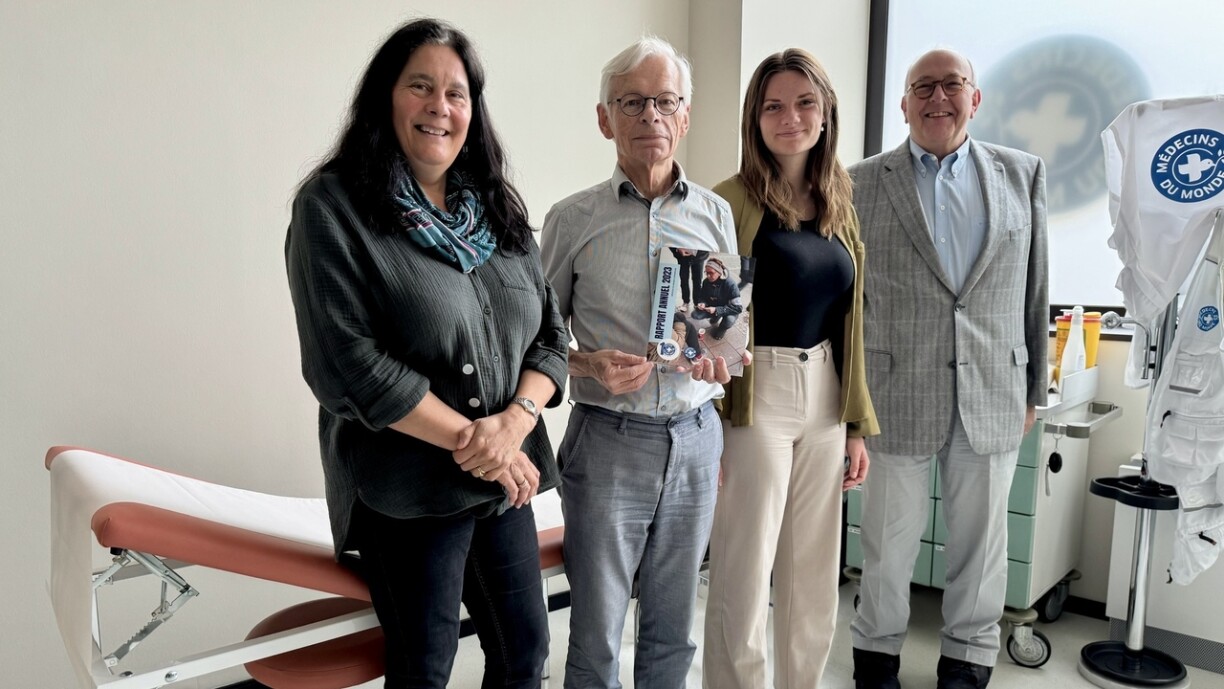
Last year, Médecins du Monde assisted 1,193 individuals in Esch-sur-Alzette and the capital, with some requiring multiple consultations from doctors or social workers. The total number of medical consultations reached 3,255.
Despite consistent patient figures of 1,200 to 1,300 annually, the organisation noted a rise in social and psychological interventions, attributed to increasing poverty levels in Luxembourg, according to Dr Bernard Thill, President of Médecins du Monde Luxembourg. Secretary Ralph Hank emphasised this trend, stating that "more people are seeking assistance due to social issues."
Hank added that the introduction of the Universal Healthcare Coverage (CUSS) pilot project in 2021 has also heightened demand for social support among beneficiaries. The legalisation of CUSS is a focal point of Médecins du Monde's advocacy efforts and the project currently supports about 76 individuals. However, due to resource constraints, particularly the need for additional social assistants, they cannot accommodate more potential beneficiaries. Consequently, they refer individuals to five other associations capable of registering them for social security and providing ongoing support.
To qualify for CUSS, individuals must reside in the country for three months, complete a three-month internship, and undergo social follow-up, including the development of a life plan. Dr Thill criticised the current system, noting that homeless individuals often have survival strategies rather than structured life plans.
Another one of their key demands is to ensure that individuals without social insurance, who are unable to register with a municipality, have access to essential services like social offices and social grocery stores. Ralph Hank highlighted another critical issue: the right to a bank account, which is often denied to those eligible for CUSS. Hank criticised some banks for refusing to open accounts for CUSS beneficiaries, thereby hindering access to necessary funds.
Another pressing demand from the organisation is to establish facilities where elderly, sick individuals living on the streets without proper documentation can spend their final years with dignity. Currently, Médecins du Monde operates Maison L'Escale in Esch, in partnership with the Centre Hospitalier Emile Mayrisch (CHEM), providing care for up to ten sick individuals without social insurance. However, due to chronic illnesses, six of these beds are currently occupied long-term.
In mid-June, Médecins du Monde met with Minister of Health Martine Deprez, who showed initial support for the project. The organisation now hopes for additional backing from the Ministry of Family Affairs to further these initiatives.
97% of patients served by Médecins du Monde live below the poverty line. Approximately 40% suffer from chronic illnesses requiring regular follow-up visits. Many patients also face significant financial hardships, with some unemployed and others struggling despite employment. About 20% of Médecins du Monde's patients are undocumented workers who live and work in Luxembourg but cannot register due to legal restrictions.
Contrary to common belief, only a small fraction of migrants—3.2%, according to Hank—come to Luxembourg specifically for medical treatment. Refugees do not come because once they have the status, they have the same rights as Luxembourg residents.
6% are Luxembourg nationals who do not have social security or do not have enough money to advance payment when they need to see a doctor.
Most patients are migrants from Eastern Europe (such as Romania, Hungary, and Poland), comprising the majority of beneficiaries. Additionally, 20 to 25% originate from North Africa (the Maghreb region) and a significant number come from South America, particularly Brazil.
Médecins du Monde continues to expand its services with the support of volunteers. In 2023, the organisation recruited 160 volunteers, including general practitioners, nurses, ophthalmologists, dentists, dermatologists, cardiologists, psychologists, psychiatrists, and other healthcare professionals.





