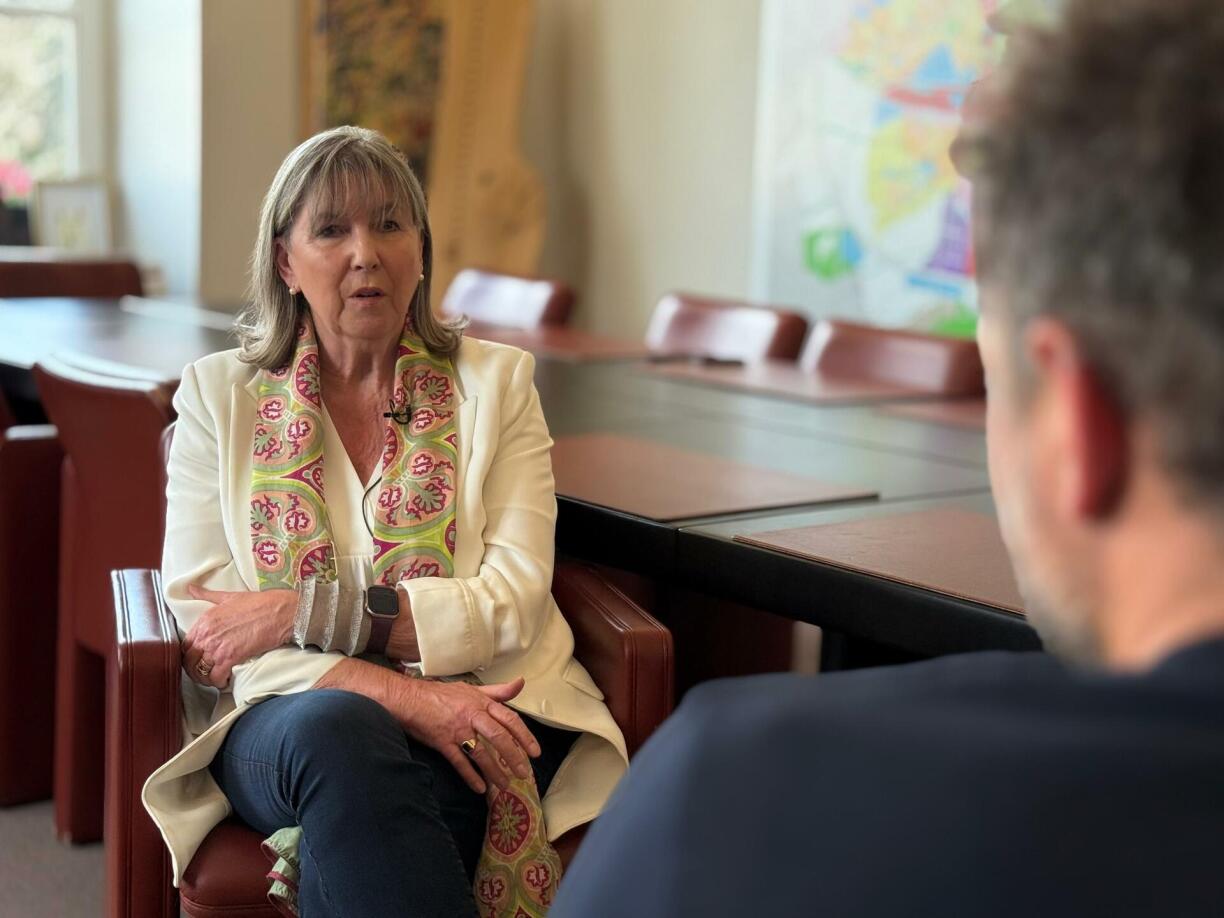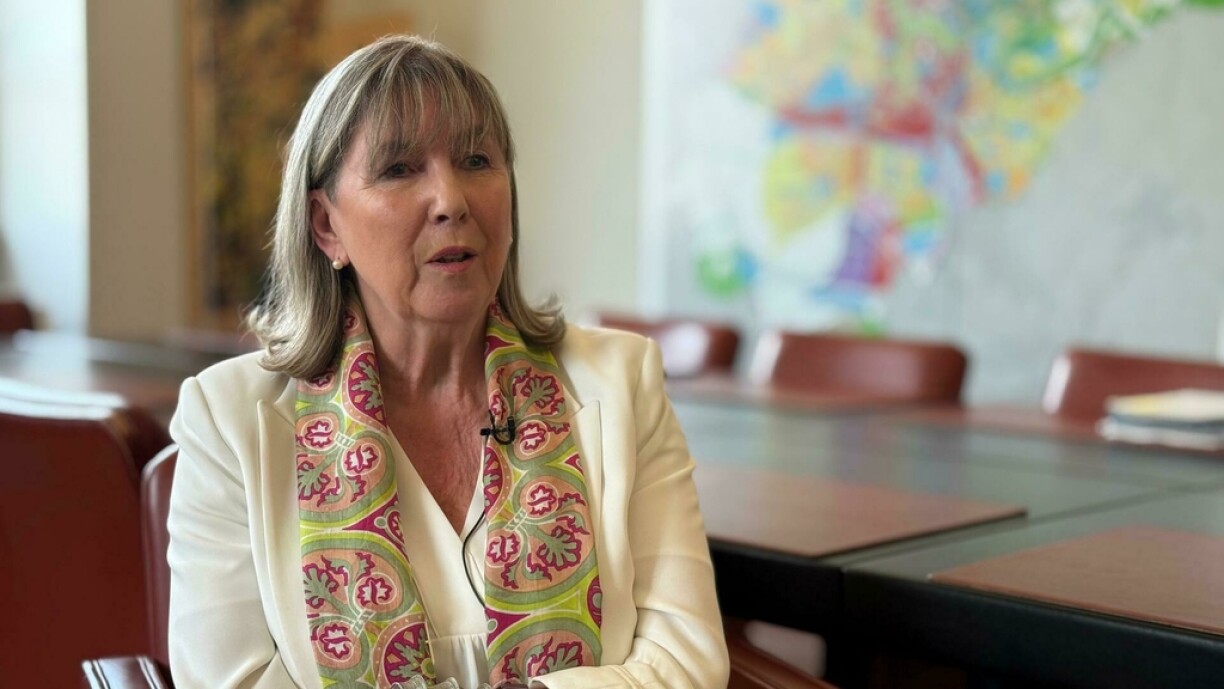
Lydie Polfer has had a long and distinguished political career. She was first elected to Parliament in 1979 and served as Mayor of Luxembourg City from 1982 to 1999, returning to the post in 2013. A member of the Democratic Party (DP), she has also served as an MEP, Foreign Minister, and Deputy Prime Minister from 1999 to 2004.
From the outset of our Sunday interview, Lydie Polfer is clear about her approach to governance: "I don't expect the city to be shaped the way I personally want it to be."
For her, Luxembourg City must be a place for everyone. With more than 70% of residents being non-Luxembourgers – and even higher numbers during the workday – bringing together such a diverse population remains one of her core challenges.
"We need to bring people together through sport, culture, and events", she explains.
She highlights the city's good rankings in quality-of-life studies and notes its relative manageability compared to other capitals. Much of this success, in her view, stems from the city's wide range of public events that foster social cohesion. From National Day celebrations to the Blues’n'Jazz Rallye, she sees these as key moments where a sense of community takes shape, often without the tensions seen elsewhere.
She also sees the upcoming royal transition in October as one such moment. As Foreign Minister in 2000, she attended the previous transition from Grand Duke Jean to Grand Duke Henri. She personally signed four of the five birth certificates of Henri's children and remembers the time fondly. She believes that the future Grand Duke Guillaume and Grand Duchess Stéphanie "will take on the role with full commitment, perhaps in a slightly different way".
One of the city's biggest challenges, according to Polfer, is its exceptional attractiveness. Over the last 25 years, the population has grown by nearly 70%, which has significantly increased demands not just for housing, but for supporting infrastructure like schools, childcare facilities, and sports spaces. She stresses that the need goes far beyond simply finding people a place to live.
She also points to some stark figures: although the city covers just 2% of the country's territory, half is comprised of forests, with 20% of the country's population living in the 1% built-up area. She further states that the city hosts 40% of all jobs in the country. These numbers alone, she says, explain many of the pressures the city is facing.
Polfer believes that to manage these pressures, cooperation with other municipalities is essential, stating that "Luxembourg is more than just its capital".
Polfer believes that having local leaders like mayors actively involved in national politics is crucial. For her, the real value lies in bringing direct experience from the municipal level into lawmaking. While drafting legislation requires a strong grasp of principles, she argues that understanding how to apply those principles in everyday life is just as important – and that’s where local knowledge becomes indispensable.
Although she admits that juggling the roles of MP and mayor can be exhausting, she sees the dual mandate as worthwhile. With Parliament and City Hall located just a few hundred metres apart, she's in a better position than many, but the workload remains intense. Nonetheless, she feels it's important for national laws to be shaped by those who understand how they play out in the real world.
Even with experience, the job takes its toll, as she acknowledges that it doesn't come without a cost to one's family. Polfer explains that "children, especially, carry a heavy share of it". She speaks warmly of her time with her daughter and grandchildren, which she now values even more.
The rise of social media has added a new layer of difficulty for politicians. Polfer is not personally active on these platforms but is kept in the loop.
Despite the pressures, she still loves the work, stating: "I've never had to force myself to do this job. If it ever became a burden, I wouldn’t continue".
She holds deep respect for other mayors across the country, especially in smaller communes, believing that "people often underestimate their work, but in fact, the opposite is true". She adds that without the same level of administrative support, they often turn to her for advice – something she’s always willing to provide.
When asked about retirement from politics, she states that she received a mandate from both voters and her party in 2023, and that as long as she feels committed, she intends to honour that mandate.
This summer, Lydie Polfer is spending her holiday in a house in southern France. She enjoys the quiet time doing things she usually doesn't have time for, namely cooking, cleaning, and indulging her love of reading.