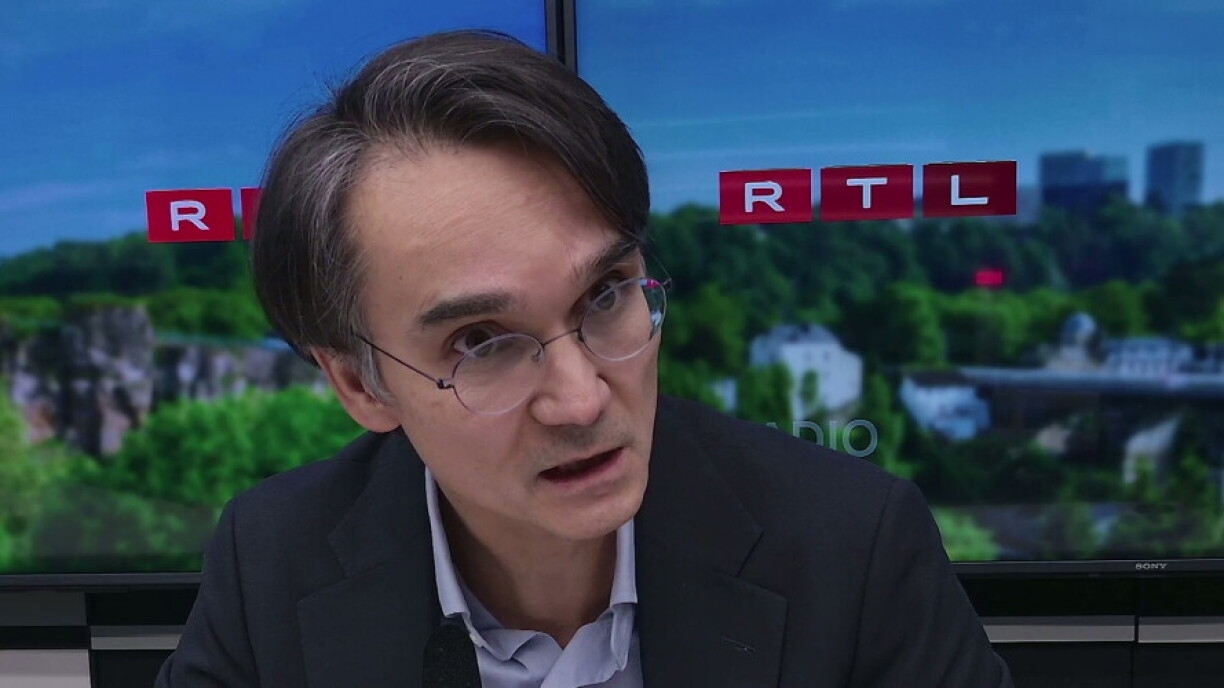
The failure of the COP 31 global climate conference was "deeply regrettable", and the European Union's decision not to sign an agreement that omitted any reference to phasing out fossil fuels was "coherent", said Gaston Trauffler, Head of Industrial Policy at the business federation Fedil, on RTL on Monday morning. Trauffler explained that Luxembourg's industry is not against decarbonisation, but needs more time and flexibility to adapt.
He emphasised that unpredictable changes in policy – what he called "zigzagging" – are damaging for the sector, describing such uncertainty as "poison". Investments worth millions can take decades to pay off, Trauffler stated, and if there is no demand for products, "it does not work". The European Union is currently seeking to reform its Emissions Trading System (ETS), but negotiations are at an impasse, which adds to uncertainty for businesses. Trauffler stressed that industry requires predictability to invest confidently and reiterated the need for more time.
Asked whether Fedil was seeking to slow down the transition, Trauffler replied: "I do not think we are putting the brakes on the transition, but we simply need more time to make the required investments and adjustments." He noted that energy efficiency measures alone are no longer sufficient; what is needed now is "significant investment" in alternative energy sources such as hydrogen, electricity grids powered by green energy, and carbon capture technologies. The necessary infrastructure for these solutions is not yet in place, he added, so factories cannot fully decarbonise until it is developed.
The European Union has set ambitious targets for reducing greenhouse gas emissions, subsidising the energy transition for decades and increasingly discouraging fossil fuel use. However, Trauffler cautioned that if the EU decarbonises in isolation, it risks making European industry uncompetitive: "We are not the only ones producing – if we manufacture at too high a price, people will no longer buy European products." He also acknowledged that the best energy is that which does not need to be imported.
Trauffler warned that decarbonisation policies must not drive industries to relocate outside Europe. He drew a connection between political indecision, widespread protests, and the electoral gains of extremist parties, citing the example of Germany, where since 2018, around 15,000 industrial jobs have been lost each month: "Now those people's children are out on the streets," he said, attributing this to political indecision.
Energy costs are a crucial factor for competitiveness. Trauffler observed that, had it been up to Prime Minister Luc Frieden, 2026 would have been designated the "year of competitiveness". While Trauffler said a thorough assessment of government policies is still needed, he dismissed claims that nothing has been done, pointing to government support for energy prices, measures on working hours, and reductions in corporate tax as meaningful steps to support the sector.