
Luis Paiva, 54, and his colleague Miguel Sabino, 46, have not received payment since the summer of 2023. The construction company they are employed by is teetering on the brink of bankruptcy, although a court ruling on the matter is still pending.
Sabino explains, "The boss still paid [us] for the first two months, but after the holidays, the situation turned dire. […] He started firing people, said he was reorganising the team because he had a lot of expenses at the moment and therefore had to let a few people go. But I remained on the team."
Sabino continued to work for the company until the end of September - without pay. His health suffered as a result, and he has been on sick leave ever since.
Struggling with insomnia, Sabino admits, "My mind is constantly racing with negative thoughts."
"I haven't received any pay since August, September, October, November, December – that's five months, including the holiday period," Sabino explains.
Sabino's boss was supposed to pay for the first three months of his sick leave, but that never happened. Sabino has now been receiving financial assistance from the National Health Fund (CNS) since January.
"This is my only source of income now. Without it, I'd have nothing," Sabino reveals, adding, "It's a dire situation to be in. My financial security and savings are depleted. Thank God we had some. And thank God my wife still earns a salary," adds the father of two.
The plight of Luis Paiva, too, paints a grim picture. His last full pay cheque came in July 2023, followed by only half payment in August, and nothing thereafter.
Expressing his frustration, Paiva states, "I feel outraged […] I'm afraid of myself. At times, I fear I may make a mistake. I don't deserve that. Not me, and many other people here in this country who are going through the same thing. Unfortunately. I don't think we deserve that. We came here to work," Paiva explains.
A scheduled shoulder operation at the end of 2023 proved to be an unexpected silver lining. Despite his employer's failure to cover the initial three months of his sick leave, Paiva has received financial support from the CNS since the surgery.
Sharing his ordeal, Paiva reveals, "When I go to the doctor, I have to pay. I'm not ashamed to say that I've already had to borrow money to go to the doctor or hospital. They won't treat me if I don't pay."
Since then, he has lost a lot more, including his savings, his long-term partner, and his sleep.
"I spend many nights without sleeping. I take pills, but they don't help either. I feel weak mentally, really weak," says Paiva. The instability of his situation and an uncertain future exacerbate his deteriorating mental health.
Paiva finds solace in solitary drives to the forest, where he can release his emotions away from prying eyes. "I feel good when I get in the car, drive into the forest, cry alone, and let it all out. All alone, without anyone seeing me. It's the only way to calm myself down. But otherwise, I can't calm down," he explains.
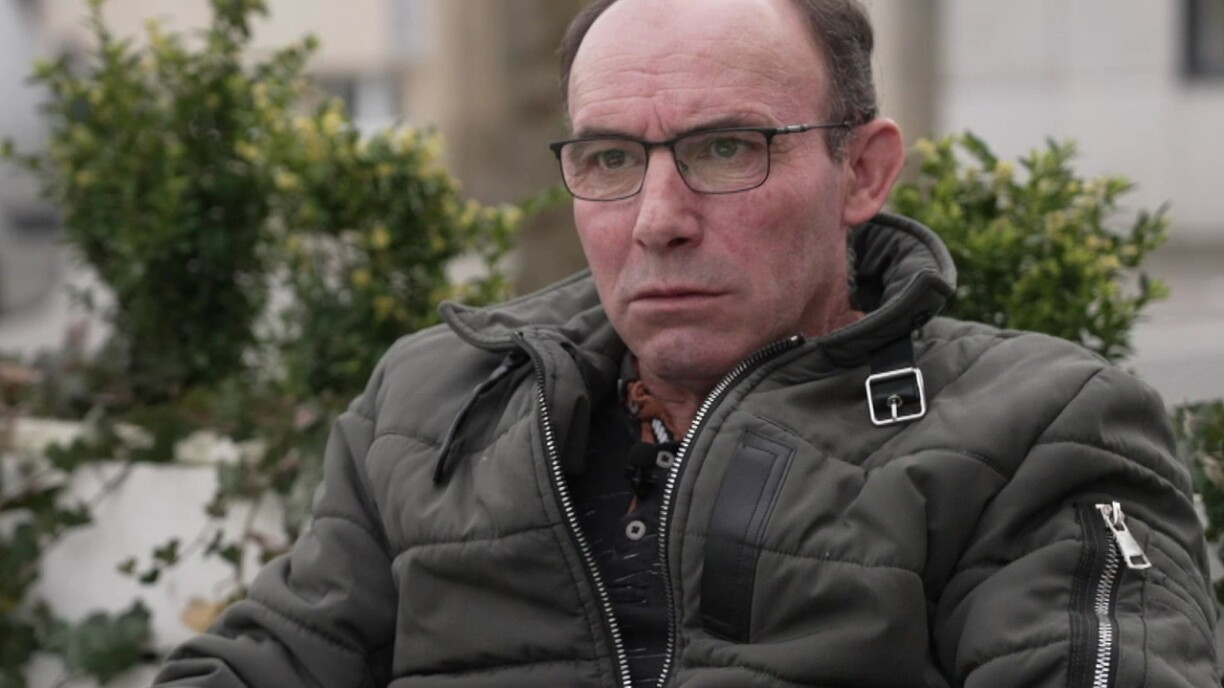
In response to the crisis, the government has sanctioned partial unemployment for various sectors within the construction industry until July. However, Tom Meyer, Head of the Department of Social Dialogue at the Ministry of Labour, warns that while this measure may offer relief to some, it will not save every struggling company. Meyer emphasises the need for a "realistic" approach, acknowledging that "not all companies and workers can be saved."
Declaring bankruptcy involves meeting three specific conditions. Firstly, the entity must be a company, not a non-profit association (ASBL). Secondly, it must have ceased payments of salaries, bills, or taxes. Lastly, it must be unable to secure credit from banks or suppliers. Even if these conditions are met, bankruptcy is not automatically declared.
Three processes can trigger bankruptcy proceedings: voluntary declaration by the company itself, a creditor's petition for bankruptcy, or a direct court decision based on available information. Only after a declaration of bankruptcy does a receiver assume control. At this stage, the state steps in as guarantor, ensuring workers' compensation up to €16,000 gross.
However, this amount is often insufficient, considering the compensation for the month of bankruptcy, the following month, and half of the prior notice period, combined with outstanding salaries.
Jean-Luc Matteis of the Independent Luxembourg Trade Union Confederation (OGBL) urges workers to act promptly. He advises, "As soon as there's a delay in pay, seek information. Don't wait for one month, two months, three months - that's a dire situation! We always wonder how people manage up until that point. That's why we appeal to people to come to us as soon as possible."
As workers like Sabino and Paiva navigate their challenging circumstances, they express a desire for greater government assistance.
"I've lost all financial security. I wasn't wealthy, but I had enough to get by. Now, with my income reduced to half and relying solely on my wife's earnings, it's become a struggle," shares Sabino.
Paiva echoes this sentiment, advocating for additional measures to aid those in similar predicaments. "If there was at least a measure in place to help people. People are losing their homes, cars, and much more. They're doing everything they can to survive," he emphasises.
Despite their hardships, both Sabino and Paiva remain determined, drawing strength from their loved ones and support networks.
"For me, it's my three children. My two grandchildren. A few family members. And friends who support me, who encourage me. Who have known me for a long time and know what I'm like," explains Paiva.
Giving up is out of the question for the two people concerned.
"It's been a tough battle. But I'll keep going. We can't give up now. We have to keep going," asserts Sabino.
Full report by RTL Télé (in Luxembourgish and Portuguese, with LB subtitles)





