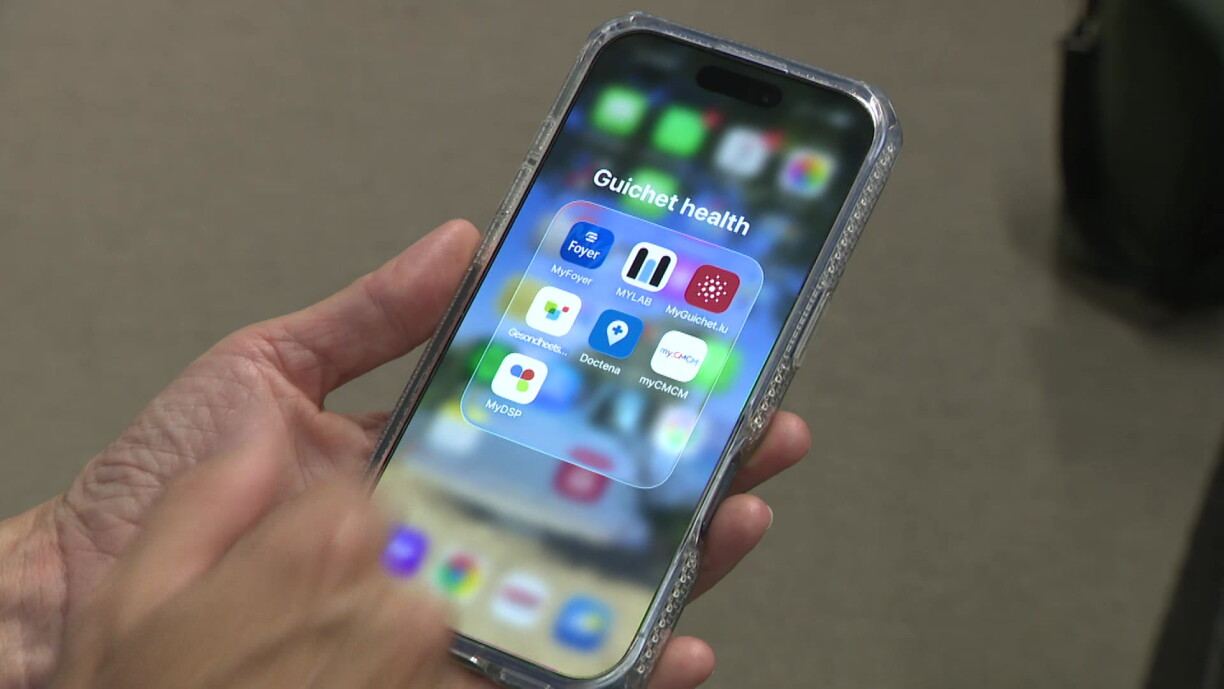
Luxembourg's eSanté agency, which oversees the country's shared digital health services, is preparing for the European Health Data Space (EEDS), an EU-wide framework that will allow patient data to be accessed securely across borders from 2029.
Last year, eSanté moved into new offices in Strassen, with its current workforce of 50 employees is set to grow to 80. Since mid-June, the agency has also had a new director general, Alexandre Baumeister.
The challenges are considerable. In spring 2029, the EEDS is expected to become operational, initially for patient records and prescriptions.
From 2031, it is also set to cover medical imaging and laboratory results. Patients' data will then be managed in one place and used across borders.
"This means that if a Luxembourg patient goes to a university hospital in Brussels and then returns to their GP or a specialist in Luxembourg, they will be able to access that data", explained Marc Hostert, president of Agence eSanté.
Health data will also be structured to allow long-term developments to be monitored. It will be standardised so that all professionals in the health sector can use it.
"In other words, a system like this should improve the patient’s chances, because it is faster and more efficient", Hostert stressed.
The data is also expected to be made available to research and innovation in anonymised form. This, too, should ultimately benefit patients. Before that can happen, however, Luxembourg's Shared Care Record, known as the Dossier de Soins Partagés (DSP), must be further improved and adapted.


The DSP is also set to become more user-friendly. Since January, simplified access has been available via MyGuichet.
Medical imaging and laboratory results are also being stored in the system. "That is why the statistics are increasing massively", said the president of Agence eSanté.
Over the past 12 months, around 3,260 DSPs have been activated each month, an increase of 30% compared to the previous year. Access is expected to be improved further, for example for GPs whose patients may not have their login details with them.
"This is the kind of thing we want to do, not with the aim of reaching usage targets, but to ensure that when access is needed, it is available in a secure but simple way", explained the new director general, Alexandre Baumeister.
The security of patients' data remains the top priority. For Agence eSanté, public trust is its most important asset.





