The POLINDEX 2023 study delves into the electoral patterns of recent years and was commissioned by the Chamber of Deputies. It was conducted in collaboration with the University of Luxembourg and the Ilres Market Research Institute, involving interviews with 1,000 voters and 500 foreign residents. The second part of the study focuses on the "panachage" procedure, examining which parties voters primarily switch between and how they gather information about candidates and policies.
Beginning with the overarching phenomenon of panachage, it has long been believed that Luxembourg voters predominantly cast their votes for individual candidates. However, the July 2023 study reveals a notable shift, with 47% of respondents expressing their preference for voting for a party list. Meanwhile, 31% indicated their intention to vote for candidates from various lists, and while 22% do not vote for a complete list, they only for candidates from a specific party.
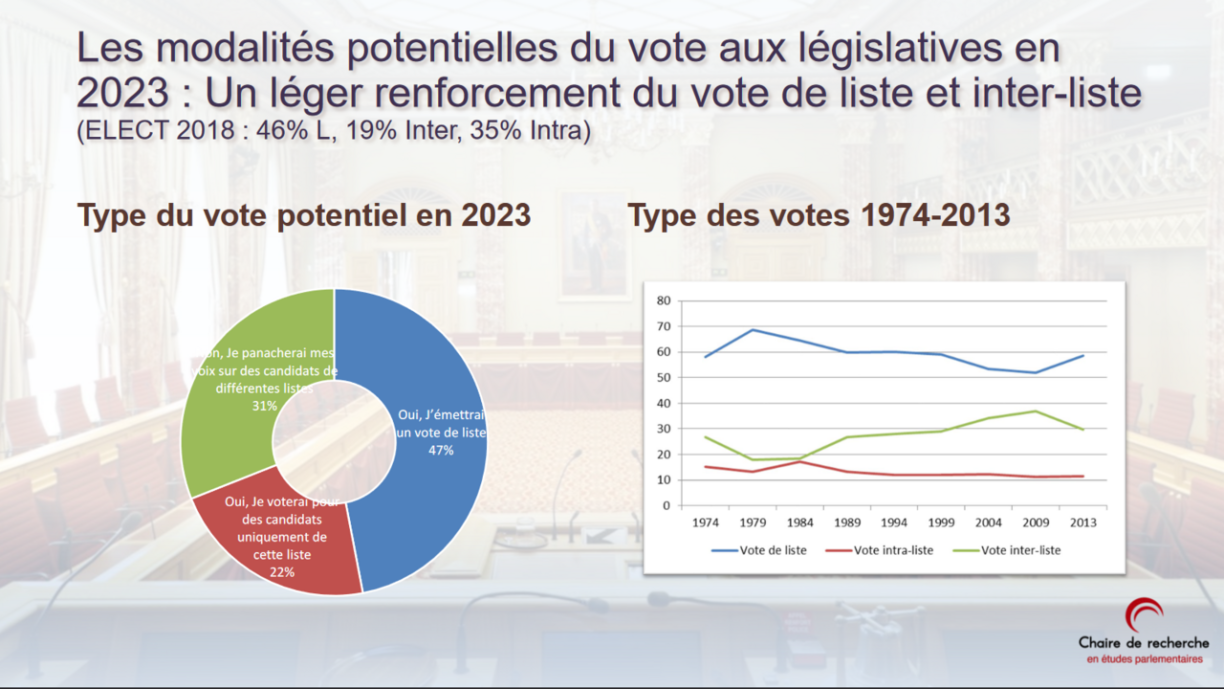
In comparison, during the 2018 legislative elections, 46% of voters chose party lists, 35% voted for candidates from different parties, and 19% opted for candidates from a specific list. This data suggests a growing inclination toward party lists, with the popularity of well-known figures from fields like sports or journalism no longer carrying the same weight.
According to political scientist Philippe Poirier from the University of Luxembourg, this shift is attributed to voters prioritising their personal convictions and political parties' policy proposals. Consequently, the likelihood of voting for a party list has increased.
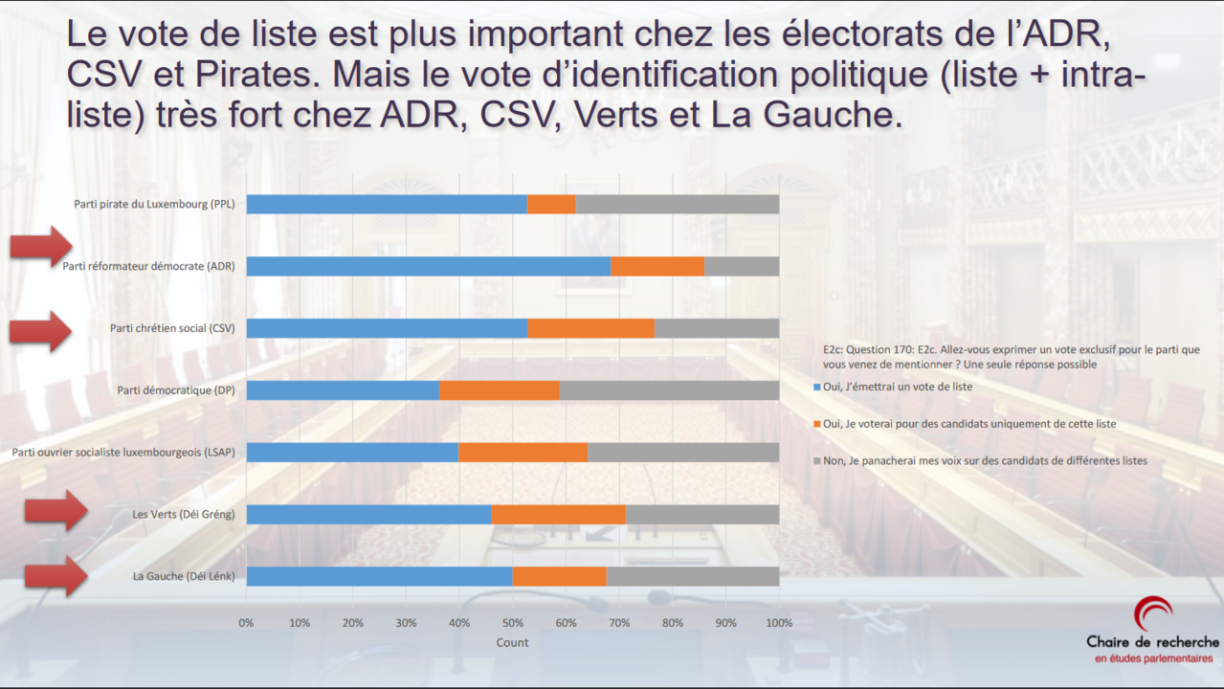
Examining specific party supporters, the study reveals that backers of the Alternative Democratic Reform Party (adr), the Christian Social People's Party (CSV), and the Pirate Party are the most inclined to vote for a list. Conversely, this voting behaviour is least common among supporters of the Democratic Party (DP) and the Luxembourg Socialist Workers' Party (LSAP). When it comes to selectively voting for candidates from a particular party, adr, CSV, the Green Party (déi Gréng), and the Left Party (déi Lénk) come out on top.
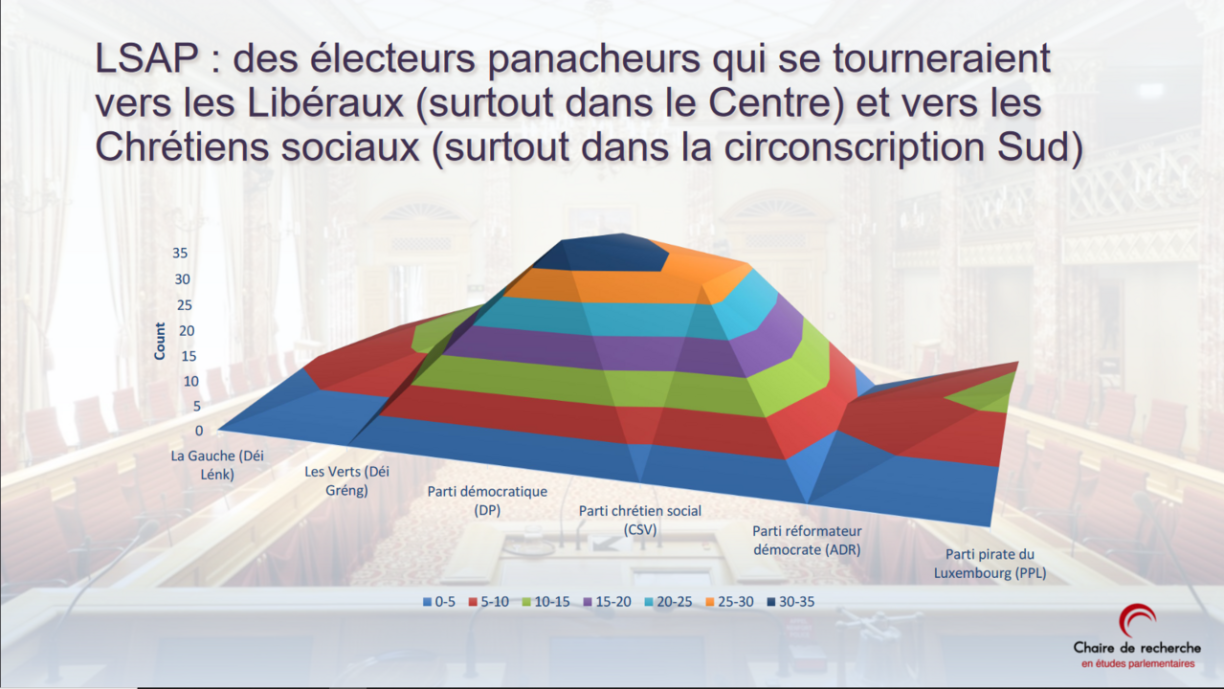
Cross-party preferences are also noteworthy. For instance, Green Party supporters engaging in panachage are drawn between 40% and 50% to the LSAP, DP, and the CSV. LSAP supporters who vote for individual candidates rather than lists are drawn to the DP in the centre and to the CSV in the south.
Meanwhile, CSV and DP supporters exhibit similar tendencies, fluctuating between each other and the LSAP at 30% to 40%, with a slight preference for the LSAP in the south. It is also interesting to note that adr supporters initially favour the DP before turning to the CSV. This distinction highlights a potential discrepancy between adr voters and adr politicians, as the latter consistently name the CSV as their preferred coalition partner.
Before casting their votes, ideally, voters engage in some level of research to inform their choices. But where do people turn to gain insights into political parties and their proposals?
Perhaps surprisingly, social media emerges as the primary source of political information for only 8% of respondents. This finding challenges the assumption that platforms like Facebook, X (formerly known as Twitter), Instagram, and the like wield significant influence in shaping political opinions. Instead, traditional media, both in print and online formats, along with radio and television, continue to dominate as the primary sources of information for Luxembourg's electorate.
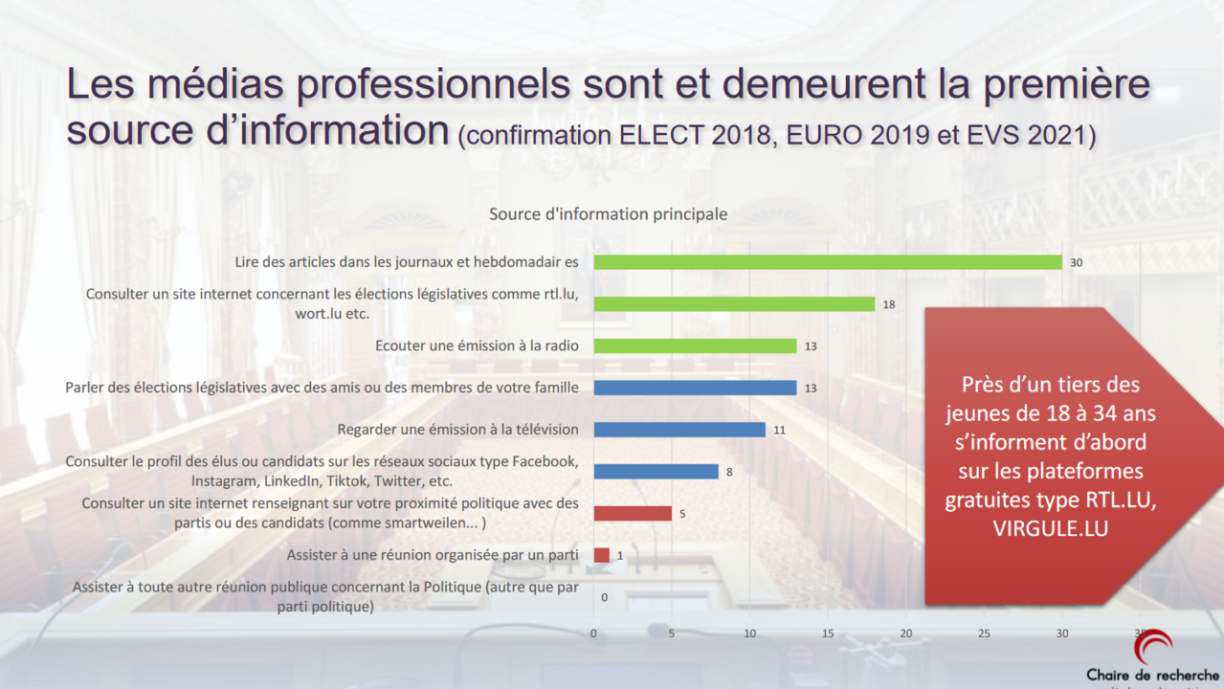
Poirier underscores this point, stating, "professional media outlets, whether in print or online, on radio or television, have consistently dominated in Luxembourg. Social networks, while having gained some ground, still constitute a minority source of information. Radio stands out as the leading professional medium."
This revelation prompts the question of how much political candidates truly benefit from sharing selfies and updates from local events on social media platforms. The fact that the work of traditional media does not completely pass voters by is one thing. How they evaluate the quality of this work, on the other hand, is another.
The third and final part of the POLINDEX survey will be released on Wednesday.
Related articles
POLINDEX Survey: Housing crisis tops voter concerns in Luxembourg





