The walls of Luxembourg City and its old districts have been part of UNESCO's World Heritage List since 1994. Since the end of November, the city's inhabitants, tourists and all those who go out at night have been able to enjoy the capital in a completely new way. The brand-new lighting system designed by the Public Lighting Department, the Public Space, Festivities and Markets Department, the City's environmental delegate and "licht - raum - stadt - planung GmbH" illuminates the city's fortified heritage like never before, allowing passers-by to revisit it with a greater sense of security.
"The night produces friendship, closeness and exchange. That's what makes a city great! Because a town is only as good as the men and women who live in its stones," explains Robert Philippart with a gentle smile, a historian who knows the town like the back of his hand. Philippart is also Unesco Site Manager at the Ministry of Culture, and helps us decipher the stories behind the city's illuminated walls.
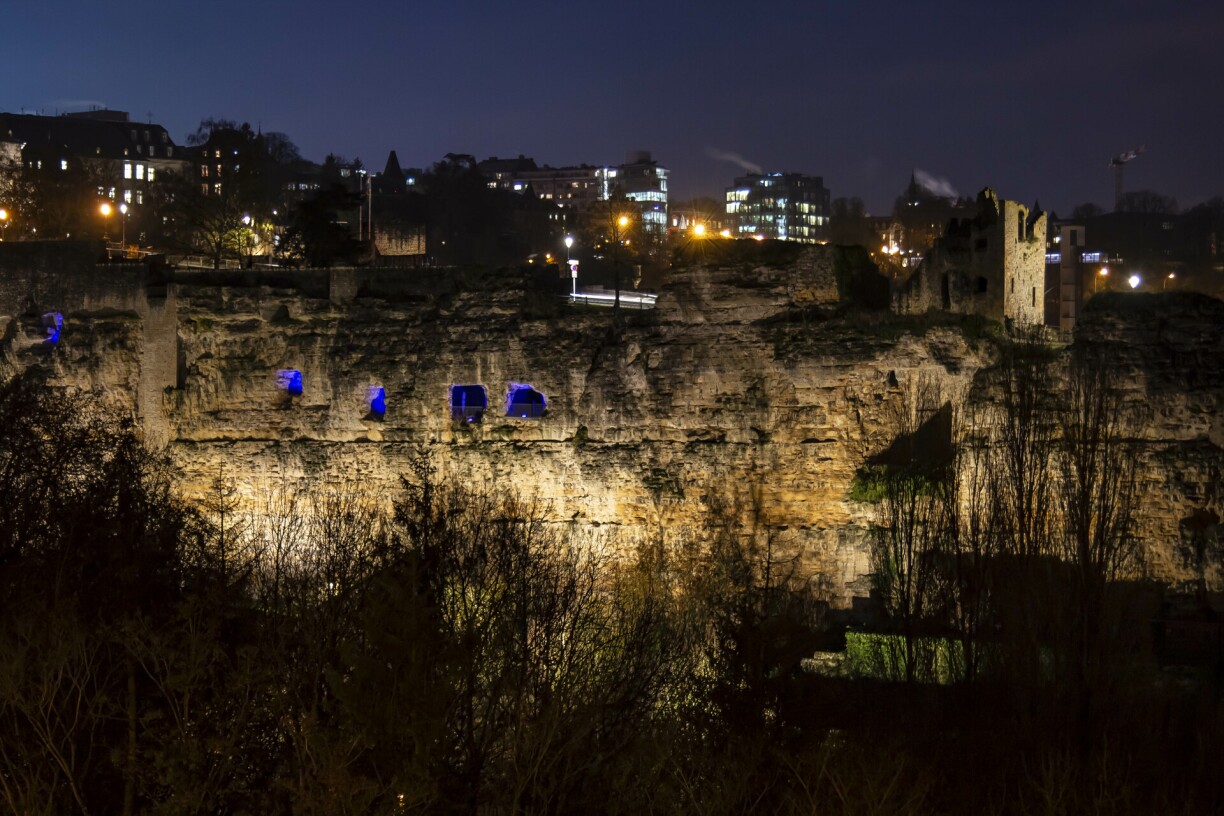
"The view onto the Bock and the old town can be taken in so well and beautifully due to the particular topography of Luxembourg City from the fortifications as well as the Alzette river. You get a beautiful view onto the ground on which Luxembourg City, or Lucilinburhuc, its original castle, was built. It's a view of the cradle of the city and the country," explains Robert Philippart.
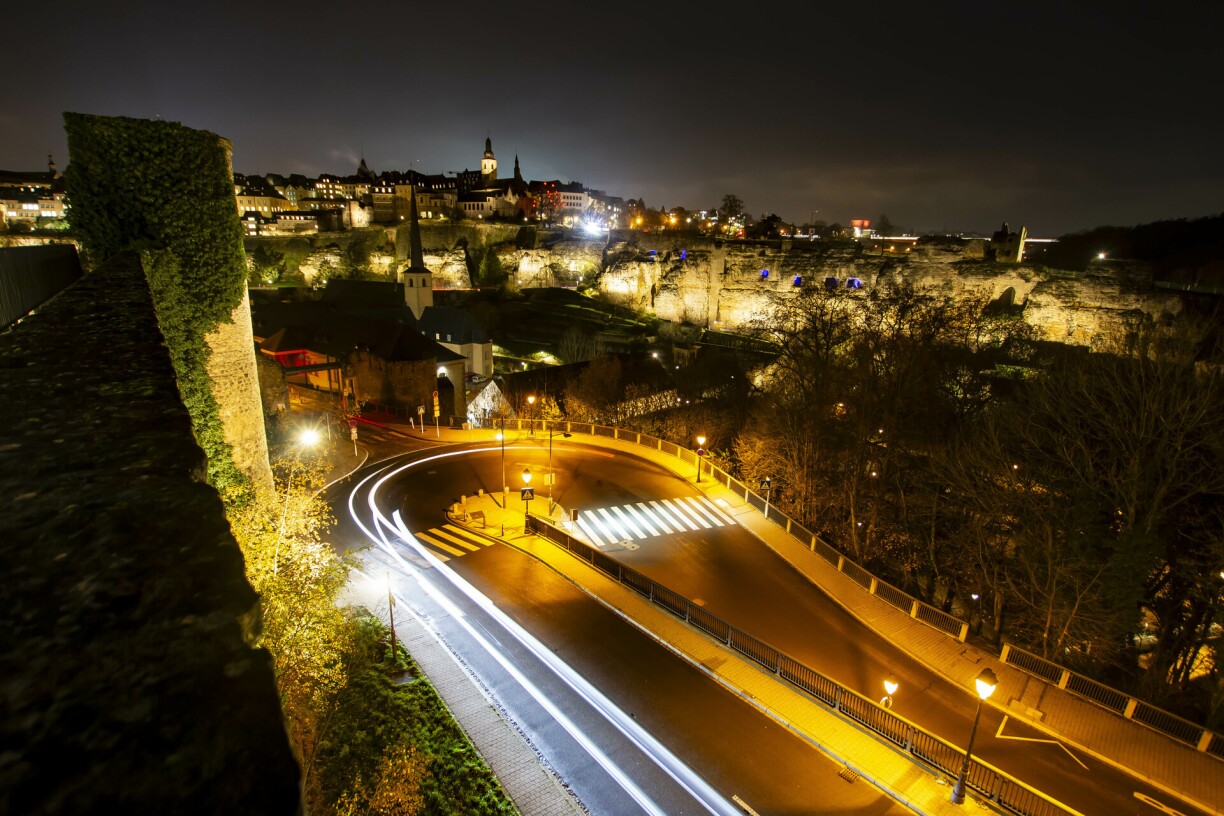
"The winding Rue de la Tour Jacob reminds us of Luxembourg's unique topography and steepness of its hills. There is a clear distinction between the lower and upper town, and it is easy to see the extent to which the lower town of Grund is protected by the hilltops. The first settlements were built next to the water, which was used for brewing, tanning and pottery from Gallo-Roman times onwards.
On the right is a section of the famous 13th-century Wenceslas Wall. And in the centre of the photo, you can see Neumünster Abbey, a former monastery of Benedictine monks built in the 17th century. They are the source of "our mutilingualism", as from 1083 they taught us German, French and Latin at the same time. Luxembourgish was added as its own language in the 19th and 20th centuries," the historian adds.
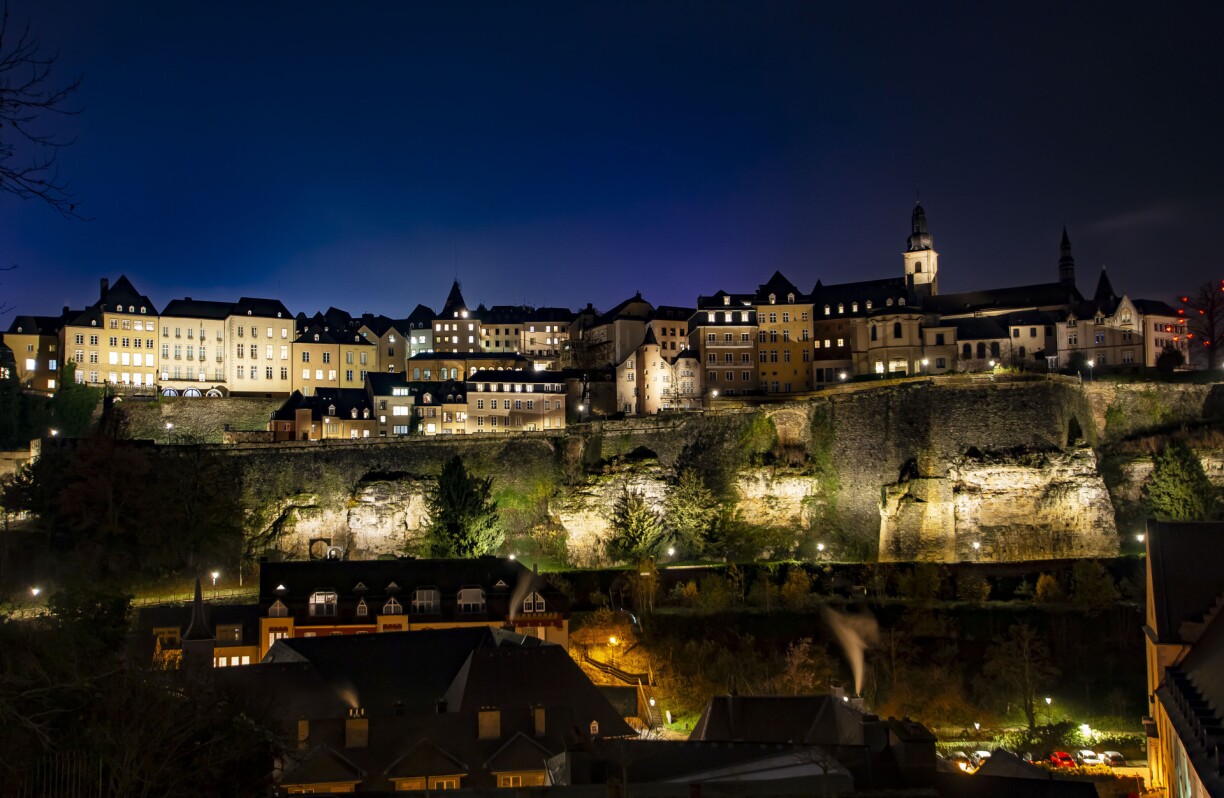
"The rocks were dried out and served as a foundation for the construction of bastions, such as here the old bastion of the castle, which was 10 metres higher at the time. The old city walls, which were built in the 16th and 17th centuries by the Spanish to protect the upper town, became the romantic Corniche promenade in the 19th century, after they had been dismantled."
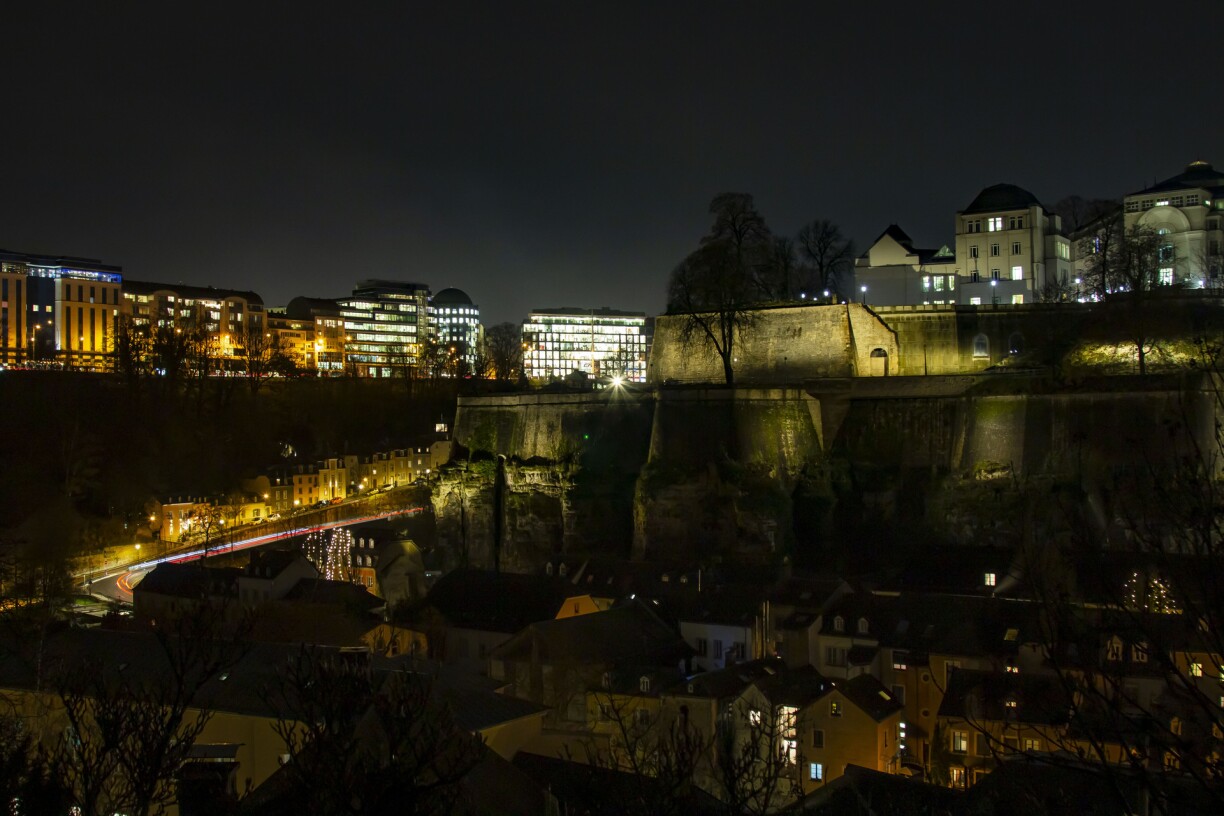
Here we have "Op de Rondellen", named after the three rounded bastions that made up the Citadel of Vauban in 1685, and whose bastions are usually triangular or trapezoidal in shape. To the rear, the very bright dairy house.
A office building of 8,000 m2 replaced the former central dairy in 2008. "The two architectural ensembles look at each other but do not merge. This opposition shows that the space renews itself and that it lives", Philippart comments.
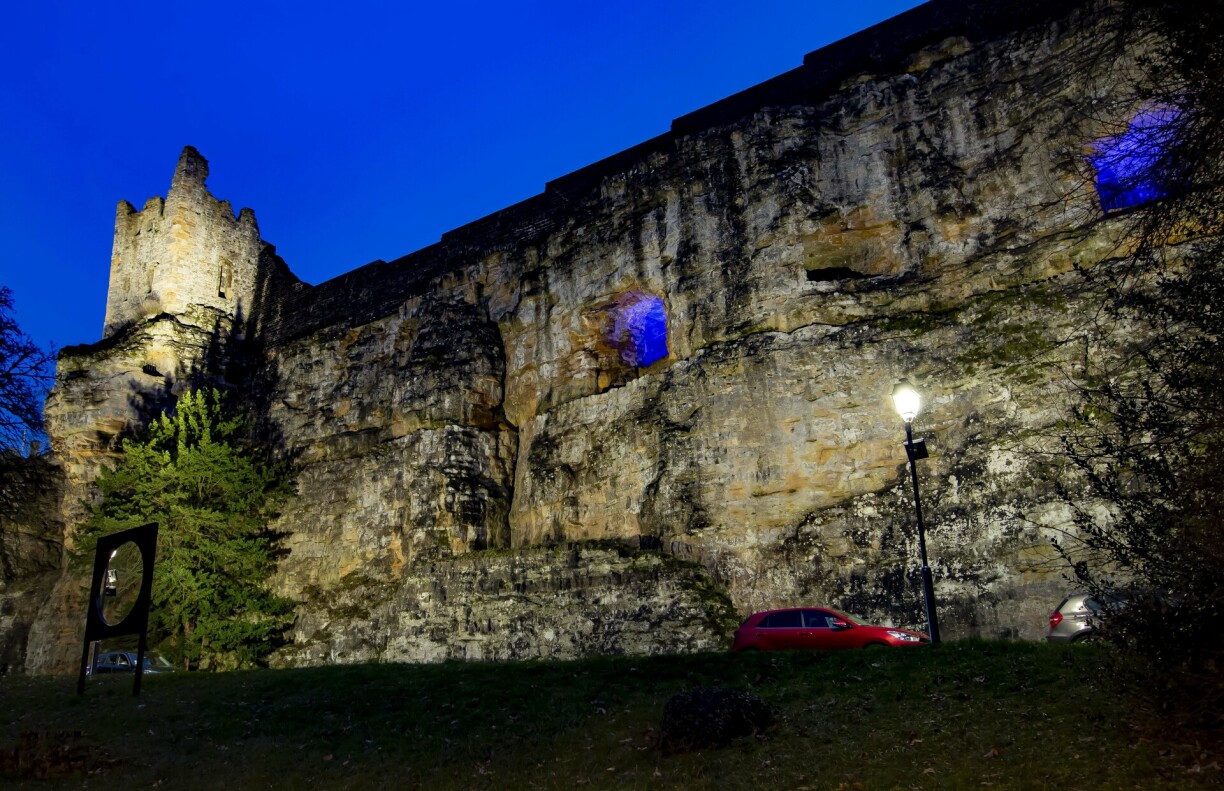
The old casemates of the Bock, built by the Austrians in the 18th century to defend the so-called Gibraltar of the North. The openings were enlarged when the town's fortifications were dismantled in 1867. Breaches had to be made in the defences, which could never be rebuilt under the Treaty of London.
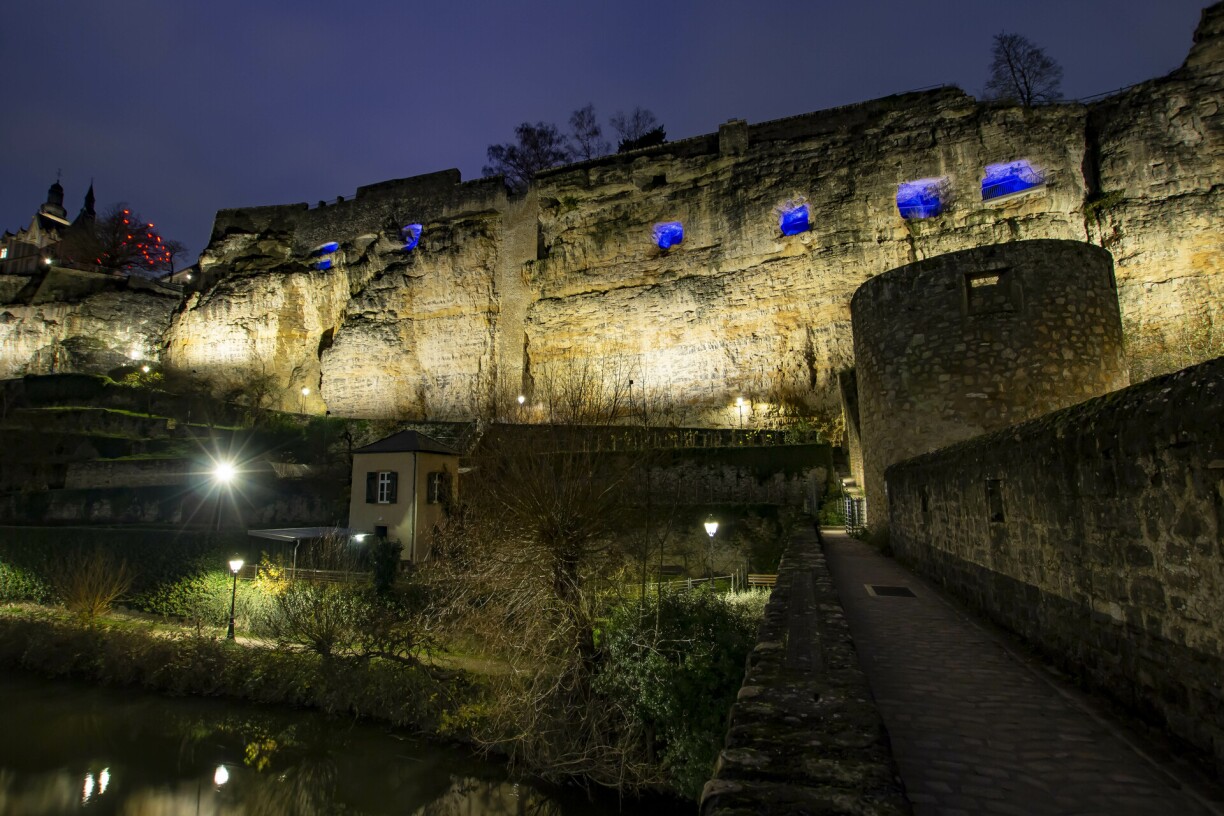
One of the most romantic views of Luxembourg City is from the "Stierchen", which is part of the Wenceslas Wall. In the background, you see the walls of the Bock casemates, and the former garden of the former Neumünster Abbey in the foreground. Here, a microclimate reigns because it is on the southern side, and the warmth of the rocky slopes makes it ideal for planting vines.





