Here are five things you should know at the end of this week:


Luxembourg's annual inflation rate rose from 2.4% to 2.6% in May, driven by significant price increases in airline tickets, package holidays, and childcare costs.
Going up – Luxembourg's annual inflation rate increased from 2.4% to 2.6%, according to the National Institute of Statistics and Economic Studies (STATEC). This uptick in inflation was notably driven by a significant rise in prices for airline tickets, which surged by 19% in May compared to April, and package holidays, which increased by 9%.
Additionally, childcare costs saw a sharp increase, with prices for crèches and children's day-care centres rising by 8.6%. Multi-service telecom offers also contributed to the overall inflation, increasing by 8% in May.
Some positives – In contrast, food prices experienced a modest increase of 0.3% compared to April, with notable price hikes in fresh seafood (+5.3%), olive oil (+3.7%), and flour (+3.4%). However, some food items saw price decreases, such as crisps (-3.3%) and fresh fish (-2.7%).
Beverage prices also declined, with mineral water falling by 2.5% and soft drinks by 1.6%. Despite these reductions, food prices were 2.1% higher year-on-year, and soft drink prices increased by 3.7%.
Fuel prices saw significant reductions in May, with diesel prices down by 5%, petrol prices falling by 3.1%, and heating oil costs dropping by 8.6%, although petroleum derivative prices were still 4.2% higher than in May 2023.
Wage indexation on the horizon – The next wage indexation, which adjusts wages to keep up with inflation, is forecasted by the STATEC to be triggered when the link coefficient of the sliding wage scale reaches 1013.46 points. According to the STATEC's May forecast, the next wage indexation is expected in the last quarter of 2024, with a subsequent one anticipated in 2025.
Luxembourg will increase its defence budget from €700 million or 1.3% of GNI to 2% of GNI to strengthen its role within NATO, as confirmed by Minister of Defence Yuriko Backes.
Minister Backes plans to present a proposal for the gradual increase in defence spending to the Government Council and formalise the commitment at the upcoming NATO summit.
In 2024, Luxembourg will contribute €70 million to aid Ukraine, with the potential for an increase based on needs, marking a shift from its historically low defence contributions among NATO members.
NATO commitment – Luxembourg is set to significantly increase its defence budget from the current €700 million, which constitutes 1.3% of its Gross National Income (GNI), to a target of 2% of GNI.
This decision, announced by Minister of Defence Yuriko Backes, aims to enhance Luxembourg's strategic role within NATO and address criticisms of being a "profiteer" in the alliance. The boost in spending is part of a broader effort to align with NATO's defence expenditure guidelines and contribute more substantially to collective security efforts.
Upcoming summit – Minister Backes will present a detailed proposal for the gradual increase in defence spending to the Government Council, outlining the steps to reach the 2% GNI target. She intends to formalise Luxembourg's commitment to this increased spending at the upcoming NATO summit in Washington next month, and also at the ministerial meeting in Brussels next week.
Ukraine aid – For the year 2024, Luxembourg has allocated €70 million to support Ukraine in its conflict with Russia, with the Ministry of Defence indicating that this amount represents the "strict minimum". This figure could be increased based on Ukraine's evolving needs, reflecting Luxembourg's flexibility and responsiveness to the situation.
Historically, Luxembourg has been one of the lowest contributors to NATO's defence budget relative to its GDP, but recent adjustments allowing contributions to be calculated based on GNI have provided an opportunity for Luxembourg to improve its standing and commitment within the alliance.
Luxembourg has the highest percentage of foreign inmates in Europe, with 78% of its prison population being foreign nationals as of January 2023.
The most common nationalities in Luxembourg's prisons are Luxembourgish, Portuguese, and French, with theft and drug offences being the main reasons for incarceration.
Luxembourg also ranks high in pre-trial detention rates (49%) and had a prison suicide rate of 14.2 per 10,000 inmates in 2022.
Council of Europe report – Luxembourg leads Europe in the percentage of foreign inmates, with 78% of its prison population being foreign nationals as of January 2023. This is the highest rate among European countries with more than half a million inhabitants. The statistics were part of a report by the Council of Europe, highlighting the significant presence of non-Luxembourgish individuals within the country's penal system.
Concerning stats – Luxembourg also has a high rate of pre-trial detention, with 49% of its inmates being held without a conviction, ranking it among the top in Europe alongside Albania and Armenia.
Additionally, the country recorded a prison suicide rate of 14.2 per 10,000 inmates in 2022, which, while lower than Latvia, Switzerland, and France, still represents a significant concern for the well-being of its prison population.
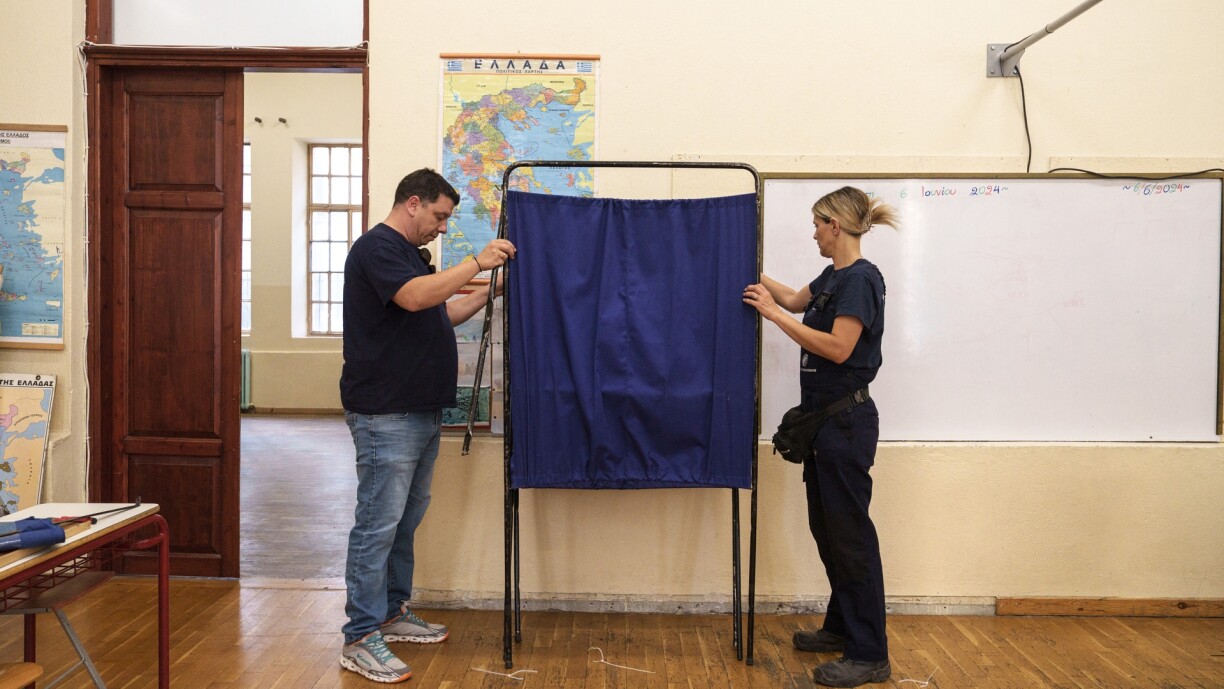
Irish Prime Minister Simon Harris voted early in the EU elections, with local and European Parliament elections occurring simultaneously amid rising anti-immigration sentiment in Ireland.
The far-right has seen gains across the EU, with Dutch exit polls showing strong support for Geert Wilders' Freedom Party and predictions of up to a quarter of the EU parliament seats being taken by far-right parties.
Major EU economies like France, Italy, Hungary, and Germany are expected to see significant support for far-right parties, reflecting widespread voter grievances and geopolitical instability.
Ireland – Irish Prime Minister Simon Harris cast his vote early in the morning on Friday as Ireland participated in both local and European Parliament elections. Despite Harris' energetic campaign efforts, there is a noticeable rise in anti-immigration sentiment among voters, reflected in the number of candidates running on such platforms.
This sentiment is particularly significant in Ireland, where around 20 percent of the population is born outside the country, leading to heightened political tensions around migration issues.
The Netherlands – Across the EU, the far-right has seen considerable gains, with Dutch exit polls showing Geert Wilders' Freedom Party (PVV) securing a strong position with seven seats. This trend suggests that up to a quarter of the EU's 720 parliament seats could be taken by far-right parties.
However, the close results in the Netherlands, where the Green-left alliance led by Frans Timmermans appeared to take first place, offer some hope for centrists aiming to maintain their influence in the EU legislature.
Elsewhere – Major EU economies, including France, Italy, Hungary, and Germany, are expected to witness significant support for far-right parties in the ongoing elections. In France, Marine Le Pen's National Rally is predicted to lead, while Giorgia Meloni's Brothers of Italy and Viktor Orban's Fidesz are favoured in Italy and Hungary, respectively.
In Germany, the extreme-right AfD is polling second. These trends underscore widespread voter dissatisfaction and grievances, fuelled by a series of crises such as the COVID-19 pandemic and Russia's war on Ukraine, contributing to the geopolitical instability influencing the elections.
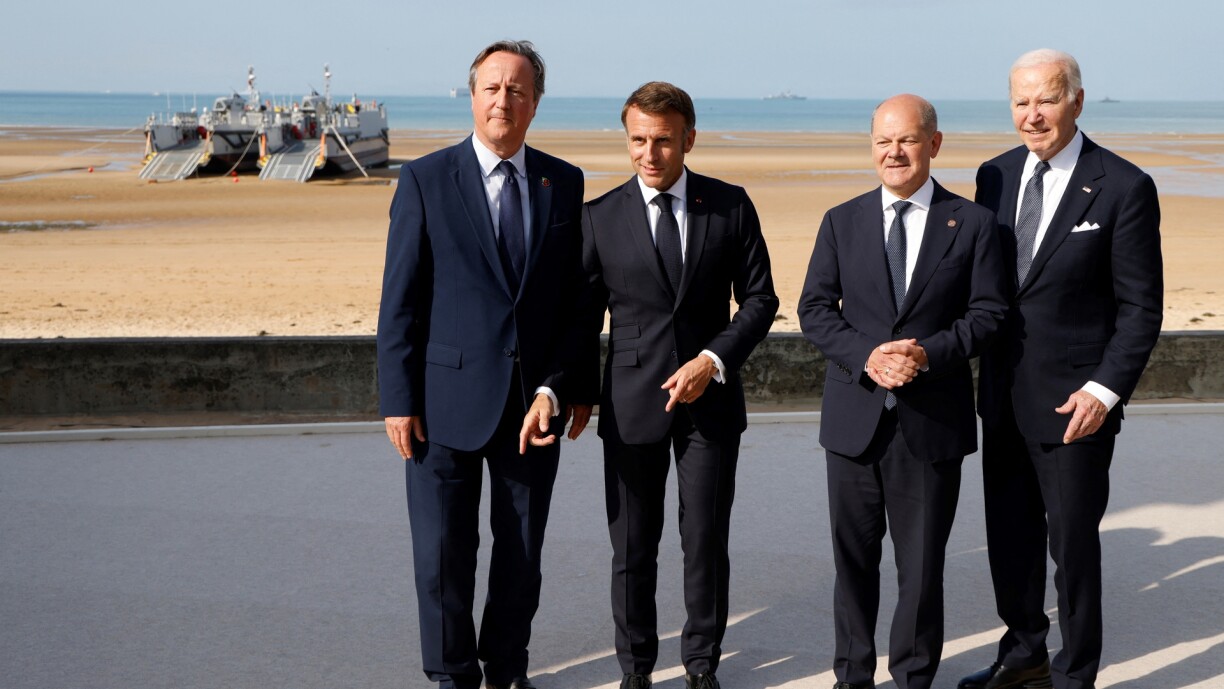
World leaders on Thursday gathered in Normandy to commemorate the 80th anniversary of D-Day, highlighting the ongoing struggle for democracy and Ukraine's fight against Russian aggression.
Biden emphasised the importance of international alliances and vowed continued support for Ukraine, warning against the dangers of isolationism and authoritarianism, while Macron announced new military support for Ukraine.
British PM Rishi Sunak faced criticism for leaving the D-Day commemorations early for a TV interview, apologising for the decision and acknowledging the significance of honouring veterans' sacrifices.
World leaders gather – On the 80th anniversary of D-Day, world leaders including US President Joe Biden, Britain's King Charles III, Canadian Prime Minister Justin Trudeau, French President Emmanuel Macron, and Ukrainian President Volodymyr Zelensky gathered in Normandy. They paid tribute to the Allied troops who landed here on 6 June 1944 and drew parallels between the fight against Nazi Germany and the current conflict in Ukraine.
The presence of Zelensky underscored the ongoing war in Europe, with leaders reflecting on the sacrifices made to liberate the continent and the persistent struggle for democracy against Russian aggression.
US and French support for Ukraine – President Joe Biden highlighted the crucial role of international alliances, vowing that the United States would not abandon Ukraine in its fight against Russia, condemning isolationism and authoritarianism.
Macron echoed these sentiments, announcing that France would transfer Mirage-2000 fighter jets to Ukraine and provide training for Ukrainian pilots.
Sunak under fire – British Prime Minister Rishi Sunak faced backlash for leaving the D-Day commemorations early to conduct a television interview amid Britain's general election campaign. Critics accused him of prioritising his personal image over honouring the veterans. Sunak later apologised, acknowledging it was a mistake to leave early and reaffirmed his respect for the veterans' sacrifices.
Business & Tech – European stock markets rose Thursday as the European Central Bank cut interest rates for the first time since 2019 – but gains were muted as sticky inflation blurred the outlook for more reductions.
Science & Environment – Nations are falling short of the goal agreed at UN climate talks to triple renewable energy capacity by 2030 as part of efforts to curb global warming, the International Energy Agency said Tuesday. https://today.rtl.lu/news/world/a/2066108.html
Entertainment – The municipality of Luxembourg City has announced the full line-up for this year's free 'City Sounds' concerts, including Toto and Robin Schulz.
Tour disrupted – Luxembourg's Benoit Martiny band had intended to travel to the UK via the Eurotunnel in order to start their tour, but were detained at Calais due to unfulfilled visa requirements.
Monument returns – After months of meticulous restoration, Luxembourg City’s beloved 'Renert' monument, celebrating Michel Rodange's fable of the same name, has returned to its pedestal at Place Guillaume II.https://today.rtl.lu/news/world/a/2066108.html
Housing – The National Society for Affordable Housing (SNHBM) reported a loss of €5.4 million in 2023, marking the first time in its history that the public property developer has recorded a financial deficit.

Your Weekly Recap is published every Friday at noon. Read earlier versions.





