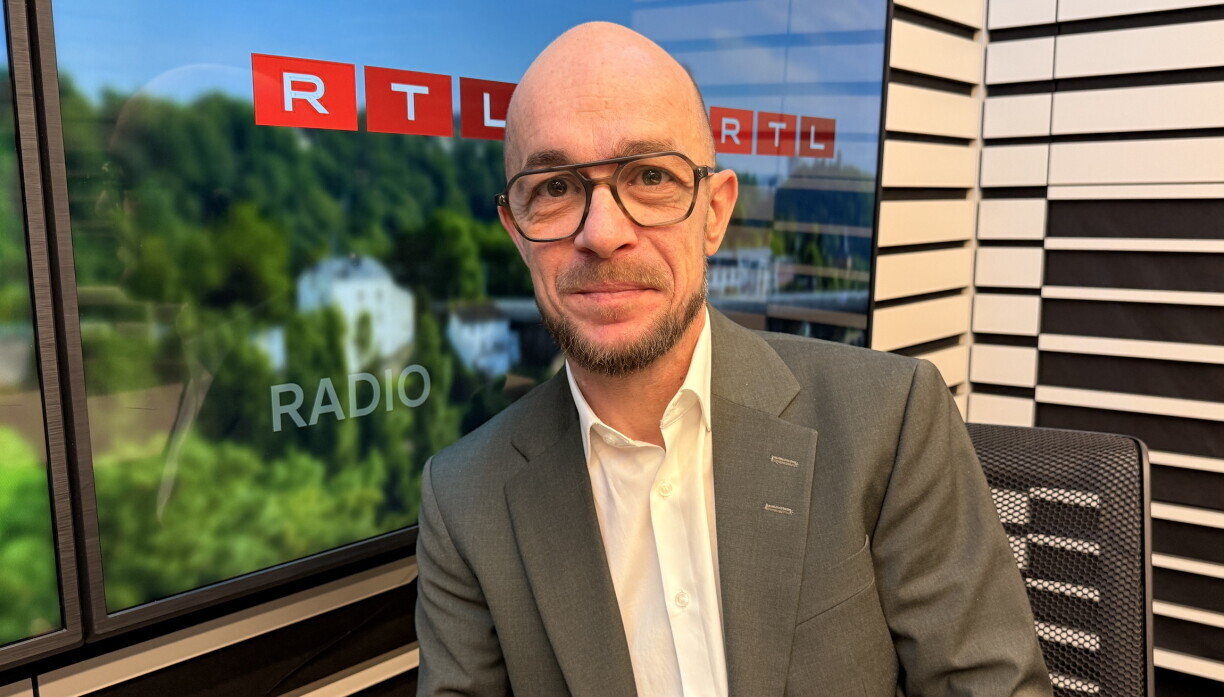
The coronavirus pandemic, the ongoing climate crisis, and the need to prepare for future disasters have prompted Luxembourg’s former emergency medicine association to broaden its remit.
The Luxembourg Society for Emergency and Disaster Medicine (SLMUC) now aims to unite professionals from a wide spectrum of fields involved in medical emergencies and disaster response to enhance national preparedness.
Previously, the association founded in 2016 focused mainly on doctors. The restructured SLMUC is now open to a range of professionals, including nurses, members of the Grand Ducal Fire and Rescue Corps (CGDIS), Luxembourg Air Rescue, and the army.
As of Wednesday, the SLMUC counted 107 members. The goal is to bring together experience, integrate the younger generation, and strengthen the country’s resilience to crises.
The association also seeks to position itself as a contact point for public authorities, particularly in disaster preparedness and exceptional situations.
Anaesthetists are welcome within the new association, Bock affirms. Earlier this year, a disagreement surfaced when anaesthetists and resuscitation specialists objected to the inclusion of emergency physicians on emergency medical teams (SAMU).
Dr Emile Bock, however, downplays the dispute, calling it a "storm in a teacup". Four or five anaesthetists have already joined SLMUC and were present at its extraordinary general assembly.
For Bock, collaboration is paramount. He emphasises that different specialisations must work more closely together to improve care and crisis preparedness, though the issue of SAMU staffing still requires resolution.
Bock highlights that the former association had already been recognised by policymakers and contributed to several advances since 2016, including changes to regulations and a report on emergency care.
He believes it is now vital to extend emergency medicine expertise beyond in-house services, for example by cooperating with the High Commission for National Protection (HCPN).
SLMUC plans to reach out to relevant stakeholders and has already been approached for collaborations. The association aims to prepare and practise various crisis scenarios, focusing on effective interprofessional cooperation.
Asked how well Luxembourg is equipped to handle a large-scale disaster with many casualties, Dr Bock gives a largely positive assessment. He notes that effective plans exist and are regularly rehearsed, with each hospital required to conduct such an exercise at least once annually.
SLMUC now wants to expand these exercises with its partners and also include scenarios outside the hospital context.
Nonetheless, Dr Bock acknowledges existing constraints: the number of operating theatres and shock rooms is limited, and there are challenges regarding staff and infrastructure.
The association hopes to address these issues and contribute to finding solutions.
For major disasters, Luxembourg relies on European solidarity and cross-border cooperation. According to Dr Bock, there are existing agreements that enable French emergency teams to intervene in Luxembourg when needed, which happens regularly.
The priority is always to get a SAMU team and a doctor to the patient as quickly as possible, and this collaboration already works well in practice.
One of SLMUC’s central demands is greater recognition of the skills of nursing and emergency care staff. Dr Bock insists that qualifications should not be judged solely on diplomas, but that additional training and practical experience must also be taken into account.
He points to the example of Belgium, which has established a specific qualification for nurses in intensive and emergency medicine, which is a model Luxembourg could emulate.
Dr Bock regrets that continuous medical education is still not mandatory for doctors in Luxembourg, and argues that the time has come to introduce such a requirement. Other European countries have successfully implemented similar models.
In the fast-evolving field of emergency medicine, he considers regular training indispensable. He believes that the responsibility for organising mandatory further training should be assigned to the Medical College.
SLMUC also wants to be involved in developing medical training at the University of Luxembourg to emphasise that emergency medicine should be an integral part of any complete medical curriculum.
The new association has already received positive feedback, Dr Bock reports, and meetings are planned with several political parties and parliamentary groups.
SLMUC intends to present its positions and explain how it can contribute to better preparedness for medical crises and disasters.


