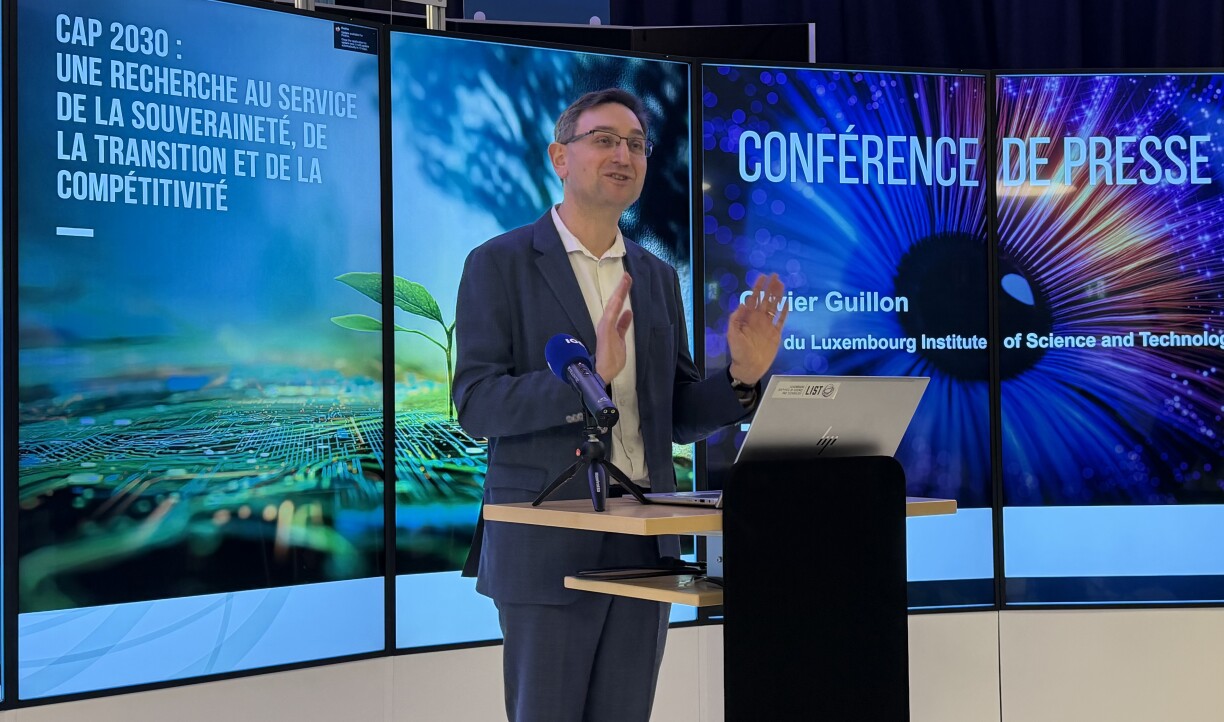
The Luxembourg Institute of Science and Technology (LIST) presented its 2025 review and future strategy on Thursday, detailing its role as a key national research player and its reorientation towards major societal challenges.
With approximately 840 employees involved in nearly 500 projects last year, LIST ranks among Luxembourg's foremost research institutions. The presentation aimed to chart the institute's strategic direction and its intended role on the national and international stage through 2030.
LIST's scale contributes to Luxembourg's strong standing in European research. Eurostat figures place the country among Europe's leaders in scientific and technological productivity, ahead of nations like Germany and France.
In his address, LIST's Director General Olivier Guillon, who took up the post in September, highlighted key industry partnerships. These include a strategic six-year alliance with Goodyear encompassing over 30 projects for sustainable, connected mobility, and collaborative work with ArcelorMittal on decarbonising steel production. Guillon also noted "major projects" underway to deploy artificial intelligence across various sectors.
This activity aligns with LIST's 'CAP 2030' strategy, which shifts the institute's focus from traditional disciplines to concrete societal challenges. Priority areas include environmental protection, climate, and resource management. In the built environment, research targets sustainable cities, smart buildings, and green mobility, while industrial research aims to enhance energy efficiency and sustainable production.
Additionally, LIST is developing strategic, cross-cutting capabilities in areas deemed vital for national sovereignty, such as space, artificial intelligence, and defence security.
Director Guillon concluded by emphasising the importance of transparency and public communication. He stated that research, largely funded by public money, must clearly communicate its objectives and results to the public to build and sustain trust in science.






