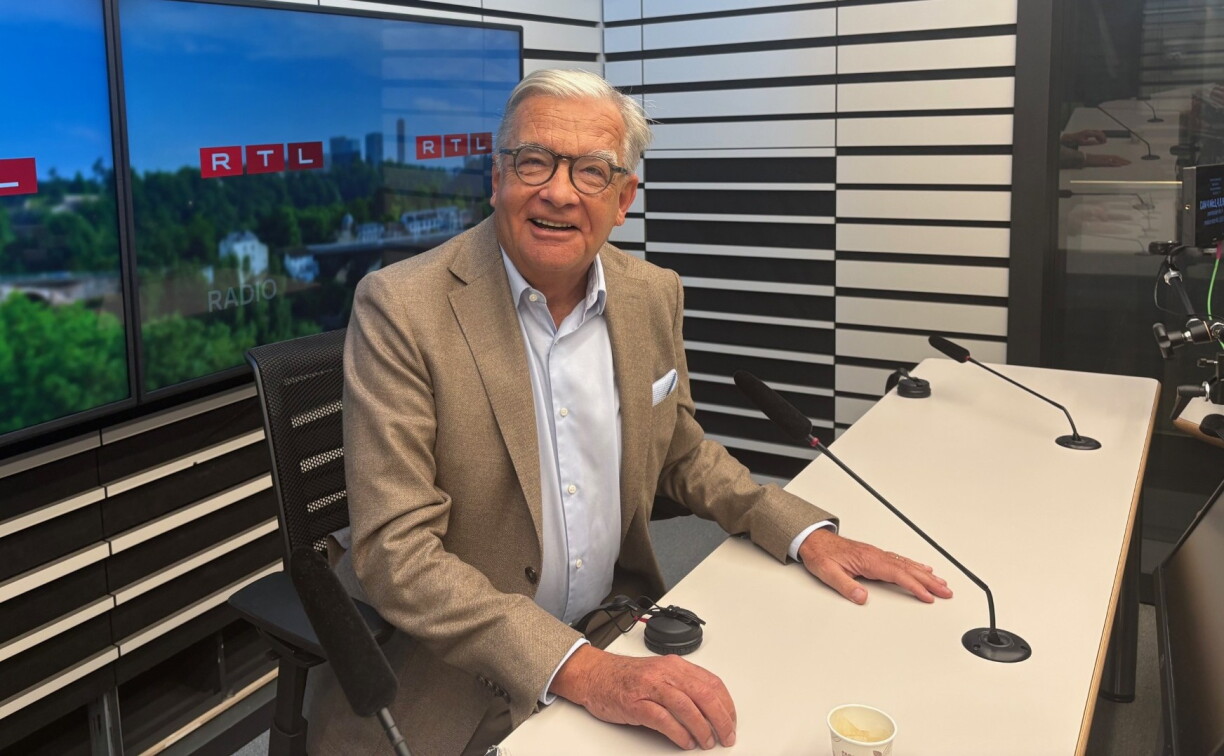
Laurent Mosar, MP for the Christian Social People's Party (CSV) and Luxembourg City alderman for finance, spoke to RTL Radio on Thursday regarding his thoughts on potential government expansion. He said one must be "very careful when introducing new government roles", and warned the gap between salaries in the public and private sectors could not widen too much. He also questioned several government investments, suggesting that savings could be found here.
Mosar pointed to two "shockingly expensive" examples, such as a fifth swimming pool in Mamer, which will serve the new sports high school site. Mosar asked if the school could not make use of any of the existing swimming pools in the area. He also pointed at the government investment in the K2 building in Kirchberg, where it was unclear what would happen to the new offices. "These are examples where I think the government could tighten its belt a bit more before it tries to convince the public to make savings of their own," the CSV MP argued.
Although Mosar stressed that he was happy to have a "very good" civil service in this country, he expressed concerns and problems regarding its development. He said he would have a "problem" with this if "the state continues to expand massively in the future". In his opinion, digitalisation, artificial intelligence, and the goal of simplifying procedures, means the government should not have to replace every civil servant heading into retirement.
Another concern in Mosar's mind would be the widening gap between public and private sector salaries. Civil service union (CGFP) president Romain Wolff recently pushed for a salary increase in negotiations, but Mosar said the CGFP was reasonable and would understand the challenges at hand.
The CSV MP said: "Very often I have the feeling that in politics and around politics people are not aware of where our wealth comes from." He pointed out that the country's financial centre generates almost 80 percent of corporate tax revenue. So if things get worse in that sector, the Grand Duchy would have big problems, a possibility that worries him "every day . "
In this context, the CSV MP wrote in a letter to the editor in the Lëtzebuerger Wort that Luxembourg could not rest on its laurels.
On Instagram, Mosar often shares photos and videos of himself doing well or relaxing – in a deck chair, in a convertible, on holiday. When asked how the two messages fit together, he replied: "Well, I'm an optimistic person, and even if there are sometimes problems, in my personal life and outside, I think you should always start the morning with an optimistic smile."
If the Esch-sur-Alzette "empty homes tax", proposed by Esch CSV mayor Christian Weis, is a success, then Luxembourg City is likely to adopt the policy as well, Mosar said. However, although he wanted to emphasise that the capital was not against such a tax, he expressed caution, mentioning he was sceptical about the practical implementation, and downplaying the possible effects.
Referring to the Canadian city of Vancouver – where after 10 years of taxing empty homes the vacancy rate fell below 1 percent – Mosar said that one could not "compare pears with apples".
To solve the problem, much more would have to be built, which Luxembourg City is working on: 500 apartments were in the process of being built and 500 in the planning stages. However, Mosar, a city councillor, then pointed out that 2,500 authorisations had been issued, but would not be built because there were no investors, or people failed to receive loans from banks. There was no time left to talk about the general development plan and the PAPs, which determine the number and size of apartments.


