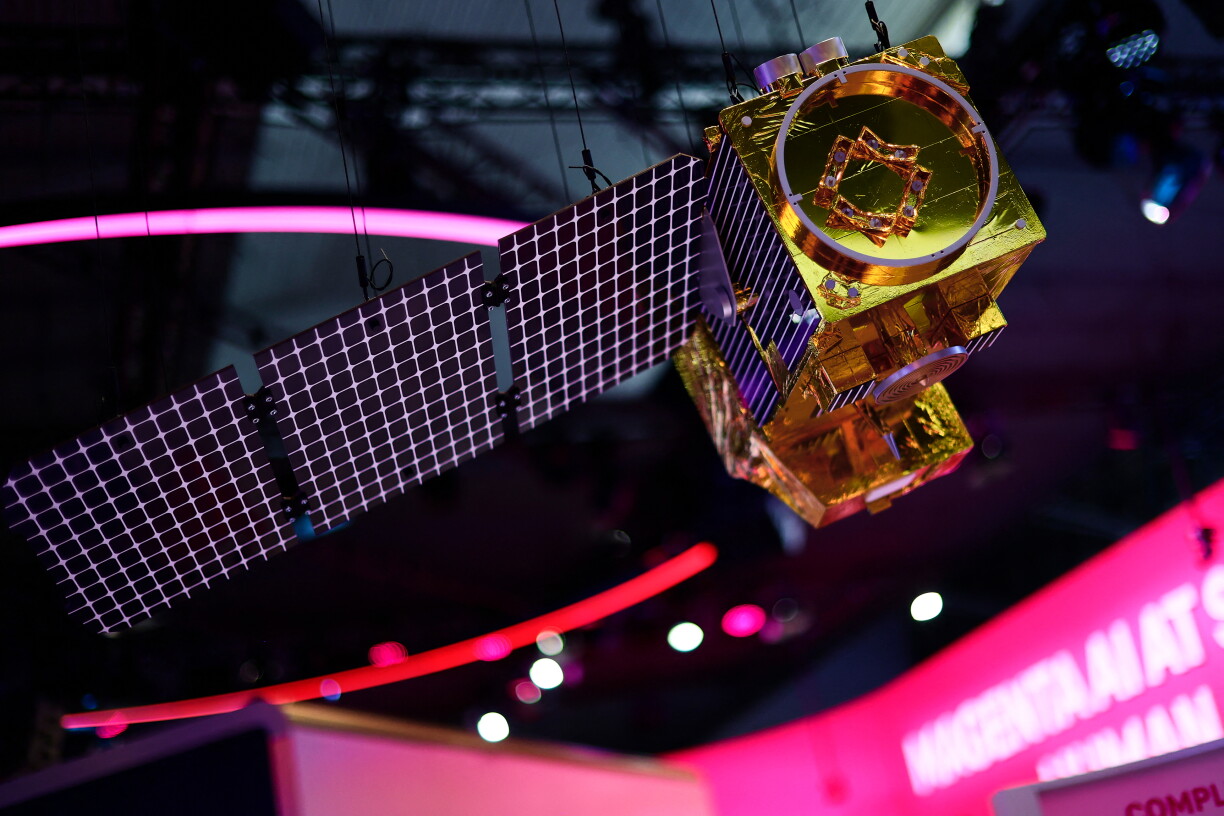
When most people think of space, the names that usually come to mind are NASA, SpaceX, astronauts, and rockets. Definitely not Kockelscheuer, a location on the edge of Luxembourg City.
Yet this is precisely where Luxembourg’s ambitions are set to lift off, with the upcoming NEOS Space Campus scheduled to open within the next two years.
Ruy Pinto, interim director of the Luxembourg Space Agency, recently spoke to RTL about the country's evolving space sector and the significance of the new campus for industry and innovation.
Since taking up his role two months ago, Pinto has emphasised the dynamism of the sector, describing space as both increasingly fashionable and strategically important.
He points out that governments, private companies, and commercial actors worldwide are paying growing attention to the field.
Where satellite TV and solar system probes once dominated, space technology now underpins navigation, Earth observation, and plays a part in geopolitical conflicts, which is a shift that makes the industry particularly exciting for Luxembourg.
Although many people may not realise it, space technology plays a role in daily life across Luxembourg.
For instance, navigation apps on smartphones, whether iPhone or Android, rely on satellite systems such as Europe’s Galileo.
Satellites are also fundamental to weather forecasting and monitoring environmental changes via European programmes like Copernicus, with much of this data processed locally.
Communication technology is advancing rapidly as well, with devices connecting directly to satellites becoming smaller and Low Earth Orbit (LEO) satellites already used in areas such as Ukraine.
Luxembourg is now making a major investment in the NEOS Space Campus at Kockelscheuer to support its growing space sector.
Pinto underlines the importance of this initiative for bringing businesses together and fostering collaboration, drawing comparisons to the concentration of innovation in California’s Silicon Valley.
By clustering companies on a single site, the campus is expected to encourage both formal and informal exchanges, whether in laboratories where small businesses can develop and test technology, or simply through conversations over coffee in communal spaces.
The campus will include areas that require security clearance, allowing sensitive dual-use (civil and military) technologies to be developed in a controlled environment.
This structure supports both innovation and security in the sector.

A key component of the new campus will be the presence of SES, Luxembourg’s leading satellite operator, which plans to establish a satellite production facility covering over 11,000 square metres at the site.
Public investment in this area is expected to significantly boost the economy, with the National Institute of Statistics and Economic Studies (STATEC) forecasting around 1,600 highly qualified jobs in the sector in the near future.
Pinto estimates that if indirect employment, such as consultancy, construction, and related industries, is included, the total number of jobs could be double the official projection as the sector matures.
According to the Luxembourg Space Agency, there are around 80 small and medium-sized enterprises currently active in the country’s space industry. This raises the question of whether a small country like Luxembourg can truly compete in such a high-tech, capital-intensive arena.
Pinto acknowledges that it would not be realistic for Luxembourg to rival the satellite projects of giants like Amazon or SpaceX, given the scale of investment required and the limited direct benefits for the local workforce.
Instead, Luxembourg is focusing on applying space technologies to sectors where it already has expertise, such as finance.
Start-ups are encouraged to explore how space data and applications can be used in financial services, and there is growing interest in the health sector, particularly in the production of medicines and biomaterials in space, which is an area where entirely new markets are emerging.


