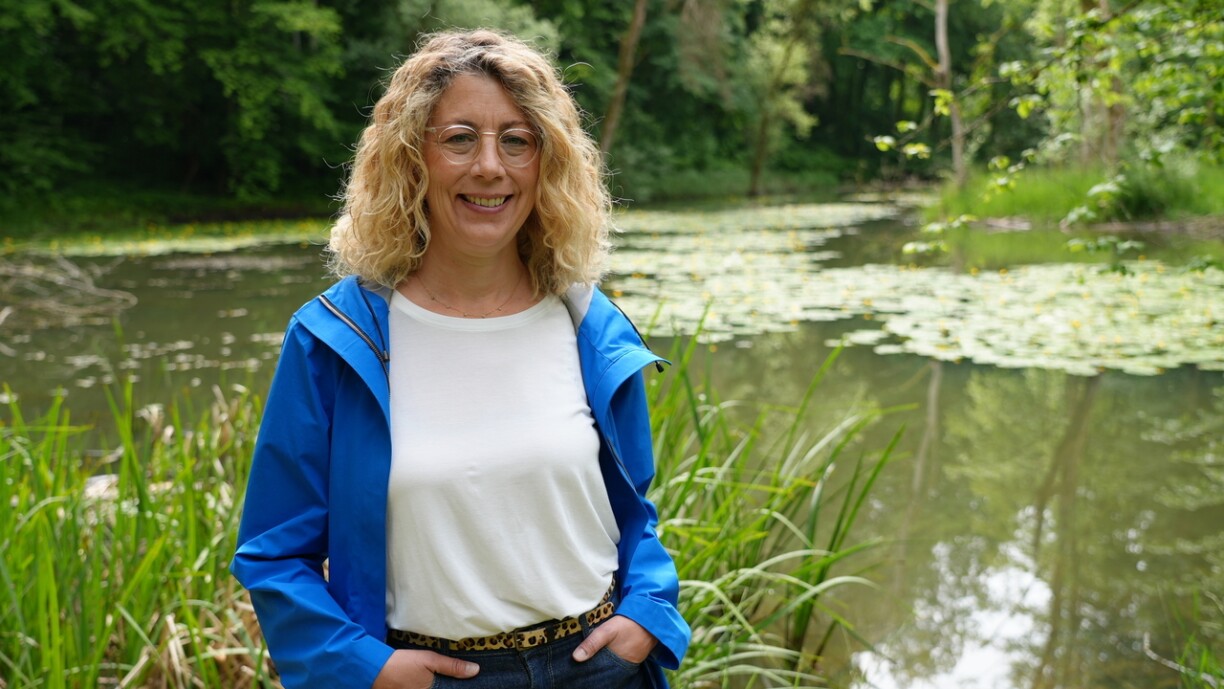
Taking up her post as Environment Minister was, in Joëlle Welfring’s own words, "intensely challenging", especially during the initial phase. The learning curve was steep, and the demands were high from the outset, she states.
Welfring, a member of the Green Party (déi Gréng), served as Luxembourg’s Environment Minister from 2 May 2022 to 17 November 2023, filling the remainder of Carole Dieschbourg’s term. Though her time in office was brief, her political trajectory has been remarkably swift: in under two years, she went from Director of the Environment Agency to Minister, and is now a Member of Parliament in the Chamber.
While Welfring may not miss the public spotlight that comes with a ministerial role, her time in government clearly left a lasting impression, on both her personally and on the environmental policies she helped shape. "I’ve never had a big ego or craved attention", she notes, adding "but being in the public eye is part of the job. You do the work, you make decisions, and then you also have to communicate it". That part, she says, took some getting used to, but she adapted quickly.
Her entry into government was, by her own account, "like jumping on a high-speed train in full motion", one she had to take control of and steer. The early days were particularly demanding, with long evenings spent reading and preparing for intense discussions the next day.
Despite the challenges, Welfring is proud of what she achieved in her relatively short time in office. Among her key priorities were revisions to forestry legislation and streamlining elements of the nature conservation law – measures she considers crucial. She also looks back positively on her collaborations with dedicated NGOs, businesses, and professionals across the country.
For Welfring, environmental protection is far more than a political agenda – it’s a personal mission rooted in a deep sense of responsibility to future generations. Her commitment is so strong that she requested this interview take place in a Natura 2000 conservation area: the Ellergronn reserve in Esch.
There, among the trees and wetlands, she shared her personal connection to the site: "| was born in Esch, and this is one of its most beautiful places", she reflected. She explained further that "it’s an area shaped by the steel industry, with old mining tunnels still beneath our feet. A pond has since formed here, showing just how powerfully nature can reclaim and renew itself if we allow it".
She explained that she often visits the site to unwind, and its significance is also familial: her grandfather lived in the neighbouring district and worked in the steel industry, making this area a meaningful link to her family history. She stated that "these same tunnels were also used to hide members of the resistance during the Second World War", adding that “another of my grandfathers was a resistance fighter, perhaps not here exactly, but he was captured by the Nazis. This place brings together the threads of personal and family history for me".
Entering politics wasn’t part of a long-term plan, but when the chance came, Welfring recognised it as a rare and important opportunity. "These don’t come along often in life", she said. She would have gladly continued in the role, as she had built expertise and valuable connections she was eager to maintain. There were projects underway she would have liked to see through and relationships she hoped to keep nurturing, she explained.
Her new political life brought with it changes in her personal world too. Friends and family, used to her low-key nature, were initially surprised by her sudden visibility. But they supported her wholeheartedly, according to Welfring.
She fondly recalls the moment her son asked what kind of minister she would be. When she answered "environment", he immediately responded: "Then you have to do it!" That moment of encouragement gave her confidence. Having her family’s backing was essential, she adds, especially knowing the toll such a role can take on home life.
Welfring’s environmental convictions date back to childhood. She remembers seeing distressing images of oil spills and wildlife suffering on the news. Even then, she saw it as a profound injustice. That sense of justice has never left her, according to her. Joining a political party had long seemed like a logical next step, but the timing hadn’t been right until just before her appointment as Minister, she stated. She joined the Greens because their values closely align with her own, something she finds essential in maintaining harmony between her personal and professional life.
Although the environment still matters to many people, Welfring acknowledges that other global crises – such as the wars in Ukraine and the Middle East, and the cost-of-living crisis – now share the stage. These issues, she said, must be addressed with equal urgency. Measures like energy price caps illustrate how environmental and economic policies are deeply interconnected, she explained.
However, she’s concerned that the current government is prioritising energy and climate issues at the expense of nature conservation. "Humanity is on the brink of a sixth mass extinction", she cautions, adding that "we need to ensure coherence across environmental policies, and I worry that’s not happening right now". From her own time in government, she knows that meaningful progress can be made when people commit fully. She believes that coalition work, despite occasional friction, is overall a powerful and constructive process. "It’s not a hindrance, it’s part of the democratic strength", she says.
But looking at the current coalition agreement, she is troubled by what she describes as "drastic cuts" to the nature protection framework. The planned removal of compensation measures for destroyed habitats is something she regrets deeply. She concludes by stating that "we can’t afford this right now, not even if construction needs to move forward. The direction these legal changes are taking is, unfortunately, the wrong one".





