The municipality of Leudelange has planned a referendum on the day of the European elections to decide whether the municipality should move from the southern electoral constituency to the central constituency.
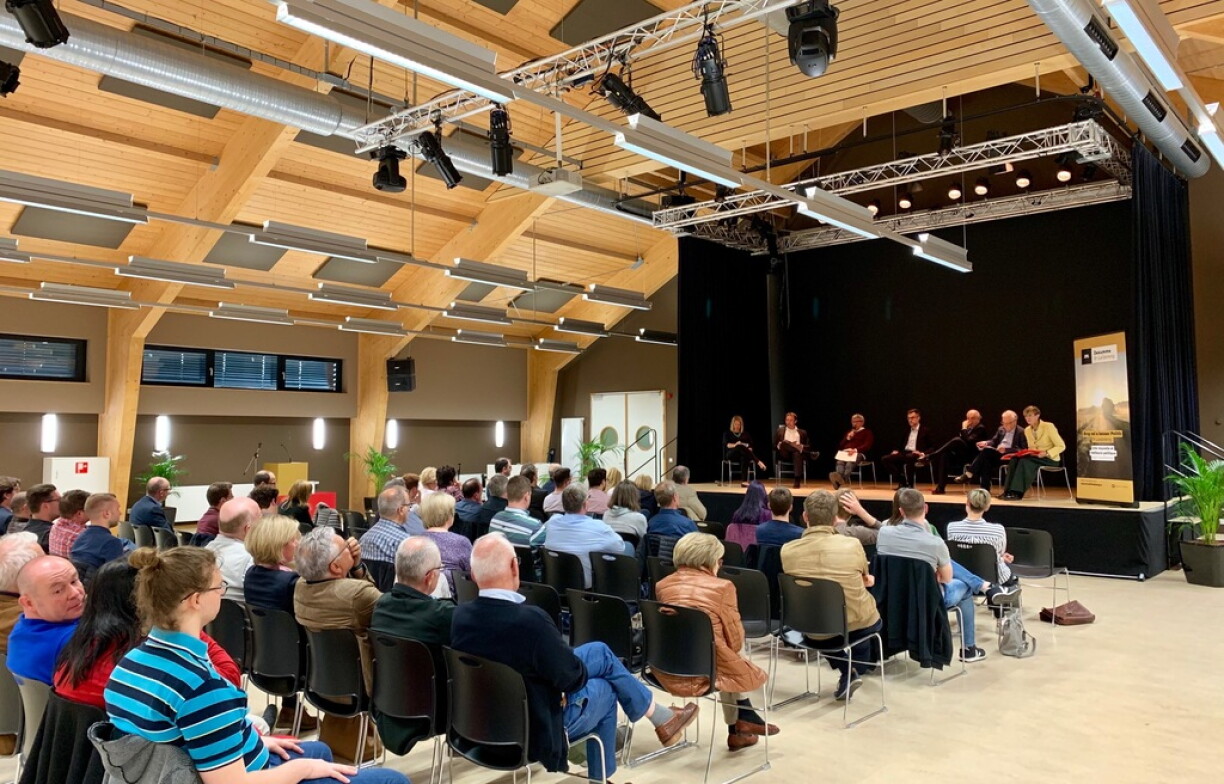
The political movement "Zesumme fir Leideleng/Together for Leudelange" took the opportunity to open discussions on whether a new voting system is needed, for example on the topic of Luxembourg's constituency division and whether the constituencies need adjusting.
Politics specialists from the University of Luxembourg explained a number of issues with the current voting system on Wednesday evening: the division of constituencies is 100 years old, with the number of seats per district going back to 1988. Sociologist Fernand Fehlen said it was generally agreed that the Luxembourgish voting system is no longer totally coherent, but to change it would be difficult.
As Fehlen explained, Chamber of Deputies MPs are elected according to a specific system. Any amendments to this system would affect their chances of re-election and they are well aware of this fact.
However, the proportion of MPs per constituency no longer corresponds to the demographic benchmarks - the centre of Luxembourg has four MPs in excess, when the number of votes is taken into account. Fehlen said changes could only take place if there was external pressure on behalf of voters.
Although it would theoretically be simple to match up districts to the population, it would not necessarily solve any issues. Historian Simone Beck said the discussion had been ongoing for nearly 100 years, with people in consensus that the system needed to be updated, but despite this, nothing has happened.
The University of Luxembourg specialists want to understand the issues around the voting system, as well as voters' preferences. Dan Schmit quoted recent polls, which showed that voters were leaning towards a single electoral district, while keeping the current panachage, or cross-voting.
Almost 70% of voters who responded to a post-vote survey said they would prefer a single electoral district. There are existing proposals to modernise the voting system, but no actual political interest in furthering these proposals. Fehlen said it was clear that the population needs to actively make their feelings known, applying pressure on the government to implement these changes.
However, Fehlen said this would be unlikely as the issue is a technical question that most voters would not normally concern themselves with.





