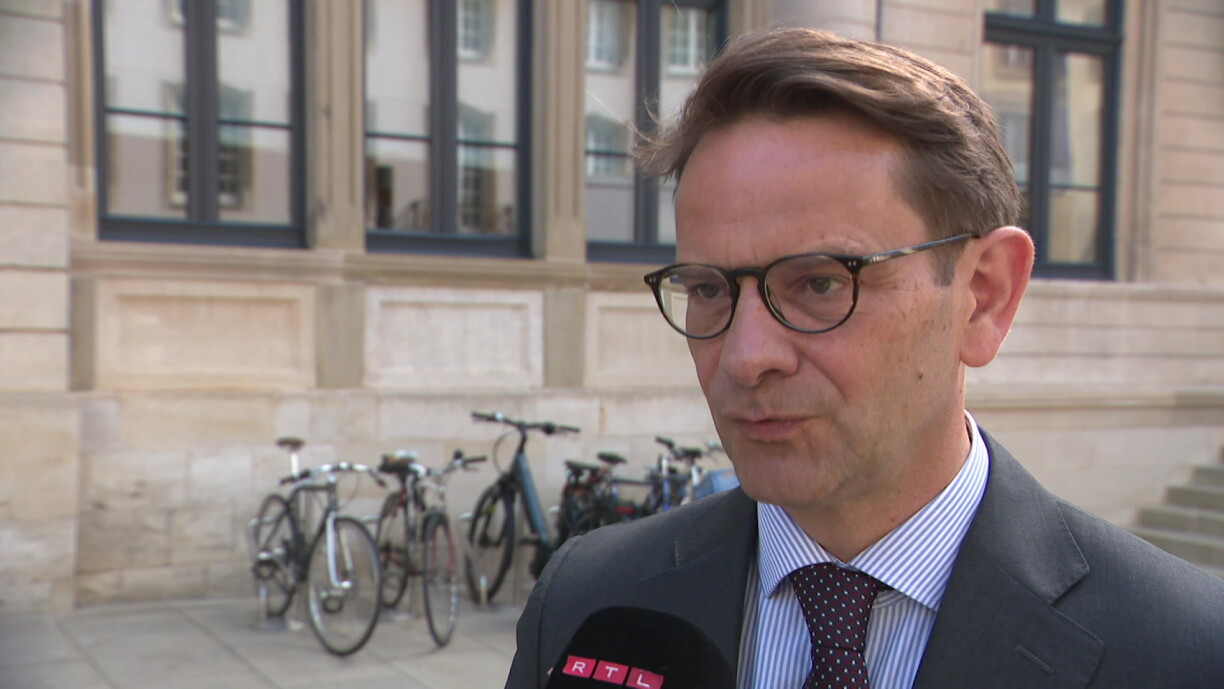
Reactions from politicians to the results of the first part of the Politmonitor on Tuesday vary considerably. They were asked about sympathy, competence and familiarity ratings, as well as about approval of the government.
The tripartite deal has not really worked in Luc Frieden's favour. Sympathy, competence and familiarity scores remain low for a prime minister. He stays in 12th place in the ranking, as he did last year.
Christian Social People’s Party (CSV) parliamentary group president Laurent Zeimet summed up the picture as follows. The prime minister's numbers have inched up, he said, and in his view the effects of the tripartite will only make themselves felt in the months to come. The agreement is now being implemented in the Chamber, he added, and it will take time before the impact reaches the public. That, he argued, is why the matter should be given time to unfold, rather than being judged too hastily.
Politicians from coalition partner, the Democratic Party (DP), fare better, with four names in the top ten.
For DP party leader Carole Hartmann, however, what matters above all is how the government as a whole is received by the public. Why voters find one figure more competent or more likeable than another, she said, is a question best put to them directly. The important thing is the overall work of the government. Her party is part of that government, she added, and it matters to the DP that the government as a whole earns the public's approval. If it has not yet done so in full, she argued, that simply means work must continue to deliver the reforms the coalition set out to implement.
Some 49 percent of those polled are satisfied with the government's work, one percentage point more than last year.
For Sam Tanson, spokesperson for déi Gréng (the Greens), satisfaction with the government remains modest. Approval of current government policy, she said, is not particularly high, which is not surprising. Even after what she described as a successful tripartite, in which an agreement was reached, the government does not really appear to be reaping the rewards.
The largely unchanged figures also show that the opposition has not managed to gain ground over the past 12 months.
Luxembourg Socialist Workers' Party (LSAP) party president Maxime Miltgen said she was confident in the work the Socialists were doing. The LSAP, does politics founded on substance. That, she added, is a long-term effort that the party is currently pursuing and making good progress on, with the results due to show through a little later, and with the leadership feeling confident the approach will bear fruit.
For Alternative Democratic Reform Party (ADR) parliamentary group chairman Fred Keup, the poll should not be overstated. The party, he said, always tends to perform much better at elections than in the kinds of questions put to the public in surveys.
David Wagner of déi Lénk (the Left) made a similar point. He knows politicians whom he personally finds likeable, he said, but he would never vote for them, since their political outlook differs entirely from his own.
For Marc Goergen of the Pirates, the picture already looks settled. Comparing the figures with the party polls, he said, it becomes clear that next time things will end up looking like Gambia 3.0, with Xavier Bettel most likely returning as prime minister. That, he argued, is what the trends suggest. The CSV, he added, will have to raise its game considerably if it wants to hold on to the top job.





