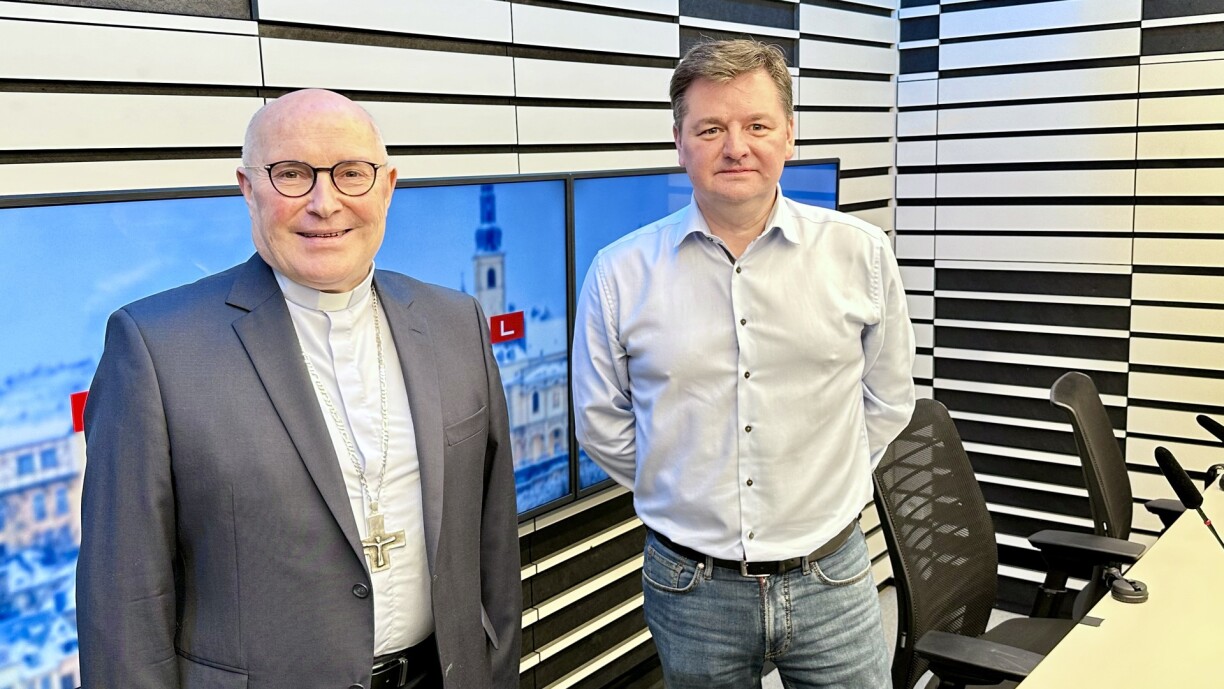
According to Wagener, the separation marked a significant turning point, prompting the Catholic Church to assume greater financial responsibility. The Church, he noted, "just about" manages to fund pastoral expenses, which he deems as the "core task" of the institution.
The Church Fund manages around 150 churches and employs about 240 full-time staff members. Around 20 church buildings have been desacralized since 2015. However, Wagener emphasised the need for a realistic inventory to assess the situation accurately. He also noted that the legal process between the archdiocese and the Association of Church Factories (SYFEL) remains ongoing.
Wagener admitted that the burden of salaries exerts pressure on the diocese's finances. In response, a new income strategy is slated for development next year, with the aid of an external consultant, amid an inactive property market.
In the former headquarters of the newspaper Luxemburger Wort in Gasperich, the diocese currently provides the National Reception Centre (ONA) with room for approximately 200 refugees, with plans for the "Ulyssee" home to relocate there as well.
Addressing the recent begging ban in Luxembourg City, Wagener expressed strong reservations, stating, "A city without poverty is an illusion." The clergyman made it very clear that the church could not accept the ban in its current form: "It is unacceptable that poor people are simply ostracised from the cityscape."
Asked about the new government, specifically the Christian Social People's Party (CSV), Wagener clarified that it was not his role to "convert" the party. While expressing hopes that the CSV maintains its roots, Wagener doubted that the church would necessarily gain more influence with the new government. Wagener revealed that a meeting with Prime Minister Luc Frieden is scheduled for January.
Wagener also touched upon the rising phenomenon of sects in Luxembourg, particularly "immigrant sects" gaining traction in the religious market. He noted that these sects appeal to individuals who feel unrepresented by traditional churches.
Looking ahead, Wagener mentioned Pope Francis's upcoming visit to Belgium next year, though no detour to Luxembourg is planned. He suggested that it is up to the government to take the initiative in this regard. The last pope who visited Luxembourg was Pope John Paul II in 1985.
Wagener was also asked about Cardinal Jean-Claude Hollerich and his chances of becoming the first Luxembourgish Pope in history. Luxembourg's Auxiliary Bishop stated that Hollerich is "certainly among the leading church personalities who have achieved worldwide renown" and that there is no denying that he is a member of certain very elite church committees.
On average, around 200 people leave the Catholic Church in Luxembourg every year. Wagener pointed out that the trend is declining and that the number of adult baptisms is increasing.





