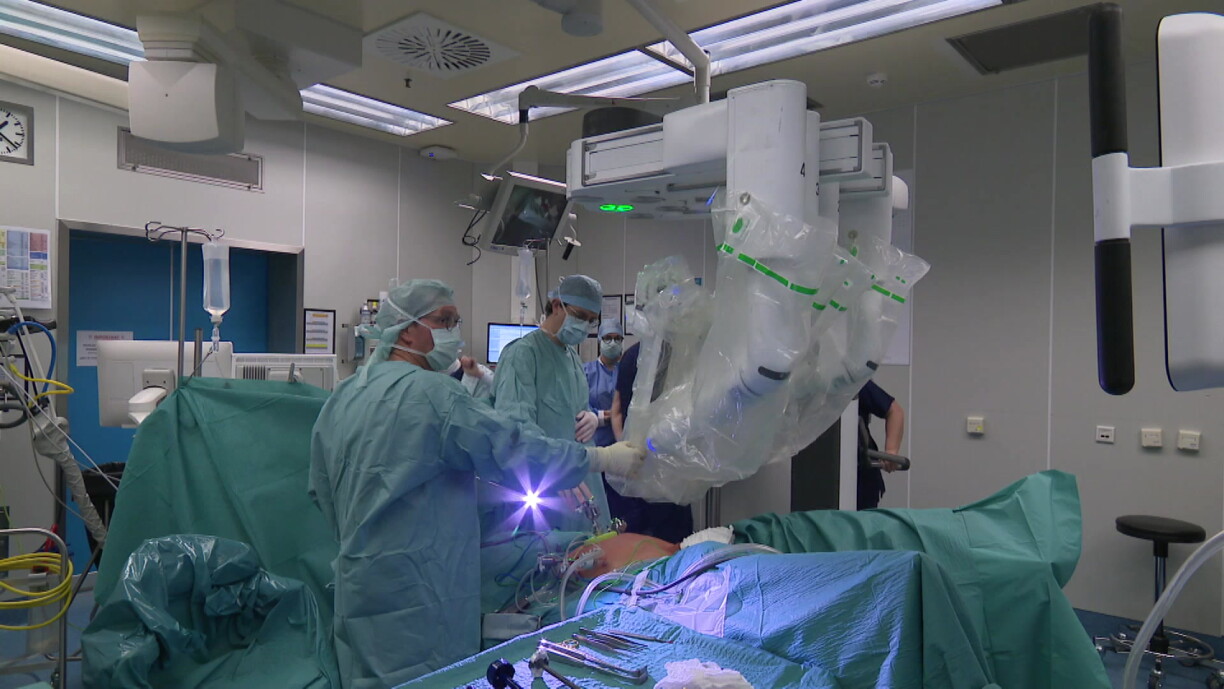
Experts recently gathered at a symposium hosted by the Robert Schuman Hospitals Fondation to discuss how robotic surgery will continue to develop and improve patient care in Luxembourg.
Robotic surgery was first introduced in Luxembourg fifteen years ago, with the technology making its debut at Kirchberg Hospital for prostate operations.
While initially met with scepticism and resistance, the use of surgical robots has since become widely accepted and proven its value.
According to Dr Marc Berna, General Director of the Robert Schuman Hospitals, robot-assisted procedures, where surgeons control robotic arms using joystick-like devices, offer a range of advantages.
These include reduced blood loss, better functional outcomes, shorter operation times, and quicker patient discharge.
Such benefits have been consistently demonstrated since the introduction of this technology.
Similar improvements have been noted in robot-assisted rectal surgery, and early results are very promising.
Over the past decade, more than 3,500 hip and knee prostheses have been implanted at the Robert Schuman Hospitals with support from robotic systems, leading to greater surgical precision and more predictable outcomes.
Experts are convinced that AI will further enhance surgical results in coming years.
In orthopaedics, for example, new AI tools are expected to enable more sophisticated patient assessments and detailed analyses, making it possible to create highly individualised treatment plans.
Factors such as a patient’s gait, posture, and ligament condition could be analysed using AI, allowing surgeons to tailor procedures more precisely to each individual.
Specialists anticipate a period of rapid innovation over the next five years, with disruptive developments expected to create major opportunities for healthcare.
As the baby boomer generation ages, the demand for prosthetic surgery is projected to increase by 400% over the next 13 years.
Meeting this surge will require either a substantial increase in medical personnel or greater reliance on machines to support a shrinking workforce.
Workforce changes are also prompting a move towards technological support.
With women now making up 80% of medical faculty students, and many seeking a more balanced lifestyle, robotics and machines are seen as essential for enabling shorter training periods and more efficient working practices.
This technological assistance is increasingly viewed as key to adapting to evolving workforce expectations.
Looking ahead, there is the possibility that surgical robots may eventually be able to operate autonomously. Nonetheless, experts insist that doctors will remain vital for supervision and oversight.
Ultimately, even as technological advances continue, a holistic and personalised approach to medicine is expected to remain central, with the human element continuing to play a crucial role in patient care.


