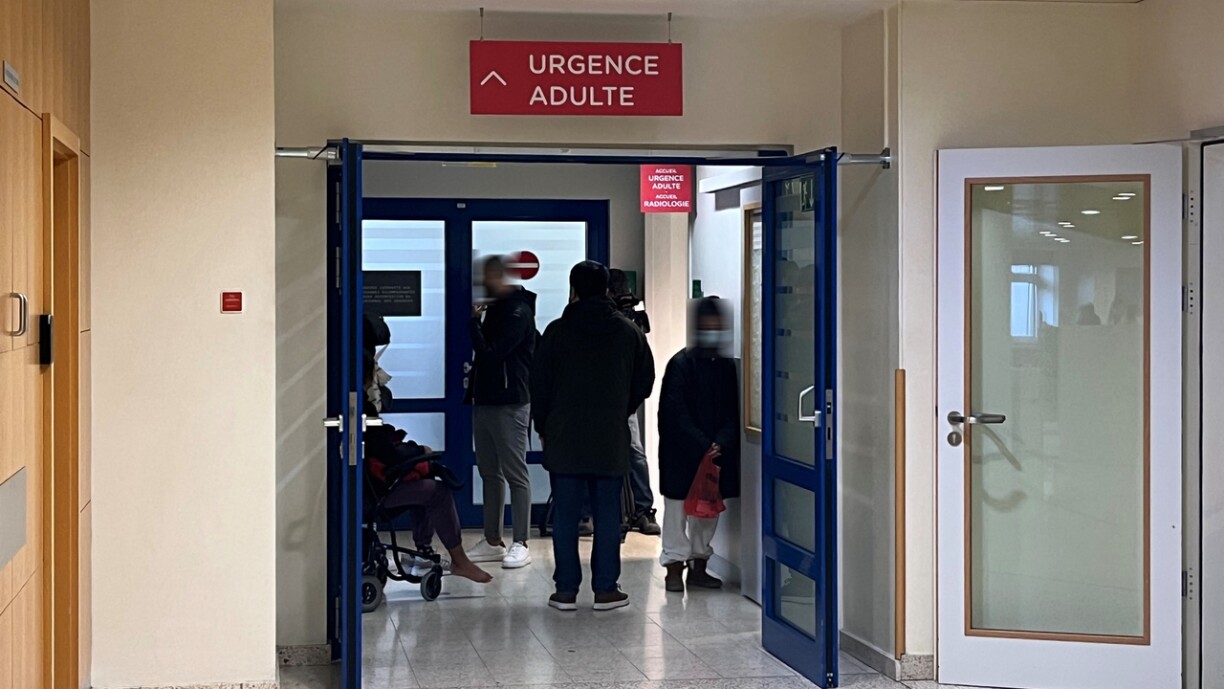
Friday morning at 10am, the emergency department at the Centre Hospitalier de Luxembourg (CHL) is usually quiet. On an average shift, over 250 patients are treated – a 10% increase compared to just a few years ago. This trend has led to longer waiting times, but also a rise in aggressive behaviour.
Staff are verbally abused almost every day, according to Géraldine Lorin, head nurse of the emergency department. "Nurses are being hit, punched, shoved, or threatened. Some patients even return and make threats along the lines of 'We'll be waiting for you after your shift.'"
As patient numbers increase, so do waiting times, particularly for less urgent cases. Patients sometimes wait four to five hours, if not longer.
"Our primary focus remains on treating seriously ill patients," stresses Dr Marc Simon, head of the CHL emergency department. However, he acknowledges that patient expectations also play a role.
"Some arrive expecting specific treatment, and frustration builds when they are told 'you don't need this', fuelling aggression."
Between 2019 and 2023, reported assaults in some hospitals have more than doubled. At CHL and Kirchberg Hospital alone, 185 cases of assault were reported in 2023, according to Health Minister Martine Deprez's response to a parliamentary question by CSV MP Laurent Mosar.
"And these are only the reported cases," stresses Dr Simon. Each incident costs precious time to an already often overwhelmed sector. "A nurse is then taken off duty, a doctor may have to step in, reinforcements are called, and the department's workflow is thrown off. The impact is enormous."
After assaults, staff have access to psychological support and informative training to manage aggressive patients. That said, de-escalation is not always possible, underlines Dr Simon. Stricter deterrents are possibly needed; a 24-hour guard presence and the removal of abusive patients could help.
The strain is pushing some staff to consider transfer or reduced hours, notes nurse Lorin. There is a lack of simple gestures of appreciation, like a smile or a kind word after treatment.
Not every health issue requires a visit to the emergency room. Patients are encouraged to consult their GP or visit the Maison Médicale for minor problems.
"See your usual GP for minor problems. Of course, call 112 for life-threatening conditions. We'll be happy to help you, whether you arrive by ambulance or on your own."
For paediatric emergencies, the emergency department highlights the following as reasons to visit:





