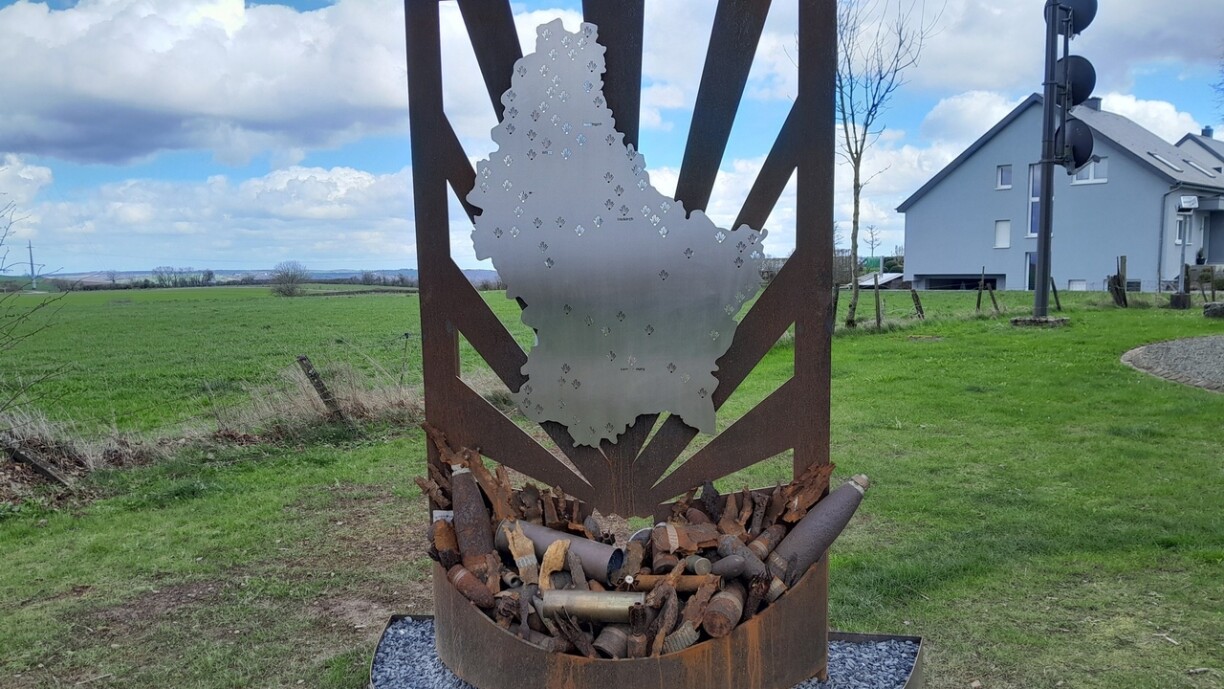
While Luxembourg may be fortunate to experience rare incidents involving war mines and munitions, the toll of war material since the end of World War I has been greater than commonly perceived. To honour those affected, a national memorial was unveiled in Hosingen on 4 April.
Located adjacent to the water tower, the monument crafted from steel features a map of Luxembourg. Designed by local artists Pol Asselborn and Remy Eiffes, the artwork incorporates old war ammunition at its base.
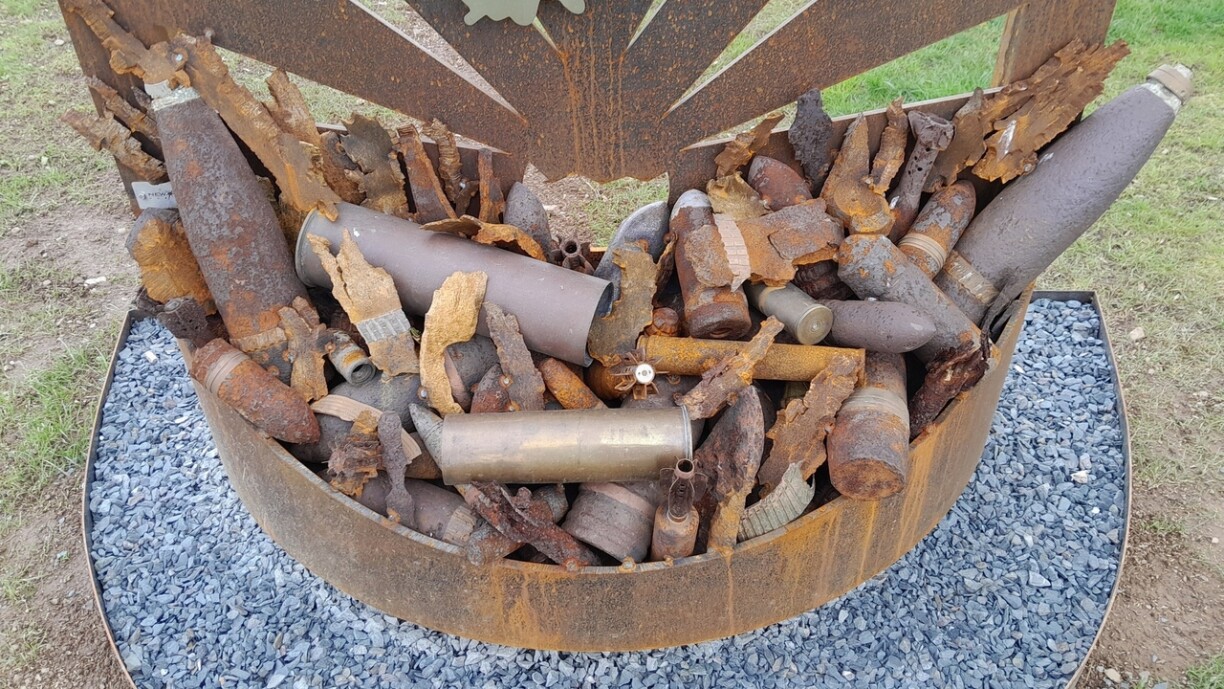
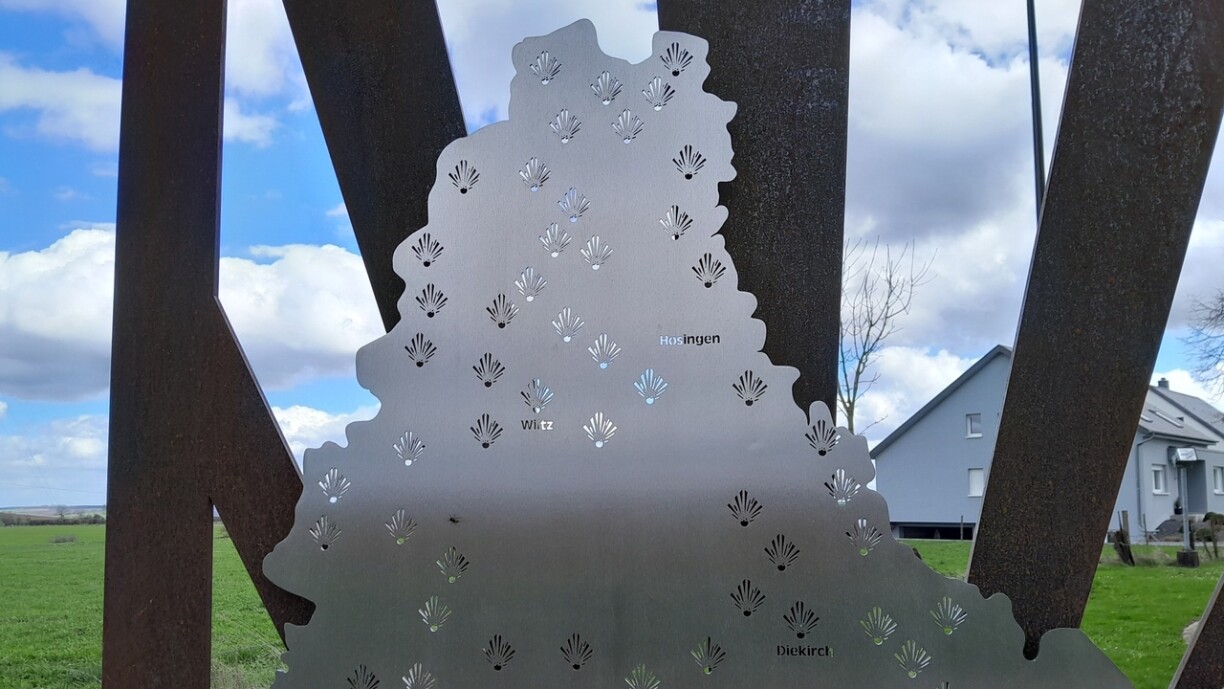
Special symbols on the map mark locations where individuals have lost their lives due to war mines or munitions. However, due to the proximity of some incidents, not every site could be individually marked.
The scale of fatal incidents in the Grand Duchy since the end of World War I is huge, as Yves Rasqui, an amateur historian and the project's driving force, elaborates: "The first accident occurred in Harlange in November 1918. The most recent, as we know, was in Waldhof in 2019. Between these events, I've identified 161 accidents resulting in 226 fatalities."
Many of these accidents occurred in the immediate aftermath of the Second World War, with victims categorised by factors such as the location and cause of their demise, as well as their military or civilian status.
Adjacent to the monument stands a memorial plaque featuring a QR code, allowing visitors to access a website containing detailed information about the victims. The monument is set to be integrated into the "Hosingen Memorial Park."
Gilles Thilgen, a member of the municipal executive board (Schäfferot) of Parc Hosingen, elaborates on the project's vision: "The first phase involves establishing a permanent exhibition within the existing water tower in Hosingen. While the water tower remains operational under the DEA [Ardennes Water Distribution Association], we aim to use all available exhibition space to showcase exhibits on Hosingen, the Parc Hosingen region, the Battle of the Bulge, and the post-war era."
The selection of the water tower for this exhibition holds historical significance, as it played a crucial strategic role during the Battle of the Bulge. Its elevated position provided German and US soldiers with a vantage point to observe their adversaries, leading to its destruction by the Germans. The current structure is a replica dating back to 1952.
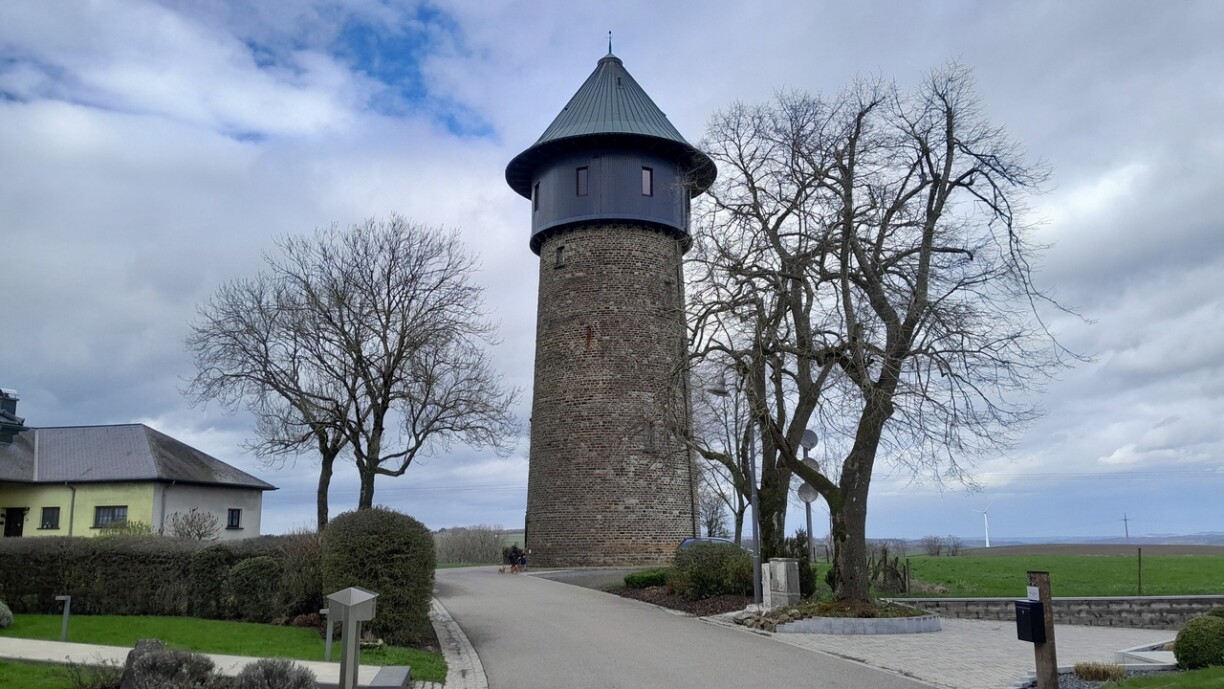
However, the conversion of the operational water tower into an exhibition space posed considerable challenges. Mayor Romain Wester of Hosingen acknowledges the complexities involved, with costs exceeding €1 million. The municipality remains hopeful for financial assistance from the Ministry of Culture and the Ministry of Tourism to support this initiative.
The exhibition within the water tower tells the story of the battle for the final liberation of Hosingen. Approximately 400 US soldiers were stationed in the village, engaging in repeated skirmishes with German forces, disrupting their advance towards Bastogne. Through large panels depicting the village both before and after destruction, the exhibition provides insight into this tumultuous period. The story unfolds through the perspectives of three individuals directly impacted: a US soldier, a German soldier, and a resident of Hosingen.
As part of the exhibition, organisers are reaching out to former residents of Hosingen, asking them to contribute photos to construct a visual "family tree." The organisers remain hopeful that the exhibition, which will be accessible by appointment only, will be unveiled by the end of 2024, although they acknowledge that this will prove difficult.
In a subsequent phase of the project, attention will shift to a historic "emergency shelter" constructed by the Reunited Steelworks of Burbach-Eich-Dudelange (ARBED) to accommodate the displaced populace post-World War II. Currently situated in Wahlhausen, this shelter is slated for dismantling, restoration, and eventual relocation next to the water tower in Hosingen.
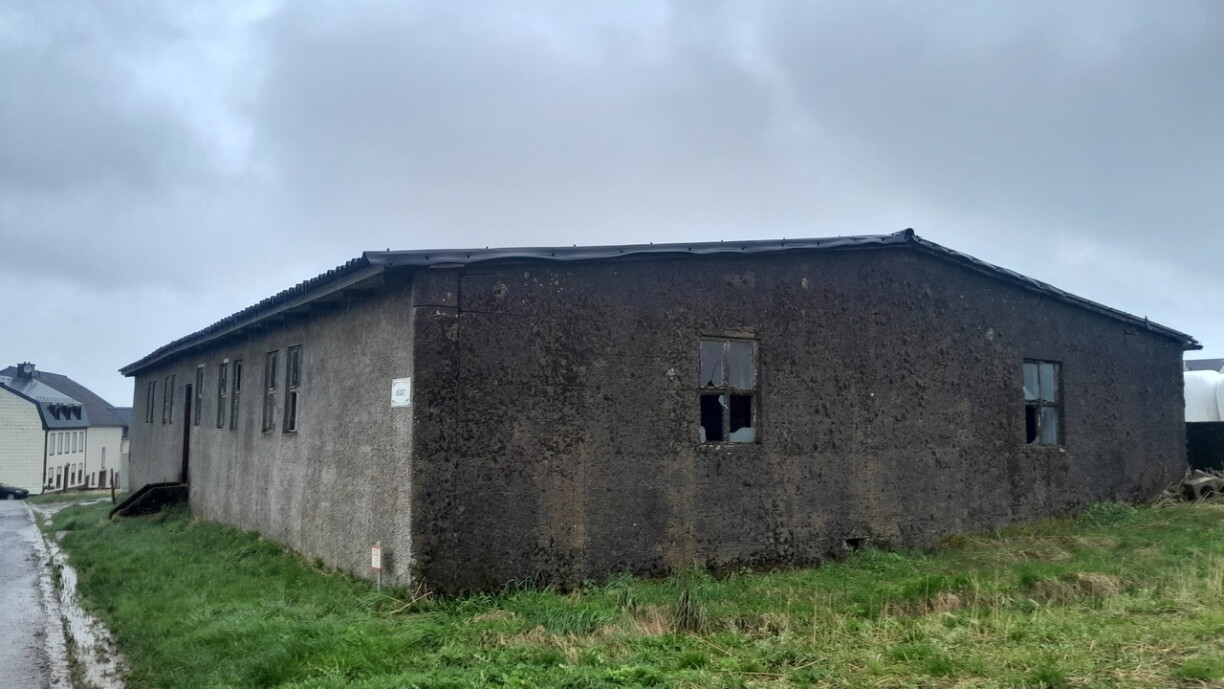
Yves Rasqui underscores the pressing need for prompt action, citing the deteriorating condition of the barracks. The property, currently under private ownership, is earmarked for donation to the municipality. There were concerns about whether it would have to be listed as a historical monument when the idea was conceived several years ago. Initially thought to be one of the barracks erected post-World War II by the Swiss emergency aid organisation, Don Suisse, similar to those in Wiltz or Echternach, subsequent investigations revealed otherwise.
The barracks will serve a dual purpose. Firstly, as a venue for hosting traveling exhibitions, with the military museum in Diekirch proposing the permanent installation of the travelling exhibition "Our Shattered Villages" in Hosingen. Secondly, a section of the building will be repurposed as a holiday house that tourists will be able to rent.
Another significant addition slated for the Memorial Park is a replica of an anti-tank barrier. A remnant of this armoured barrier, believed to be the last in Luxembourg, currently rests in the forest near Rodershausen. When Luxembourg was invaded by the German army on 10 May 1940, the barrier was detonated and part of it, a concrete base that had been left on the side of the road, was pushed down a slope. Although plans were initially in place to retrieve the block, recommendations from the responsible ministry advised against it.
The realisation of the entire Hosingen Memorial Park project is expected to take several years.





