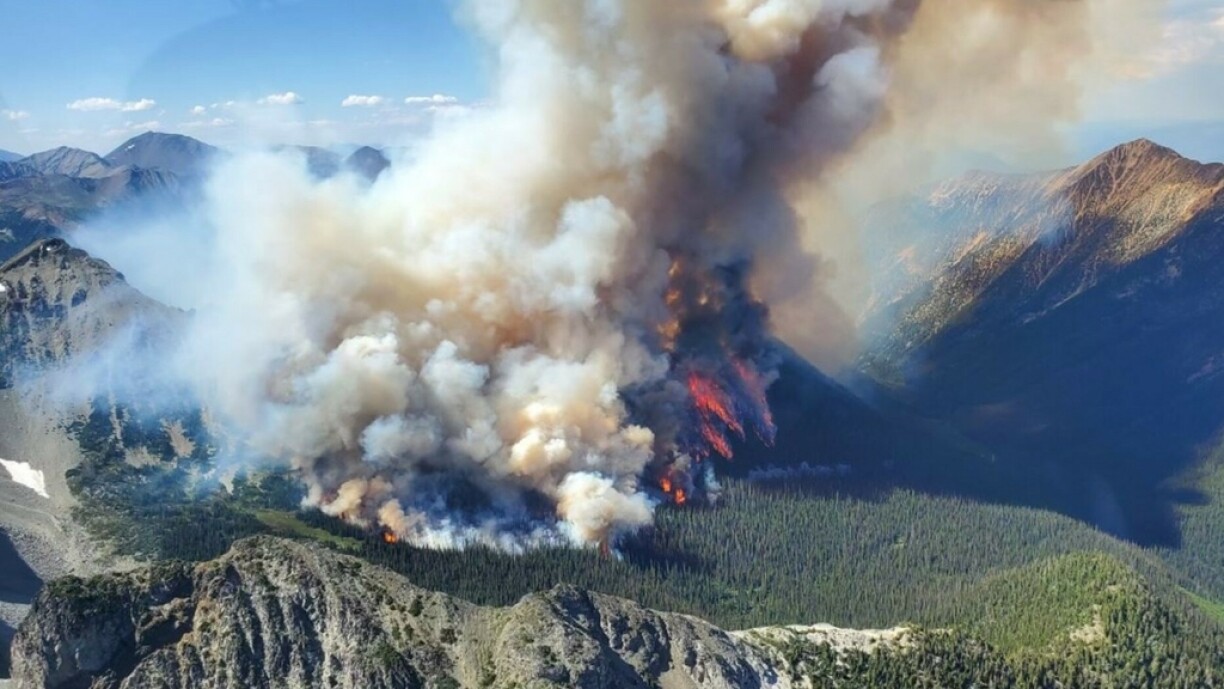
The Canadian Rocky Mountains currently have forest fires raging in several areas, resulting in the evacuation of around 10,000 people from the city of Jasper and its national park. The national park administration said another 15,000 visitors had been staying in the national part when the call for evacuation was issued.
In Alberta, there are 175 active wildfires, a third of which are not yet under control. British Columbia province has reported around 300 forest fires.
The fires in the Canadian forests seem to have had an impact in the air quality across Europe, including Luxembourg and the surrounding areas. Meteolux said the wildfires had most likely contributed to an increased concentration of particles - an aerosol layer, as it is known - which was measured at a height of 5-8 kilometres on Wednesday night.
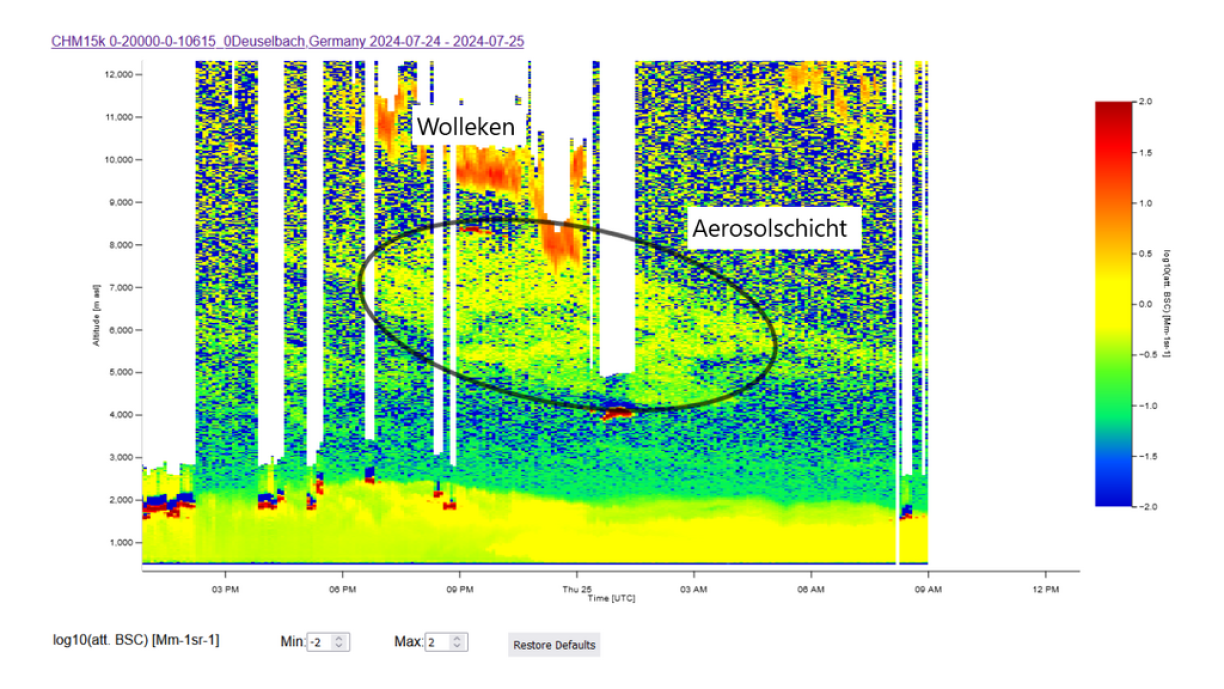
The aerosol layer has since moved on over the British isles . Over the coming days the particles will continue to dilute within the atmosphere.
The particles that come into the air due to the Canadian forest fires are generally transported to Luxembourg via the same mechanism as the Sahara dust - low pressure areas propel the particles up into the air, where they are swept over the Greater Region by a horizontal wind. It is relatively easy for the particles to achieve the right height due to the heat and smoke generated by wild fires. During transport, the concentration is often diluted by atmospheric turbulence or precipitation.
As long as the particles remain in the upper atmosphere, such phenomena do not have a negative impact on the air quality on the ground.





