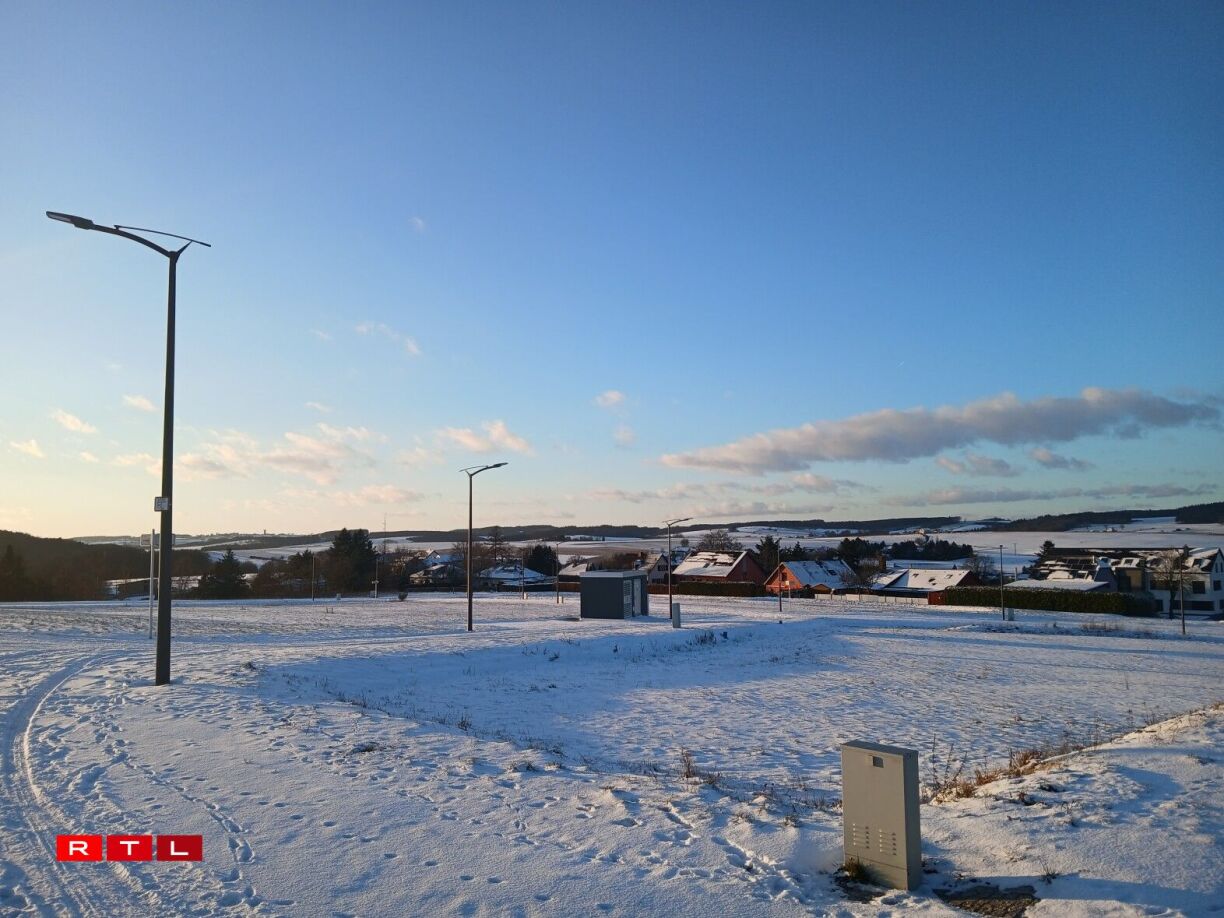
The chronic shortage of affordable housing in Luxembourg is a persistent political issue, yet projects can languish for years. A stark example is unfolding in the village of Harlange, where plans for 67 affordable housing units have been stalled for approximately 20 years, in part due to the unique economic realities of the country's northwestern region.
The National Society for Affordable Housing (SNHBM) has owned a four-hectare plot in Harlange for two decades. A Special Development Plan (PAP) authorising construction was established, but the project has seen little progress.
According to an investigation by our colleagues from RTL Radio, officials cite a primary challenge: lower land prices in the northwest, combined with a required 99-year building lease, may deter potential buyers.
The building lease model, a cornerstone of the government's affordable housing policy, grants a long-term usage right but not full ownership. The SNHBM fears that in a region with cheaper land, buyers would be reluctant to enter such an agreement when they could potentially purchase property outright elsewhere for a comparable long-term investment.
This dynamic, officials suggested to RTL, reflects a distinct regional "mentality" towards property ownership.
In an interview with RTL, SNHBM Director Guy Entringer explained the dilemma. He emphasised that the 99-year building lease with a pre-emption right is a government-mandated framework which the SNHBM follows. While he affirmed the building lease model as generally "the right way to create affordable housing", he acknowledged it was "perhaps not the right concept for this specific location".
Entringer noted that after discussions with government and municipal officials, an adapted solution for the site had been found that the SNHBM "can live with".
Further complicating the stalled Harlange project is the fact that its PAP, adopted several years ago, no longer meets contemporary construction standards. Entringer explained that while building density must be lower in a village like Harlange than in urban areas, the original plan for 67 units on four hectares – a density of 17 units per hectare – is now outdated.
"The norm nowadays", Entringer added, "is to create between 25 and 30 units per hectare."
The impasse is now set to break, primarily due to an intervention by the Commune Lac de la Haute-Sûre. The municipality has decided to buy back part of the land from the SNHBM.
Mayor Marco Koeune criticised the prolonged inactivity, stating it is "unacceptable" that a plot of land that is owned by the state is left empty in the middle of a housing crisis. He also warned that pre-installed infrastructure for streets, electricity, and utilities, in place for years, risks falling into disrepair.
Under the new agreement, the municipality will sell 40 individual plots, while the SNHBM will construct 24 flats and three single-family homes for rent.
Entringer stressed this hybrid solution is "an exceptional course of action" not representative of the agency's general approach in northern Luxembourg. He pointed to recent progress elsewhere, noting the first residents have moved into a project in Heiderscheid and that other developments are being prepared in Hupperdange, Bourscheid, Grosbous, and Hosingen.
Construction in Harlange is now anticipated to begin in the second quarter of 2027. Once completed, the new housing will represent a significant addition to the village of roughly 600 inhabitants and the wider commune, which has over 2,300 residents.





