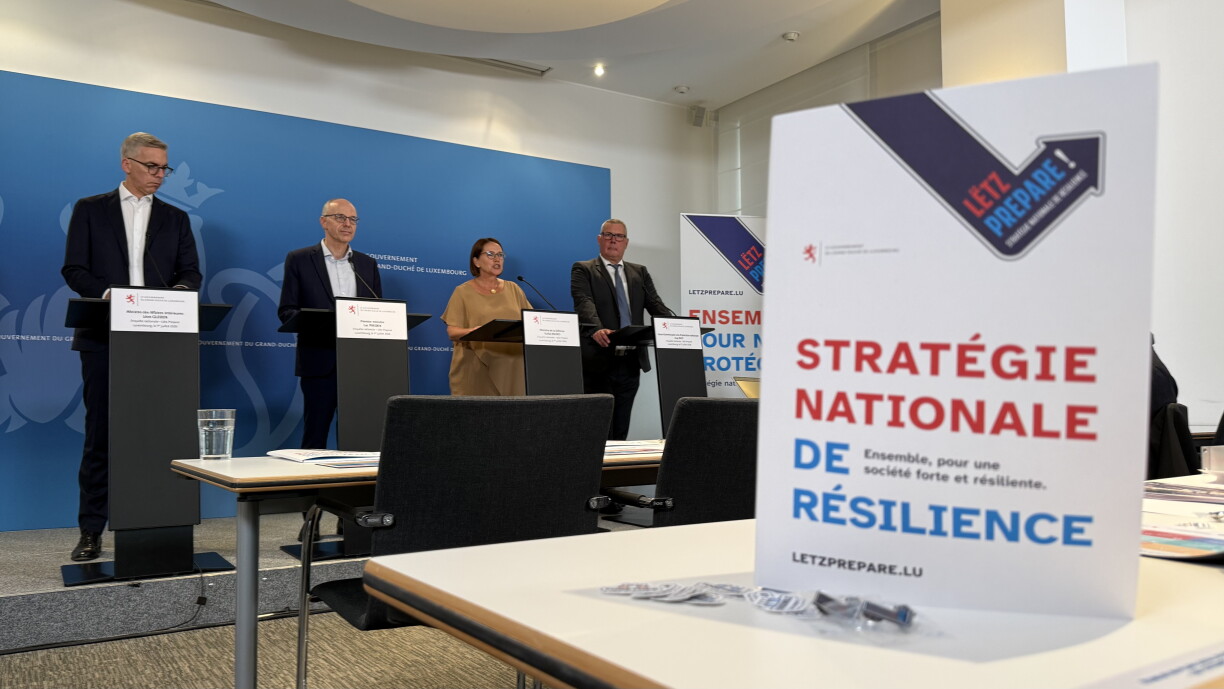
According to an Ilres survey, Luxembourg residents consider cyberattacks, flooding, and extreme weather to be the most likely disaster risks that could materialise in the Grand Duchy. However, they believe that a financial and economic crisis or a nuclear accident would have even more severe consequences than a cyberattack. The survey was commissioned by the government, which is continuing to develop its national resilience strategy.


Prime Minister Luc Frieden said at the presentation of the results on Wednesday that Luxembourg as a society is better positioned if it is well prepared. In this context, the government will issue a 'Let's prepare' guide in September or October, offering residents practical recommendations on how to respond depending on the situation. Frieden said the guide is something residents should keep close at hand to prepare for various scenarios. "Resilience is therefore not only a task for the state, but also the task of every individual", he stated.
The guide will provide households with instructions on what they need to survive self-sufficiently for 72 hours without assistance in the event of a crisis. In addition, a "resilience bonus" is to be introduced for the construction of public infrastructure in the future. For example, new sports halls could be built in such a way that they can accommodate people during a crisis – equipped with kitchens and camp beds.





