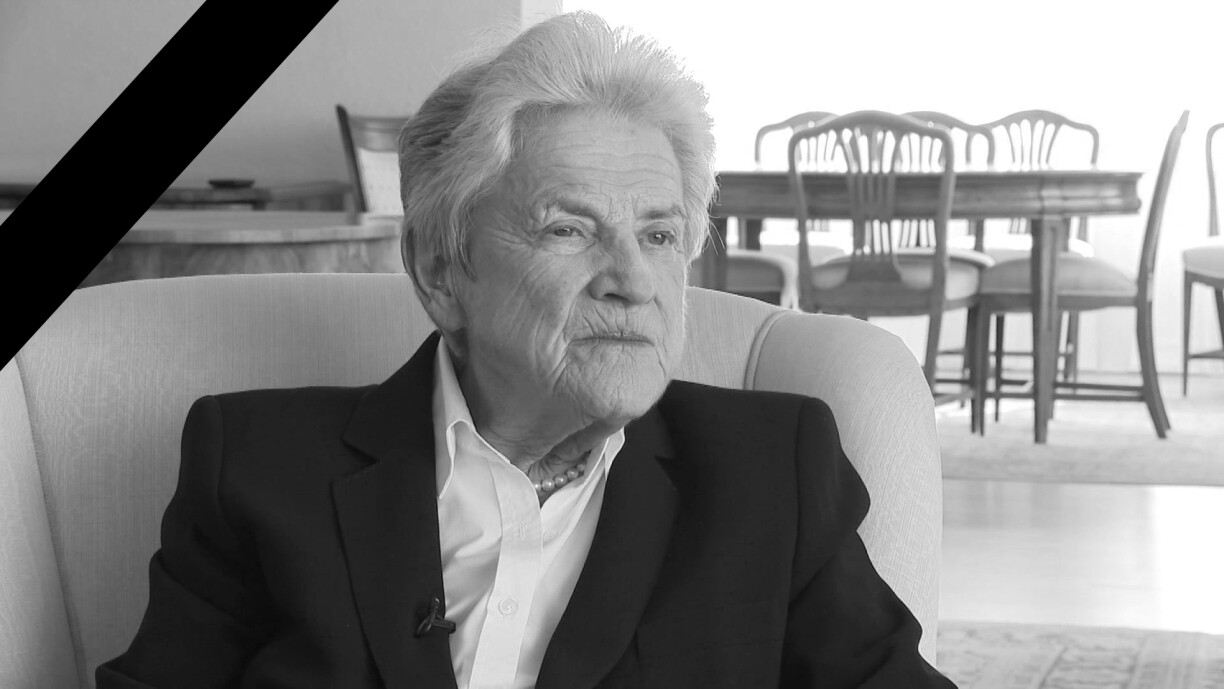
The political world is mourning the death of former Luxembourg City Mayor and Minister Colette Flesch, who passed away on Wednesday at the age of 88.
Her death marks another loss for Luxembourg politics in the early weeks of the new year. Flesch was a prominent figure in the Democratic Party (DP).
Before entering politics, Flesch was distinguished by her accomplishments in fencing. Following a bronze medal win at the 1958 Junior World Championships, she competed in three Olympic Games, representing Luxembourg in Rome (1960), Tokyo (1964), and Mexico City (1968).
Her transition to politics, she later remarked, was unplanned. "Politics – well, it just sort of happened," she said in a 1996 interview, recalling that she was asked to run during an early election in 1968 and was subsequently elected. While she acknowledged a longstanding interest in political affairs, Flesch always maintained that sport remained her first great passion.
Following the December 1968 elections, Flesch began her parliamentary career upon entering the Chamber of Deputies in early 1969. Her political ascent continued rapidly, and in 1970, she broke new ground by becoming the first woman to be elected Mayor of Luxembourg City.
She led the city's council for a decade, a period she often recalled as profoundly meaningful and personally fulfilling. In 1980, Flesch faced a dual new challenge: she was appointed President of the DP and succeeded Gaston Thorn in the national government as he prepared to become President of the European Commission.
In government, Flesch served as Deputy Prime Minister and Minister of Foreign Affairs, while also overseeing the portfolios for the Economy and Justice. Her tenure lasted until 1984, when the DP was succeeded in the governing coalition by the Luxembourg Socialist Workers' Party (LSAP).
Flesch's career also had a significant European dimension. Between 1969 and 2004, she served multiple terms as a Member of the European Parliament for Luxembourg. From 1990 to 1999, she worked within the European Commission as a Director-General, responsible for Culture, Communication, Sport, and the Translation Service.
After her time in Brussels and Strasbourg, she returned to both the national parliament and local politics. She concluded her municipal career in 2007, retiring to a standing ovation. In 2009, after an unsuccessful final candidacy in the national elections, she stepped back from active politics, ending a public career that had spanned over 40 years.
Reflecting on her journey, Flesch expressed deep gratitude:
"I think I was very lucky to have been able to do all those things. I am grateful to the people who made politics possible for me, the people who showed me the ropes and introduced me to politics, but also the voters who gave me the opportunity. I can only wish for all young girls that life treats them as well as it has treated me. And for that, I am grateful."





