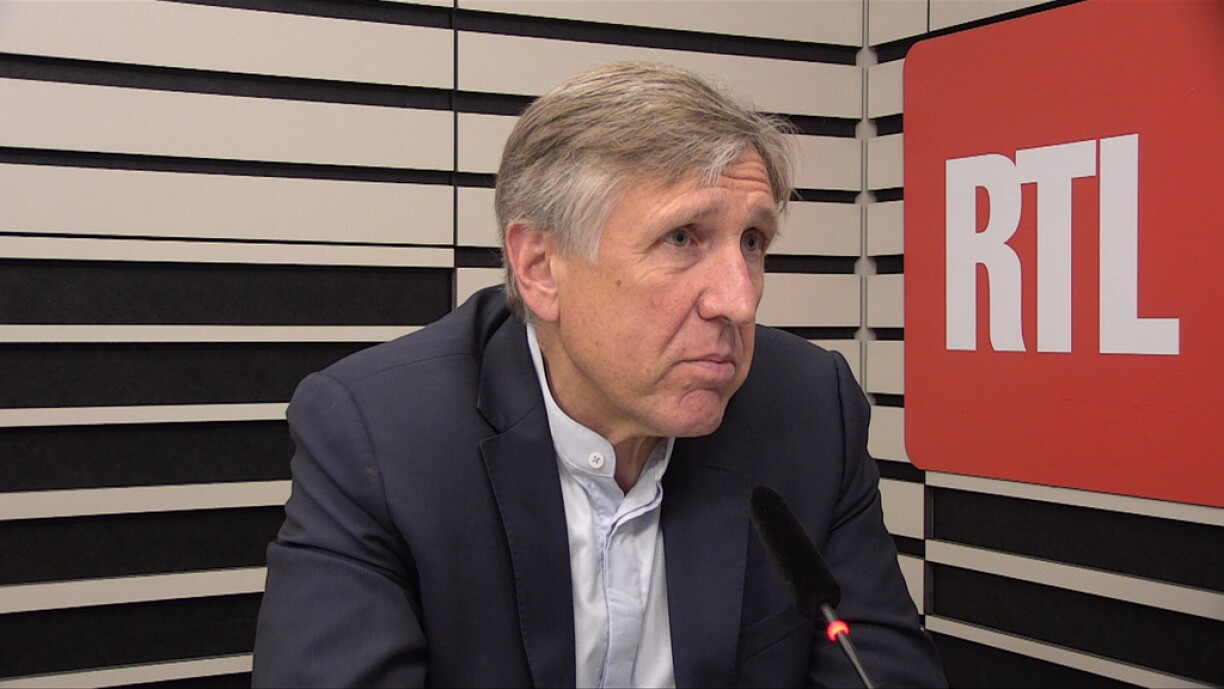
Bausch, who holds the roles of Minister of Defence, Minister for Mobility and Public Works, and Minister for Internal Security, disclosed the difficulty he has had in coping with the news that his party and government colleague Félix Braz had had a heart attack. Bausch's struggle resided in the fact that it is not only his colleague who is hospitalised, but a good friend of his: "When I heard the news, I felt like I was in a bad film. I was shocked that it had happened again [referring to the loss of his party colleague Camille Gira last year]."
Bausch also visited Braz in hospital and confirmed that it is truly difficult to see a friend in that situation. Whilst the minister highlighted that he would not make any medical speculations on his colleague's health and suggest that Braz's workload as Deputy Prime Minister and Minister of Justice caused the heart attack, the minister nevertheless pointed out that the ministerial workload likely contributed to the issue.
Stress is inherent in working in government, he said, given that ministers often work days that last up to 13 or 14 hours. Bausch affirmed that politics is a difficult business and sometimes ministers could neglect to look after their health sufficiently, which, in his view, is perhaps the price you pay to uphold such a responsibility. The minister did suggest that this is an area where improvement could be required.
However, despite the concern government members will be feeling for their colleague, their work must go on. Minister for Culture and Housing Sam Tanson is temporarily taking over Braz's mandate over the Ministry of Justice and the government would, as Bausch explained, continue to examine the situation on a week-by-week basis. As for Braz's role as Deputy Prime Minister, Etienne Schneider - who shares the role with Braz - will cover those duties alone. Bausch will however help Schneider as he is charged with coordinating work.
Asked about the central database affair ahead of the return to politics, Bausch was firm in stating that the stocktaking of the issue is complete. A law on CCTV surveillance is just about complete and once the Chamber of Deputies returns after the summer break, Bausch will meet with the parliamentary commission on internal security to provide details on the so-called background checks.
As for his work presiding over the Ministry of Mobility, Bausch explained that the pilot phase concerning the 90km/h speed limit on parts of the motorway is now being analysed ahead of a report on new options to tackle rush hour congestion, which mainly concern buses and carsharing.
The average speed camera on the N11 is in its test phase, but data saved by the speed cameras are being deleted whilst the authorities test the devices to ensure they work. As of 2020, the speed camera between Waldhof and Gonderange will definitively be in operation.
Finally, the minister discussed passenger tax on flights, which will increase from 3.5% to 7%. This, however, is not a CO2 tax, but concerns the fact that Luxembourg Airport must continue to fund itself. Although the tax will be adjusted, Luxembourg continues to have one of the lowest passenger tax amounts in Europe.





